


Canadian agriculture news — New Brunswick unveiled the New Brunswick Farm Growth plan on Friday, November 6, betting that the province’s farmers can cut emissions, survive wilder weather, and still grow a sector worth about $1.7 billion a year.
By Maplestime Agriculture Desk | Keswick Ridge, New Brunswick | November 7, 2026
Sources: CBC News New Brunswick | Agricultural Alliance of New Brunswick | Last updated: November 7, 2026
Key Takeaways
- Agriculture Minister Pat Finnigan announced the New Brunswick Agriculture Growth Action Plan and the Agriculture Climate Change Strategy at Coburn Farms in Keswick Ridge on November 6.
- Provincial funding starts at $200,000 in 2025-2026 and rises to $2.2 million in 2026-2027, alongside federal funding.
- The New Brunswick Farm Growth plan aims to cut farm-sector emissions by 40 kilotonnes by 2030 and 60 kilotonnes by 2050.
- Farms produce about 4% of the province’s total emissions, while the agri-food sector contributes about $1.7 billion in GDP and more than 17,000 jobs.
- Sixth-generation farmer David Coburn says last summer’s drought gave him his smallest apple crop in 20 years, while this year’s balanced rain delivered one of the biggest in 25 years.
New Brunswick Farm Growth Plan Announced at Coburn Farms
Finnigan made the announcement at Coburn Farms in Keswick Ridge on a 19-degree November afternoon, a temperature that did not go unnoticed. “I think we’re going to be growing bananas soon if this keeps up,” Finnigan said. The joke landed because it is barely a joke anymore: the same warming that stretched the growing season is the force battering the province’s farms.
The two documents launched on Friday work as a pair. The growth action plan is about building the sector up, and the climate change strategy is about making sure the weather does not tear it back down. The strategy document itself is dated February 2026; the November 6 event was its public launch, with the minister putting the province’s weight behind it in front of farmers.
What the New Brunswick Farm Growth Climate Plan Funds
The money starts modestly and scales fast. Provincial funding is $200,000 in 2025-2026, rising to $2.2 million in 2026-2027, with federal funding alongside it. That is the kind of ramp that says the province wants to see results before it writes bigger cheques, and it puts the pressure squarely on the first year of delivery.
The emissions targets are specific. The strategy aims to cut farm-sector emissions by 40 kilotonnes by 2030 and 60 kilotonnes by 2050. Farms account for about 4% of New Brunswick’s total emissions, so this is not the province’s biggest climate problem, but it is one where the people doing the work are also the people feeling the damage first.
Farmers Face Drought, Pests, and Soil Under Strain
Environment and Climate Change Minister Gilles LePage did not soften the picture. “More frequent extreme weather events, prolonged droughts, excessive rainfall, flooding, heat waves and changing growing conditions are affecting crop yields, livestock production, infrastructure and farm profitability,” LePage said.
The strategy is built to help producers handle drought, protect soil health, and manage pests, the three pressures that now define a New Brunswick growing season. It is the unglamorous work of farming in a changing climate: keeping water in the soil when it does not rain, and keeping the soil itself from washing away when it rains too much.
One Orchard, Two Seasons, and the Whole Story
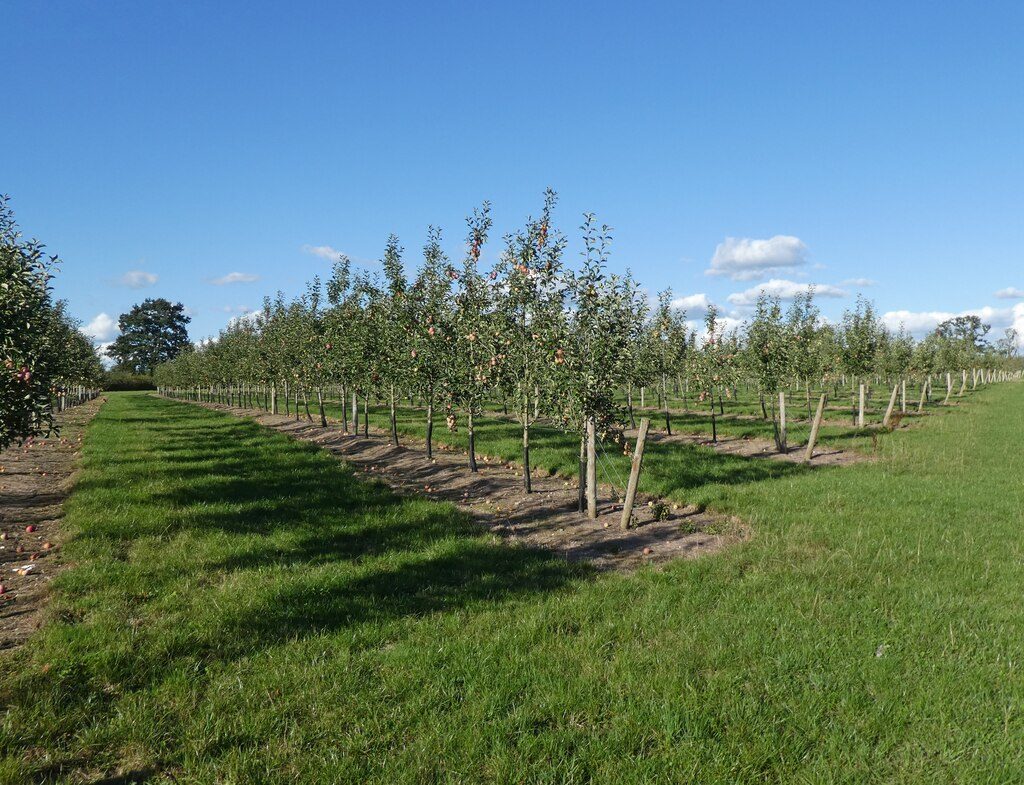
Nobody at the launch made the case better than David Coburn, the sixth-generation farmer hosting it. His orchard shrank from 100 acres to 10 after the apple-market collapse of the 1990s, and today 98% of its crop goes into cider. He has seen the weather swing from one extreme to the other in back-to-back years.
Last summer’s drought produced his smallest apple crop in 20 years. This year, balanced rain gave him one of the biggest in 25 years. That is the new reality in a single orchard: feast one year, famine the next, with very little in between.
Why the Province Is Betting on Agriculture
The stakes go beyond the farm gate. The agri-food sector contributes about $1.7 billion in GDP and more than 17,000 jobs in New Brunswick, and the Agricultural Alliance of New Brunswick has backed calls to double the agri-food economy. A sector that size cannot be left to ride out the weather on its own, and the province knows it.
“Together, these initiatives will help strengthen our agriculture sector, grow our economy, and build a more resilient, sustainable future for producers across the province,” Finnigan said. The test will be whether the funding that starts at $200,000 and grows to $2.2 million actually reaches the farmers staring at a dry field or a flooded one, and whether the New Brunswick Farm Growth plan’s emissions targets survive contact with the next bad season.
Maplestime will provide updates from the New Brunswick farm growth and climate plan as announcements are made.
Have a tip about New Brunswick agriculture? Email [email protected]
Have a correction? Email [email protected]
Do you think $2.2 million is enough to help New Brunswick farmers survive the next drought, or is this another plan that sounds good on a warm November afternoon and fades by spring? Tell us in the comments. And share this with every Canadian following farming and the climate fight this weekend.
Enjoying Maplestime? Support independent Canadian journalism — no paywall, no corporate owners.