




Canada immigration news: Canada’s New Asylum Rules are now in their first weeks, and the message to claimants is blunt: one online application, one 60 day clock to file the full case, and a system still carrying a backlog near 300,000 claims.
Quick Answer: Canada’s New Asylum Rules took effect November 3. Every claim now starts with one online application in the IRCC Portal, then an in person appointment. Once a claim is found eligible, the claimant has 60 days to file the case, with a single 30 day extension available. The minister must finish security and admissibility review within 365 days.
By Maplestime News Desk | Ottawa, Ontario | November 14, 2026
Sources: Law360 Canada, R-Way Immigration, GoFarGlobal | Last updated: November 14, 2026
Key Takeaways
- The new rules took effect November 3, 2026. Every claim, inland or at a port of entry, now starts with a single online application in the IRCC Portal, followed by an in person appointment.
- Once an officer finds a claim eligible for referral, the claimant has 60 days to file the complete application and documents, with a single 30 day extension available on request.
- The minister must finish security and admissibility review within 365 days of receiving the complete file, or as soon as feasible if operational limits prevent it.
- The rules come from SOR/2026-218 and SOR/2026-219, registered October 23 and published in the Canada Gazette, Part II on November 4, carrying forward Bill C-12, which received royal assent March 26, 2026.
- The backlog behind the change: IRB inventory rose from around 70,000 claims at the end of 2022 to nearly 300,000 at the end of 2025. New claims from January to August 2026 were down 52 percent vs the same period in 2025.
- Claims already referred to the IRB before November 3 continue under the old process.
What do the New Asylum Rules change at the front end?
The old Basis of Claim Form is gone. A claimant now gives the basis of claim information to the minister as part of the application itself, before the claim is ever referred to the Refugee Protection Division. Paper forms remain available for those who need them. Much of the work that used to happen after a claim reached the IRB now happens before it gets there, under deadlines the claimant can miss.
The clocks are the heart of the change. The 60 day clock starts the day an officer finds the claim eligible for referral. If the claimant asks in the way the minister specifies, before the period ends, the minister must grant one 30 day extension, and may also extend or pause the period for fairness. The minister then has 365 days from receiving the complete file to finish considering the claim, or as soon as feasible if operational limits prevent it. After that, the claim goes to the IRB, and the Refugee Protection Division, not an officer, sets the hearing date.
Work permits now depend on meeting those steps on time. A claimant who cannot support themselves without working may get a work permit once the claim is found eligible and the required documents and information are in, or while a referred claim waits for a decision. The immigration medical exam must be completed first, and a permit is usually issued within less than a month once the requirements are met.
Related: Ontario Works Newcomers Risk 2026 — Thousands Could Lose Support While Waiting For Risk Assessment
What happens if a claimant misses the 60 day clock?
Under the old system, abandonment was mostly a risk at the IRB stage. Now it can arise before referral. If the claimant does not provide what the minister requires, the claim is sent to the IRB for an abandonment proceeding. The IRB may give the claimant another extension to comply, and the amended rules require the division to give the claimant a chance to make representations before deciding a claim is abandoned, in writing or at a special hearing, within time limits the division sets. A claimant relying on medical reasons needs a medical certificate.
The first narrative now carries real weight. Any change or addition to the basis of claim information after referral must be in writing, with a description of how it differs from what was first provided and a declaration that it is complete, true and correct. It must arrive no later than five days after the claimant receives the notice to appear, and a hearing date will be changed only in exceptional circumstances, where the party has acted diligently.
There is also a new path back. A claimant who withdrew a claim may apply to the minister to reinstate it, explaining why. The minister considers whether the application was made on time and, if it was not, the reasons for the delay.
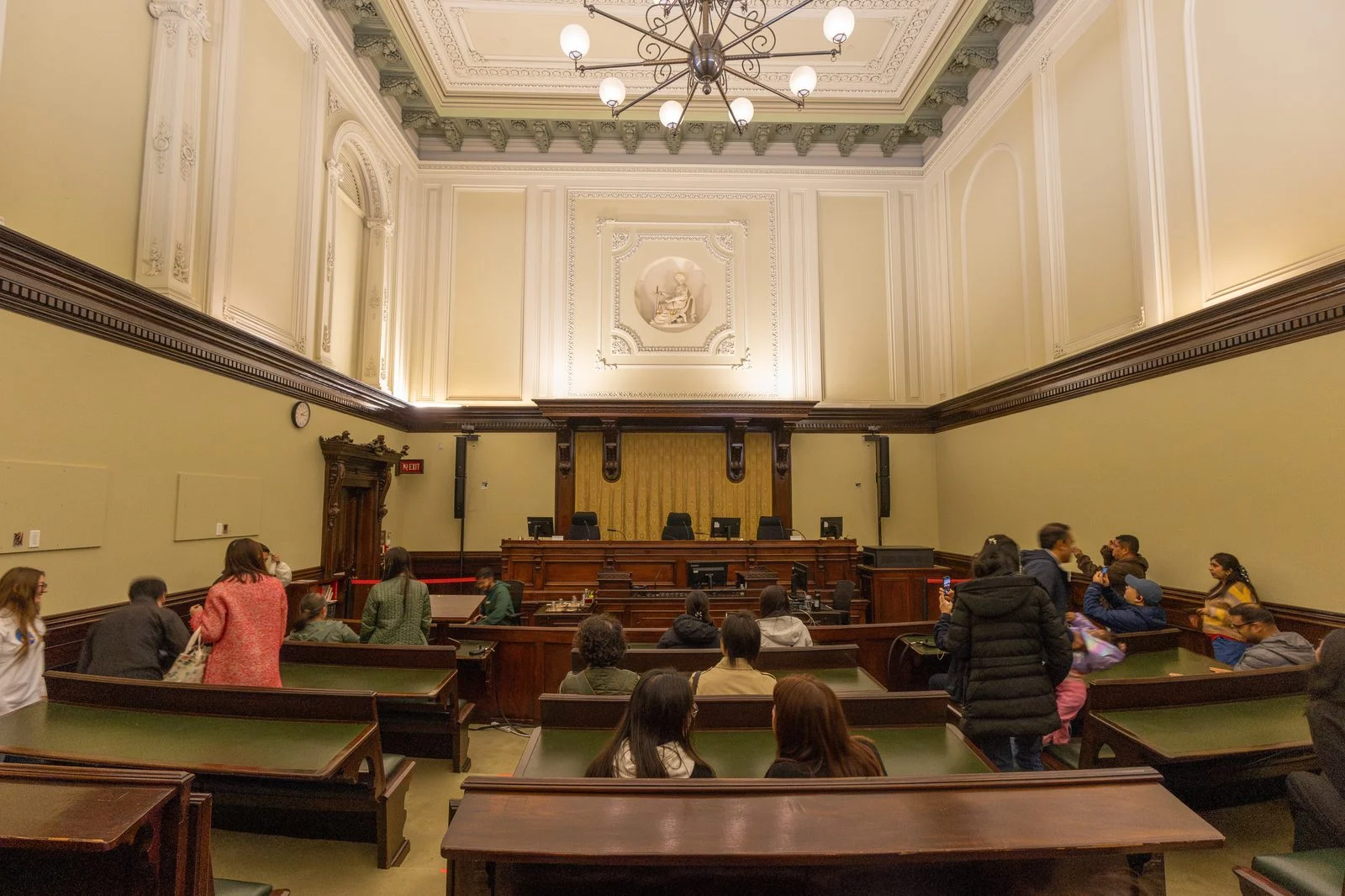
A courtroom at Osgoode Hall in Toronto. Photo: Dillan Payne, CC BY-SA 4.0, via Wikimedia Commons
Who can no longer make a claim under the new eligibility bars?
Bill C-12 made two kinds of claims ineligible for referral to the IRB: claims made more than one year after first entering Canada, counting entries after June 24, 2020, and claims made more than 14 days after entering between ports of entry from the United States. The regulations add exceptions. The one year rule does not apply to a claimant who, within one year of entering Canada, submits documents or information with a view to making an inland claim. Unaccompanied minors under 18 with no parent or legally responsible adult in Canada are exempt from both rules.
People caught by the bars are not left with nothing. They keep access to a paper based Pre Removal Risk Assessment, their remaining route to ask for protection before removal. IRCC sent procedural fairness letters to roughly 30,000 claimants already in the refugee board system, telling them they are now ineligible for the refugee claim process. In practice, for a client close to one year in Canada, the date of the first online submission can decide whether there is a claim at all.
Why is Ottawa moving this fast?
The backlog is the reason, and it is stark. The Immigration and Refugee Board’s inventory rose from around 70,000 claims at the end of 2022 to nearly 300,000 at the end of 2025. New claims are already falling: from January to August 2026 they were 52 percent lower than in the same period of 2025 and 68 percent lower than in 2024.
Enforcement is tightening at the same time. The Canada Border Services Agency recorded 23,160 enforced removals in 2025, up from 17,397 in 2024, and 16,426 in the first nine months of 2026. Canada’s Border Plan provides 55.5 million dollars to lift removal capacity to 20,000 a year in 2025-26 and 2026-27. The new process should give claimants faster answers, which is good for everyone. But it also moves the risk forward. The cases that go wrong now will mostly go wrong in the first 60 days, long before anyone sits in a hearing room.
Newton Immigration Services posted a four slide carousel on November 3 explaining the one online process, the 60 day deadline, the 30 day extension and the 52 percent drop in claims.
Frequently Asked Questions
Do the new rules apply to claims already at the IRB?
No. Claims already referred and waiting at the IRB are not subject to the new requirements and continue to be processed as before. The New Asylum Rules apply to claims made from November 3 onward.
Can a withdrawn claim be brought back?
Yes. A claimant who withdrew a claim may apply to the minister to reinstate it, explaining why. The minister considers whether the application was made on time and, if it was not, the reasons for the delay.
What if I entered Canada more than a year ago?
A claim made more than one year after first entry to Canada is ineligible for referral to the IRB, with exceptions for people who submitted documents toward an inland claim within that year and for unaccompanied minors. Affected claimants keep access to a paper based risk assessment before removal.
The Toronto skyline viewed from Trillium Park. Photo: Maksim Sokolov (maxergon.com), CC BY-SA 4.0, via Wikimedia Commons

Maplestime will provide updates from the new asylum rules as announcements are made.
Have a tip about this story? Email [email protected]
Have a correction? Email [email protected]
Is a 60 day clock fair to people fleeing for their lives, or is it the discipline a 300,000 case backlog demands? Tell us in the comments. And share this with every newcomer who needs to know the new deadlines.
Enjoying Maplestime? Support independent Canadian journalism — no paywall, no corporate owners.