



CANADIAN BUSINESS
By Ayomikun. O | 2026 | Updated: September 19, 2026 | No Comments | 16 Mins Read
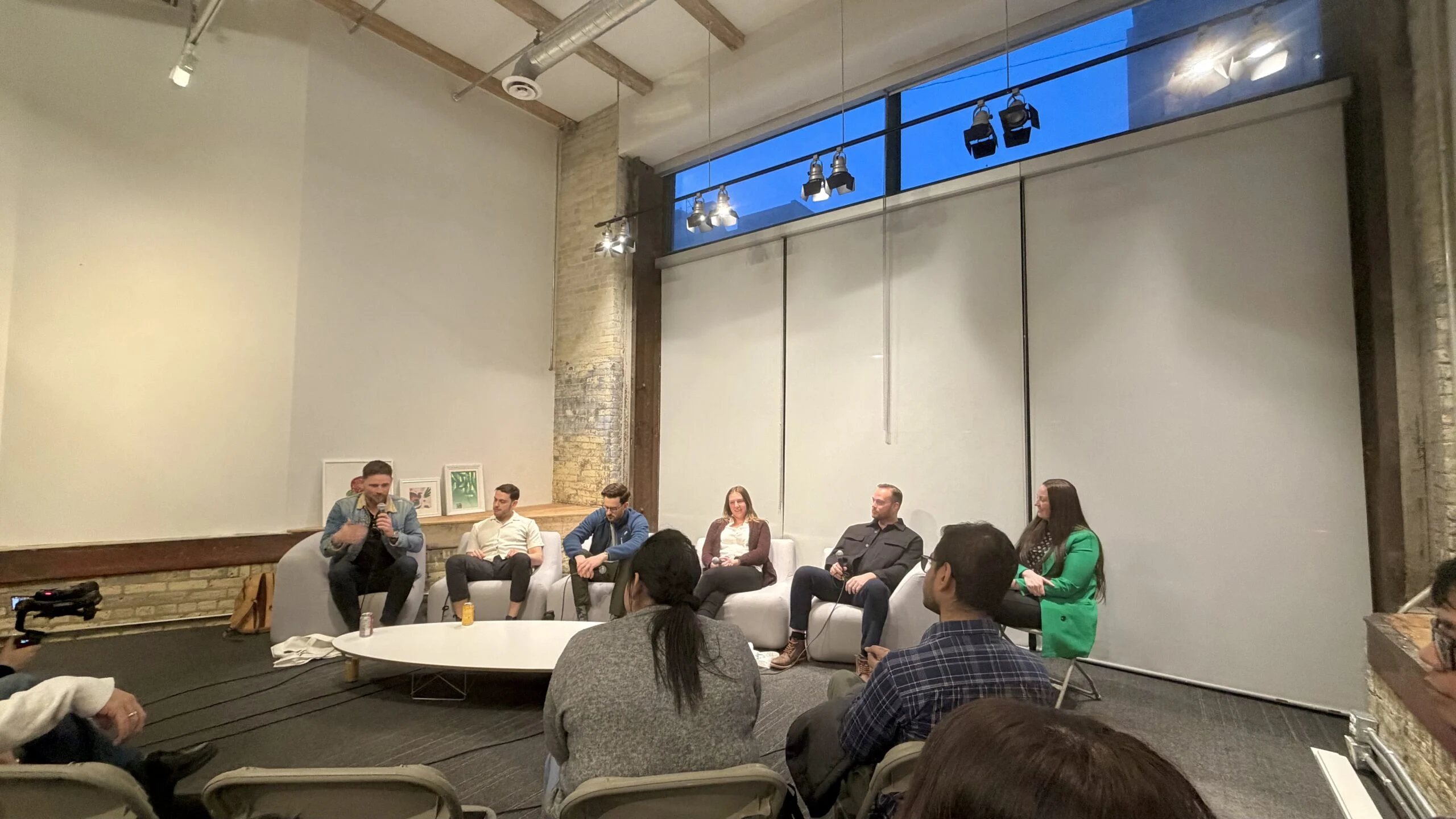
Canadian startup founders advice — the most honest version I have ever heard did not come from a podcast or a book. It came from a couch in a Winnipeg office on a Tuesday night, where five founders said the things most startup panels are too polished to admit.
By Maplestime Business Desk | Winnipeg, Manitoba | September 19, 2026
Sources: Brandish Agency (Winnipeg Tech Week 2025 panel) | Founder interviews | Last updated: September 19, 2026
Key Takeaways: Canadian Startup Founders Advice in One Page
- Your first idea is probably wrong — Chekkit tried geo-fencing and Wi-Fi marketing before business texting clicked, nine years into a fully bootstrapped run with 30 million messages sent
- A bad product customers tolerate beats a good product nobody has tried — Taiv’s earliest hardware barely worked, but bar owners stayed because they believed in the idea
- Every time the founders chased funding, it wasn’t there; every time they focused on the business, money showed up — Chekkit bootstrapped nine years without a single VC cheque
- A Winnipeg company beat Blackbaud and Salesforce on a Seattle RFP — but 90% of Aryval’s customers are American, because Canadian buyers are slower to adopt
- Founder David Peters’ rule for the emotional swings: you get 24 hours to sit in it — the elation or the despair — then you move on
- The thing that almost stopped you is usually the thing that defines you — Peters pitched to an empty room years before building Construction Clock
First, Who Was in the Room
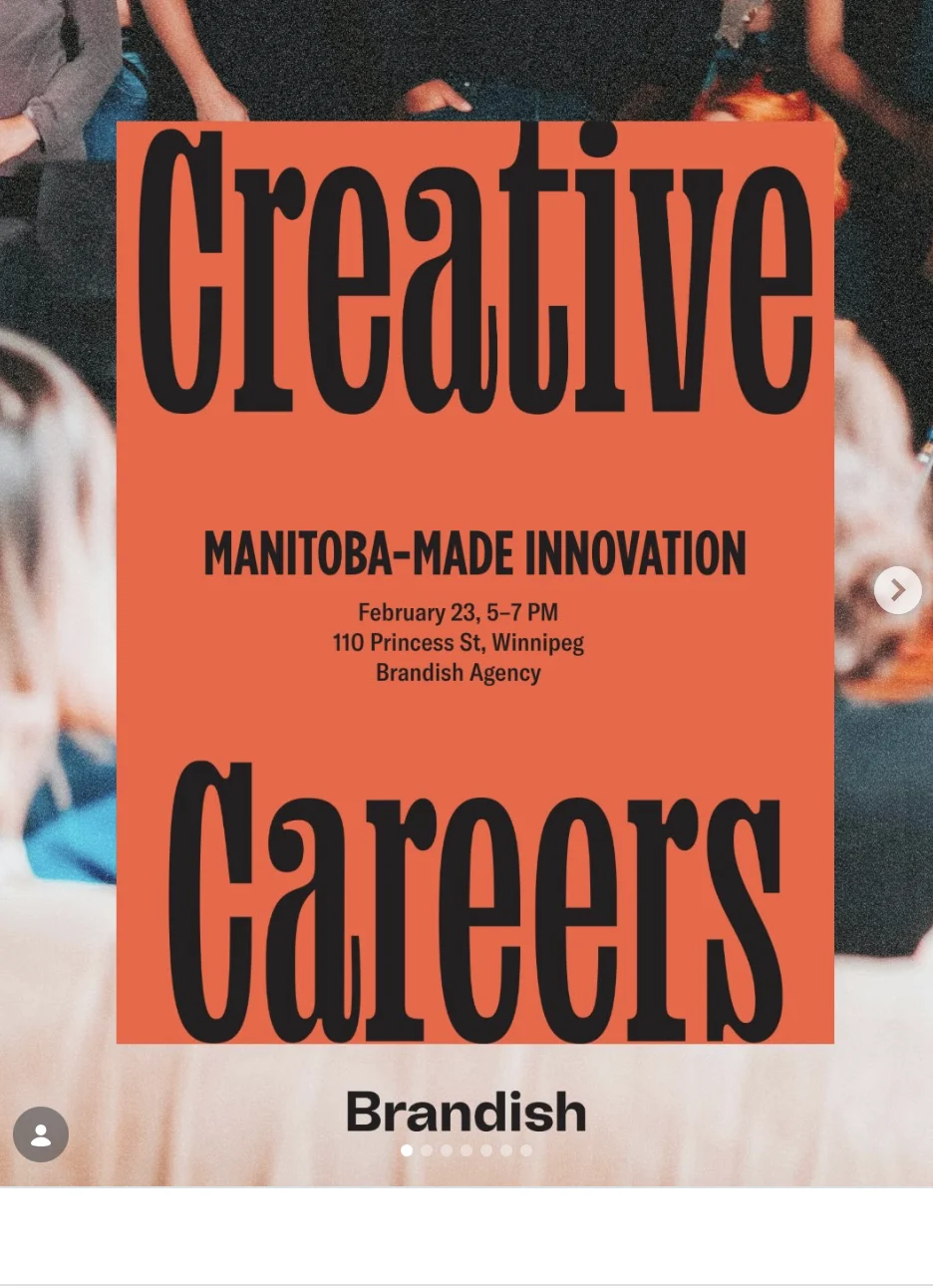
Winnipeg Tech Week 2025 was hosted by Brandish Agency — a creative agency that had just moved into a new Winnipeg office, making the evening their first event in the space. The room felt like the kind of place where people tell the truth. Maybe it was the intimacy. Maybe it was the city. Winnipeg has always had a way of cutting through pretence. Five founders got on a couch and said the things most startup panels are too polished to admit.
They talked about products that barely worked. About terrible summers that made them question everything. About the funding they couldn’t get until they stopped asking for it. About beating Salesforce in Seattle. About being recognized on a flight to Las Vegas. About sitting in a car at the end of a bad day thinking, I could probably work at that place over there.
I took notes on all of it. Here’s what I heard — and what it means for anyone building a company in Canada.
Founder · Grant McDonald — Bobo App
AI-powered platform helping parents navigate diagnoses and manage chronic illness in children. Active in 46 markets. Canada is their third-largest. Growing 38% month over month for eight consecutive months.
Founder · Emily Franz Lien — Chekkit
A business texting platform that consolidates Instagram DMs, Facebook Messenger, SMS, and more into one inbox. Nine years in. Fully bootstrapped. Over 30 million messages sent through the platform.
Founder · Dan — Aryval
Event management and application software for K–12 private and independent schools. Won an RFP in Seattle — beating Blackbaud and Salesforce — to build an application system for a district of private schools.
Founder · Noah — Taiv
Replaces generic TV commercials in bars and restaurants with targeted, venue-specific content. Born from watching a Jets game at a Corydon bar and seeing a Boston Pizza ad for cheaper beer than what the bar was selling.
Founder · David Peters — Construction Clock
Automated AI-powered time tracking for the construction industry. Built by a former carpenter with no high school diploma who ran his own construction company for 17 years before breaking his back and deciding to build an app instead.
Your First Idea Is Probably Wrong — and That’s Fine
Emily from Chekkit said something early in the evening that quietly reframed everything that followed. She said there was no single “spark” for their company. No eureka moment. No revelation in the shower. They tried geo-fencing first — couldn’t figure out how to move it forward. Then Wi-Fi marketing — got plenty of locations, but customers kept dropping off. They couldn’t get anyone to stay and pay consistently. Then they tried business texting, and something clicked.
People actually used it. People actually paid. People called when it went down.
Nine years later, Chekkit has 30 million messages through its platform. But the version of Chekkit that exists today barely resembles what they set out to build at the start. The willingness to throw away the original idea — not once, but multiple times — is what got them there.
We found we could get people to stay on and actually pay without cancelling. You didn’t have to work so hard to get all the accounts, and then they all cancel, and you do it all over again.
— Emily, Chekkit
This matters more for Canadian founders than it might seem. We tend to treat pivoting as a sign of failure — a product that didn’t work, a vision that was off. But Emily was describing something else: a disciplined search for a model that actually fits. That search took years. It required a patience that most founders — and most investors — don’t allow themselves.
If you’re early and struggling to find traction, the question isn’t whether your company is failing. The question is whether you’re paying close enough attention to where people actually stay.
A Bad Product That People Tolerate Is Better Proof Than a Good Product Nobody’s Tried
Noah from Taiv said it plainly: their early days were terrible. The product barely worked. The hardware was finicky, the AI models were rough, the firmware was a mess. Getting everything to work together took longer than anyone wanted to admit.
But here’s what struck me. He said venue owners stuck with them anyway. They put up with the broken product because they believed so deeply in the idea — a bar controlling what plays on its own TV screens instead of advertising for its competitors — that they were willing to endure a version of it that didn’t really work yet.
When we had a terrible product and people would still put up with it because they liked the idea so much — that’s when I knew we were building something real.
— Noah, Co-founder, Taiv
I’ve thought about this a lot since leaving that room. There’s a version of “launch early” advice that gets misunderstood as “ship something broken and hope for the best.” What Noah was actually describing is something more specific: if your idea is strong enough, the right customers will carry you through the ugly early version while you build toward the good one. That patience from customers — the willingness to stay through the rough part — is the signal you’re looking for.
Polished products with no users are a dime a dozen. Rough products with users who refuse to leave are rare. Learn to tell the difference.
Every Time I Chased Funding, It Wasn’t There. Every Time I Focused on the Business, It Showed Up
David said this. Then Emily from Chekkit said basically the same thing. Then Dan from Aryval nodded. By the time they’d each said their version of it, it stopped sounding like a coincidence and started sounding like a law.
The Chekkit team bootstrapped their entire nine-year run. No outside investment. No angel round. No VC. Just customers who paid, a product that worked, and a team that kept showing up. Emily made this sound almost boring when she said it — like it was obvious. But in a startup culture that treats a VC term sheet as the ultimate validation, it’s a radical position.
Grant put it more directly: build a business that’s growing, with customers who love it, good retention, and a big market. That’s what investors want. If you’re not there yet, focus on getting there — don’t make funding the priority.
Dan’s path was different but rhymed: Aryval went the angel route specifically because their seasonal revenue model wouldn’t fit a typical VC thesis. They found angels with exits in their space who added real strategic value beyond the cheque. The point wasn’t that outside money is bad — it was that the money followed the business, not the pitch deck.
Related: Microsoft’s Mico Is A ‘Clippy’ For The AI Era — What Canadians Should Know
This is the piece of Canadian startup founders advice that cuts against the grain of startup Twitter. The fundraising announcement is not the milestone. The customer who renews for year three is the milestone.
Beating Salesforce in Seattle from a Winnipeg Office Is Possible — But Only If You Go Where the Customers Are
Dan from Aryval dropped this almost casually, and I had to stop and process it for a moment. Aryval competed on an RFP against Blackbaud and Salesforce — two of the most entrenched software companies in the education space — to build an application management system for private independent schools in Seattle. And they won.
A company from Winnipeg. With a team that started as education consultants. Beating Salesforce.
But here’s what Dan also said, and it’s the part that often gets left out of the success story: 90% of Aryval’s customers are in the United States. Canadian schools, he noted, are a little behind. A little more risk averse. Slower to adopt. That’s not a criticism — it’s just a reality that shaped how they scaled. They went where the customers were ready first, built proof, and now that proof makes the Canadian conversation much easier.
Canadian schools are a little behind at times, and a little more risk averse. But we have our eyes on Australia and the UK too — once the foundational pieces are there.
— Dan, Co-founder & CEO, Aryval
Noah from Taiv said almost the exact same thing about the US market — that they launched there first because Americans make decisions faster, fire you faster if you’re not good enough, and therefore teach you faster. There’s a pattern here that Canadian founders should sit with: Canada is a great place to build. It is not always the right first market. Knowing the difference matters.
The practical takeaway: build in Winnipeg if you want — the cost structure, the talent loyalty, and the grant ecosystem are real advantages — but sell where the buyers are ready. Then come home with proof.
It’s Never as Good as You Think, and Never as Bad as You Feel — But You Have 24 Hours to Sit in It
David Peters from Construction Clock said something toward the end of the evening that I keep coming back to. He described 2025 as a year that started with records being broken — best numbers ever, team on fire, everything working — and then collapsed into the worst summer he’d had in years. And then came back. And then they had a great fall and winter again.
The honest version of building a company, he said, looks like that. Not a line that goes up and to the right. A line that goes up, then down, then sideways, then up again. The trap is treating the highs as confirmation you’ve made it and treating the lows as proof you haven’t.
It’s never as bad as you think it’s going to be, and it’s never as good as you think it’s going to be. What we had — the greatest day we’d ever had — I’d tell our team: enjoy it for a moment, then go back to work. Because the worst day is coming too, and we need that same attitude for that one.
— David Peters, Founder, Construction Clock
His rule: you get 24 hours to sit in whatever it is. The elation or the despair. Take the 24 hours. Then move on. He called it not sitting in it for more than a day. I thought that was one of the most useful pieces of founder advice I’d ever heard said out loud, and it cost him nothing to say it.
Most founders don’t fail because they lack strategy. They fail because they can’t regulate the emotional weather of the thing. Twenty-four hours is a discipline you can actually practice.
The Thing That Almost Stopped You Is Usually the Thing That Defines You
David Peters closed the evening with a story. Years ago, he walked into a startup event not far from where we were sitting. He’d seen an Instagram ad for it. It was one of those weekend things where you pitch an idea and build a team. He got up at the mic and pitched his idea — that you could put a measuring tape on an iPhone — in thirty seconds, shaking. The room was roughly the size of the one we were in. When the “build your team” part came, not a single person walked over to him.
He left that night and told himself the startup thing wasn’t for him.
Years went by. Then, one day, he just started. Didn’t talk about it. Just started building. The guy who couldn’t get one person to join his team is now being recognized on flights. The company he built while recovering from a broken back — with no high school diploma and seventeen years of carpentry behind him — is automating time tracking for construction crews across Canada.
I would have been trembling holding this mic a couple of years ago. But I just love what I do, and I haven’t felt like I’ve worked a day in the last four years. If you feel like you should be doing this — you should. Put in the work, because it’s definitely worth it.
— David Peters, Founder, Construction Clock
He wasn’t trying to be inspiring when he said that. He was just telling what happened. That’s what made it land.
There are probably people reading this right now who have a version of that story — the idea they pitched to silence, the application they sent that went nowhere, the thing they started and stopped. The founders in that room all had their version of it. The difference, as far as I could tell, is only that they eventually started again.
Why Winnipeg Keeps Producing These Founders
I left Winnipeg Tech Week thinking about something Grant from Bobo App said when someone in the audience asked about healthcare in Canada. He asked the room how many people thought Canada’s healthcare system was being managed effectively. Almost no one raised their hand. And then he described what Bobo is trying to do: give every Canadian parent something that functions like a pediatric doctor in their pocket. Available between the appointments. Available in the provinces where specialists are months away. Available in the gaps that the system wasn’t designed to fill.
Bobo is now active in 46 markets globally, with Canada as the third-largest, growing 38% month over month. The founders came back to Canada from Germany intentionally — in part because navigating Canada’s 13 separate provincial healthcare systems, each with its own medical licensing rules and privacy regulations, is itself proof of multinational scalability. If you can make a health platform work compliantly across every Canadian province, you’ve essentially built the infrastructure to operate internationally.
Five companies. Five founders. Five completely different problems — a bar TV, a school application, a construction time card, a business inbox, a sick child at 2 a.m. All of them trying to build something useful, from Canada, with whatever they had.
That felt like the real story of the evening. Not the metrics or the market sizes or the fundraising strategies. Just five people who saw a problem, couldn’t stop thinking about it, and eventually decided to do something about it.
Winnipeg, apparently, is full of those people. The rest of Canada should start paying attention.
Frequently Asked Questions
What is Winnipeg Tech Week and who hosts it?
Winnipeg Tech Week is a community-driven series of startup and tech events held in Winnipeg, Manitoba. The panel featured in this article was hosted by Brandish Agency, a Winnipeg-based creative agency — the evening was also their first event in their new office space. Brandish runs founder and industry panels roughly every six weeks, rotating through different industries. Follow them on LinkedIn and Instagram to catch future events.
Who were the five founders on the panel?
Grant McDonald, CEO and co-founder of Bobo App (AI-powered pediatric health platform); Emily Franz Lien of Chekkit (unified business text messaging); Dan, CEO and co-founder of Aryval (K–12 school event and application management); Noah, co-founder of Taiv (bar and restaurant TV ad replacement); and David Peters, founder of Construction Clock (automated time tracking for the trades). All five companies are Canadian-founded, with roots in Manitoba.
Is Winnipeg actually a good place to start a company in Canada?
Every founder on the panel addressed this, and the consensus was nuanced: Winnipeg is a great place to build, but it may not be where your first customers are. The cost of living is low enough to survive the lean early years, the government grant and tax credit ecosystem is genuinely strong — American investors are often shocked at what’s available — and the talent pool, while smaller than Toronto or Vancouver, tends to be loyal and hardworking.
The caveat: several founders noted that Canadian buyers — especially in industries like education and hospitality — can be more risk-averse and slower to adopt new technology than their American counterparts. Multiple founders launched in the US first and plan to return to Canada with a proven product. That’s a strategy worth considering, not a knock on the city.
What is the “24-hour rule” that David Peters talked about?
Construction Clock founder David Peters described a personal rule for managing the emotional swings of running a startup: you get 24 hours to sit in whatever you’re feeling — good or bad — and then you move on. Had the best day in company history? Celebrate it, feel it fully, then get back to work — because a bad day is coming and you’ll need the same composure for that one. Had the worst week of the year? Let yourself feel it, but only for 24 hours. Then get up.
He framed this as the most important mental habit he’d developed — not optimism exactly, but a kind of disciplined emotional processing that keeps you from spiralling in either direction.
Did Aryval really beat Salesforce in an RFP?
Yes — Dan from Aryval shared at the panel that the company competed on a request for proposal to build an application management system for private independent schools in downtown Seattle. They were up against Blackbaud and Salesforce — two of the most established names in education and CRM software — and won the contract, with the application system rolling out in spring 2025. Dan noted this was not in Aryval’s plan — someone approached them about it — but they competed anyway and won. It’s now become a major part of the company’s expansion strategy, moving from event management into application management and eventually student information systems.
What is Taiv and how does it work?
Taiv is a Winnipeg-born startup that installs hardware and AI software in bars and restaurants to intercept commercial breaks on live TV broadcasts and replace them with content the venue controls — their own drink specials, upcoming events, local sponsor ads, or anything relevant to the space. Instead of a national beer brand getting 30 seconds of screen time in front of a bar’s customers, the bar itself gets that 30 seconds back.
The idea came to co-founder Dave while watching a Jets game at a Corydon bar in Winnipeg. A Boston Pizza ad appeared on the bar’s TV promoting cheaper beer than what the bar was selling. That moment of absurdity — a bar paying to advertise for its own competitor — became the founding insight. Taiv launched in the US market first and is planning Canadian expansion.
What advice did the founders give about raising money in Canada?
The most consistent piece of advice across all five founders: stop making funding the priority and start making the business the priority. Every time they chased investment, it wasn’t available. Every time they focused on building something customers actually used and paid for, money started finding them.
Specific guidance: Chekkit bootstrapped for nine years and is still growing — proof that VC isn’t the only path. Aryval went the angel route specifically because their seasonal revenue model wouldn’t fit a typical VC thesis — and found angels with exits in their space who added real strategic value beyond the cheque. Grant from Bobo put it simply: build a business with real customers, good retention, and a big market. If you have that, you should be talking to investors. If you don’t have it yet, focus on getting there first.
What is Bobo App and is it available across Canada?
Bobo App is a Canadian health-tech platform that helps parents get diagnoses for their children’s chronic illnesses and manage symptoms between clinical appointments. The app uses AI to analyse health data and biomarkers, giving parents meaningful support in the gaps between specialist visits — which in Canada can be months apart, especially outside of major urban centres.
The platform is currently active in 46 markets globally, with Canada as the third-largest. The founders returned to Canada from Germany intentionally, in part because navigating Canada’s 13 separate provincial healthcare systems — each with its own medical licensing rules and privacy regulations — is itself a proof of multinational scalability.
Maplestime will provide updates from Winnipeg’s startup scene as announcements are made throughout 2026.
Have a tip about a Canadian startup? Email [email protected]
Have a correction? Email [email protected]
Which of these founders’ stories hit closest to home for you — and if you’re sitting on an idea you haven’t acted on yet, what is actually stopping you? Tell us in the comments. And share this with every Canadian founder who still thinks you have to move to Toronto to build something real.
Enjoying Maplestime? Support independent Canadian journalism — no paywall, no corporate owners.