



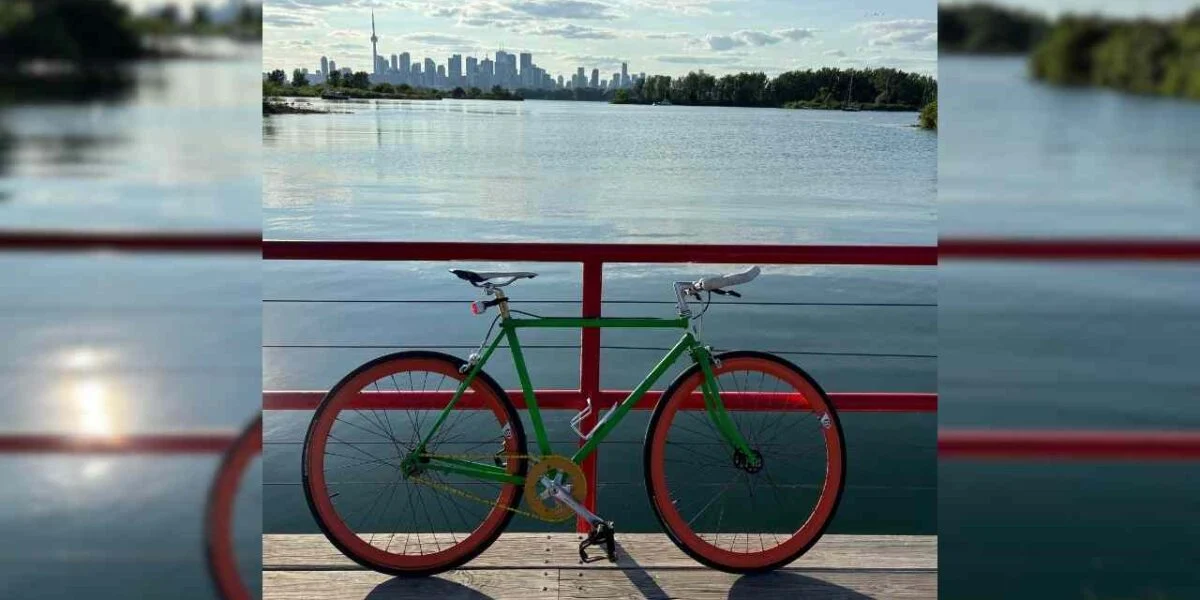
Canadian opinion — “Roads are built for buses, cars, and trucks, not for people on bikes,” Rob Ford said a decade ago, before spending $300,000 of taxpayer money ripping out bike infrastructure in a city he claimed he would save from the gravy train. Now, another Ford brother has dug him up to finish the job: Doug Ford’s government planned legislation to throttle new bike lanes across Ontario, all in the name of easing congestion. The data says limiting bike lanes won’t ease congestion. It will just get more cyclists killed.
By Maplestime Opinion Desk | Toronto, Ontario | September 19, 2026
Sources: CBC News, Cycle Toronto, Toronto Community Bikeways Coalition | Last updated: September 19, 2026
Key Takeaways
- Doug Ford’s Ontario government planned legislation — timed for when the house returned on October 21 — to severely limit new bike infrastructure to fight congestion
- Bloor Street was flagged for a future bike lane in a 1977 City of Toronto report; today 4,000–5,000 cyclists use the corridor daily
- Cycle Toronto data: average monthly spending on Bloor rose from $186 (2015, pre-lanes) to $245 (2017, post-lanes)
- Bike Share Toronto exploded from 665,000 trips in 2015 to 4.6 million in 2022
- 2024 already set a record for cyclist deaths in Toronto — including a 24-year-old killed by a dumpster truck on Bloor
The Resurrection of a Bad Idea
Doug Ford seems to believe cycling is a recreational hobby — something people do on weekends at the park, not a mode of transportation. It is the same blind spot his brother had, and it ignores the obvious: bikes are transportation vehicles that take people from one point to another, just like cars, motorcycles, and public transit.
Consider the numbers on Bloor Street, the corridor at the heart of this fight. In 1977, a City of Toronto report identified Bloor for a future bike lane because of its high cyclist volume and its potential to connect people to the subway. That was nearly 50 years ago. Today, about 4,000 to 5,000 cyclists ride that corridor every day. A volunteer count by the Toronto Community Bikeways Coalition found 519 cyclists on a single day — July 26, 2023 — including 121 at midnight, 418 at 8 a.m., and 500 at 6 p.m.
As for Ford’s 2023 line to Mayor Olivia Chow about Bloor and Etobicoke bike lanes — “we see one cyclist a year and the businesses are losing their hair” — the facts disagree twice over. On cyclist volume, see above. On business: multiple economic studies of bikes and businesses on Bloor reached one conclusion — bike lanes had a positive impact. Cycle Toronto’s research found the average person was spending $186 per month on Bloor in 2015, before the lanes. In 2017, post-lanes, that was $245 per month. Studies from Paris and Portland show the same pattern: cyclists spend more per month than car drivers.
The Numbers Nobody at Queen’s Park Quotes
The cycling boom is not a Toronto-only story. Bike Share Toronto, the public bike-sharing system, grew from 665,000 trips in 2015 to 4.6 million trips in 2022. In Hamilton, between July and December 2023, more than 80,000 cyclists used the Cannon Street cycle track, a major east-west downtown corridor.
This is a province moving on two wheels in growing numbers. The Premier’s job is to help municipalities make roads safer for everyone — not to pour fuel on the same old cars-versus-bikes culture war.
Related: Ontario Water Under Threat: Critics Say Ford’s Policies Push Province Toward Privatization
Related: Newfoundland Wind Storm 2026 — Weekend Gusts Knock Out Power Across the Island
Record Deaths, Same Old Politics
Here is what makes this fight obscene: 2024 was already a record year for cyclist deaths in Toronto — including the death of a 24-year-old hit by a dumpster truck while riding west on Bloor. Every death like that is a policy choice. Limiting bike lanes will lead to more cyclists dying, not fewer.
The timing tells you everything about the motive. With talk of an early provincial election in 2025, this looks like cheap vote-buying: punish cyclists, reward the car-drivers-who-never-bike base, and hope nobody reads the data.
Other cities read the data — and then read it again. Paris expanded its biking arteries and doubled the number of cyclists in a single year (2022–23), on a plan to become 100 per cent cyclable by 2026. Closer to home, Montreal’s Express Bike Network — a 191-kilometre city-wide cycling network — is under construction, adding to already top-class infrastructure.
If Doug Ford were serious about easing congestion, he would stop pitting road users against one another and focus on the proven answers: better public transit and safer roads. Cutting bike lanes will shave zero minutes off a driver’s commute.
Stay in Your Lane, Premier
There is also a jurisdiction problem. Building bike lanes is municipal business. Ontario has an urgent housing crisis, and Ford himself has said municipalities know what is best for their towns and cities — that he will not dictate to them from Queen’s Park. That logic should apply to moving traffic too.
The benefits of cycling are not mysterious: it eases congestion, it is a carbon-negative commute, it is good for physical and mental health, and it is good for the economy. For the Premier, one more time.
Rob Ford once said: “My heart bleeds for them [cyclists] when I hear someone gets killed, but it’s their own fault at the end of the day.” It is not hard to hear Doug Ford saying the same thing. But here is the truth: his heart will not bleed, and his hands will be covered in blood for the next cyclist who dies because he traded protected lanes for cheap votes.
Maplestime will provide updates from Ontario’s bike lane debate as announcements are made.
Have a tip about cycling infrastructure? Email [email protected]
Have a correction? Email [email protected]
Should the province be allowed to override cities on bike lanes — or is Doug Ford just recycling his brother’s culture war for a few more votes? Tell us in the comments, and share this with every cyclist who rides Bloor Street.
Enjoying Maplestime? Support independent Canadian journalism — no paywall, no corporate owners.