


Canada news today — the Namaygoosisagagun First Nation wildfire in 2026 destroyed an entire Indigenous community in northwestern Ontario in less than one hour on Monday, forcing just over two dozen residents to flee by boat across a lake as flames consumed every home they had ever known. Everyone got out alive. Scott Frank and Lyndon Paavola went door to door. Fifteen-year-old Miiyah Paavola grabbed her two chihuahuas and told her friends to move faster. When Chief Helen Paavola’s phone went silent during the evacuation she did not know if anyone had survived. It is a miracle that my members are alive today, she said Wednesday in Thunder Bay.
By Maplestime News Desk | Thunder Bay, Ontario | July 16, 2026
Sources: CBC News | Nishnawbe Aski Nation | Anishinabek Nation | Last updated: July 16, 2026, 2:30 PM CDT
What We Know So Far
- Namaygoosisagagun First Nation, also known as Collins First Nation, was destroyed by a wildfire on Monday July 13, about 250 kilometres north of Thunder Bay in northwestern Ontario
- Just over two dozen people were in the community when the fire approached — all escaped safely using a handful of boats to cross the lake
- The entire community burned to the ground in less than one hour
- Evacuees are currently staying in hotels in Thunder Bay
- The wildfire affecting Namaygoosisagagun, Armstrong, and Whitesand First Nation grew to more than 350,000 hectares as of Thursday
- More than 175 wildfires are burning across Ontario
- More than a dozen communities are under mandatory evacuation orders as of Thursday and Thunder Bay has run out of room to accommodate more people
- Ontario formally requested federal assistance Thursday including possible Canadian Armed Forces deployment
- Namaygoosisagagun is still in the process of becoming a recognized First Nation — Chief Paavola says this should not affect government duty to help
- NAN Grand Chief Alvin Fiddler raised concerns about limited airport infrastructure in Ontario’s far north hampering large-scale evacuations
- The community is determined to rebuild
A Call From Mom Saying Not to Panic
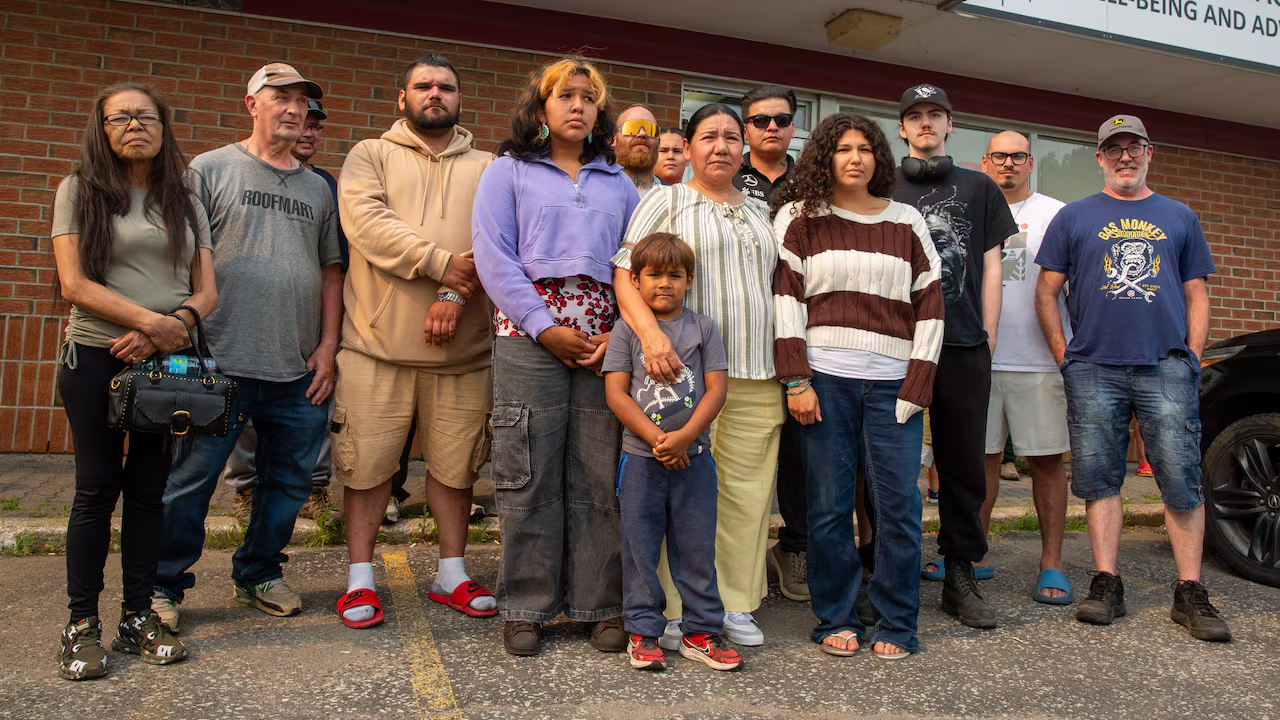
Miiyah Paavola was fifteen years old and far from home when her phone rang.
Her mother, Chief Helen Paavola of Namaygoosisagagun First Nation, was calling from Ottawa where she had been attending the Assembly of First Nations Annual General Assembly. The message she delivered was calm and measured and said exactly what a mother says when she does not want her child to be frightened.
Do not panic.
“So of course, I panicked,” Miiyah said.
What her mother was telling her was that the entire community had to evacuate. A wildfire was coming. Everyone needed to leave immediately.
Miiyah grabbed her two chihuahuas. She told her friends to hurry up. And then she went to the beach with everyone else and got on a boat.
Behind them the fire came.
What Happened on the Ground
Namaygoosisagagun First Nation sits west of Armstrong, about 250 kilometres north of Thunder Bay in northwestern Ontario. The community has 130 registered members though the number of people actually living in the community fluctuates with the seasons and circumstances. On Monday July 13 just over two dozen people were there when the wildfire moved in.
Scott Frank and Lyndon Paavola did not wait for anyone to tell them what to do. They went door to door. Pack a bag. Get to the beach. Now.
Frank watched the fire close in with a speed that left no room for hesitation.
“It was within a matter of minutes where it went from just smoke to open flames just around the corner from us,” Frank said. “Adrenalin definitely took over.”
Miiyah saw it from the water.
“I’ve never seen a fire that big. It was angry. It was moving fast. The wind really did not help,” she said.
Community members loaded into a handful of boats stuffed to capacity with people and pets and crossed the lake. They watched their First Nation burn from the water. Every house. Every building. Everything that had been built by hand by people who had chosen to live off the land and water in one of the most remote corners of Ontario.
Gone in under an hour.
When the boats reached the other side Frank said the fire followed them the whole way to Highway 527. There was no moment to stop and catch a breath. There was only moving and not stopping.
Everyone made it out. Every single person.
Related: Republicans Blast Canada Over Wildfire Smoke 2026 — U.S. Threatens Sanctions
Related: Prairie Weather Warning 2026 — Flooding and Tornado Threat Sweeps Alberta and Saskatchewan
A Chief Who Did Not Know If Her People Were Alive
Chief Helen Paavola was in Ottawa when the fire reached her community. She was on the phone trying to reach her members as they evacuated. The signal kept cutting in and out. At some point it stopped entirely.
The silence that followed is the kind that no community leader should ever have to experience.
“There was a time where it was just that silence, where I didn’t even know if anybody survived,” Paavola said. “It’s a miracle that my members are alive today.”
When she finally heard that everyone was safe she felt something that is hard to describe as simple relief. Her people had looked after each other. They had gone door to door in the minutes before the fire arrived. They had loaded onto boats and crossed a lake. They had driven fire roads with flames at their backs.
They did it themselves with no outside help and no time to wait for any.
“They’re my heroes,” Paavola said. “They risked their lives to make sure that everyone was accounted for.”
The community’s evacuees are now staying in hotels in Thunder Bay. They are safe and they have a roof over their heads. What they do not have is a home to return to.
“They survived it, but now we have nothing,” the chief said. “The whole community burned down within less than an hour.”
The Fire Still Growing
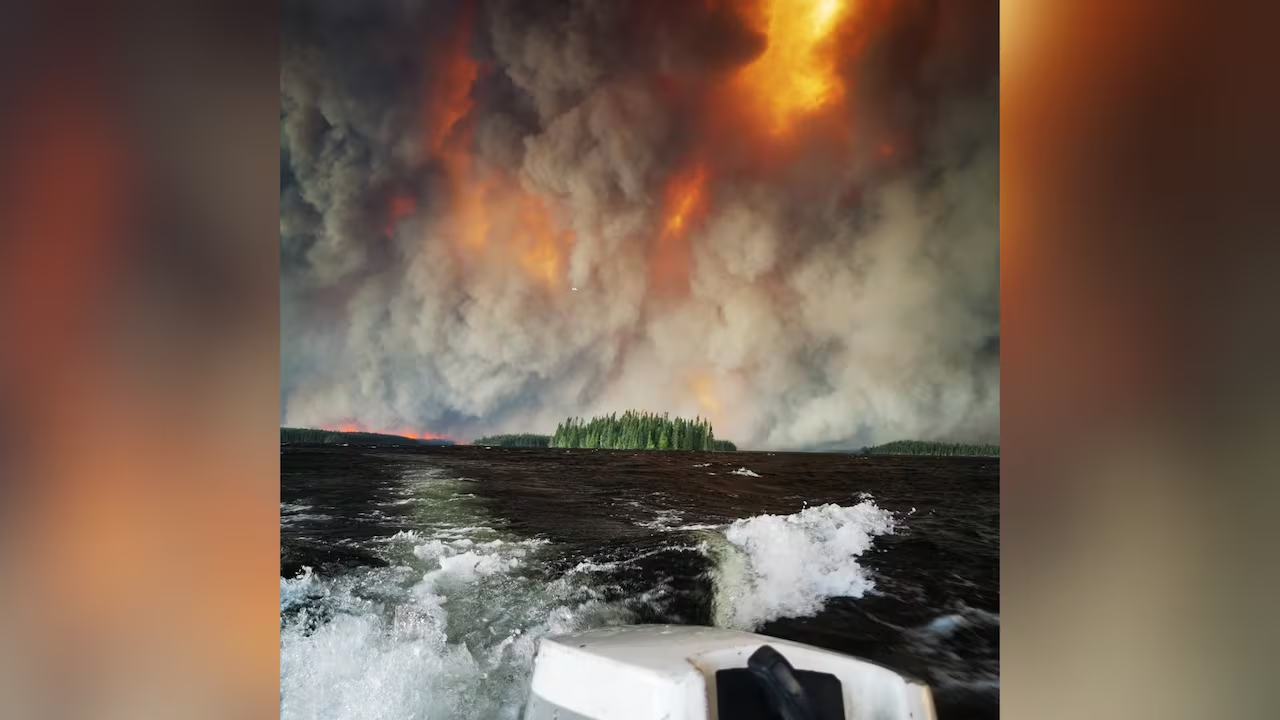
The wildfire that destroyed Namaygoosisagagun was not a contained or controlled event by Thursday. The fire affecting Namaygoosisagagun First Nation, Armstrong, and Whitesand First Nation had grown to more than 350,000 hectares as of Thursday according to Ontario’s Aviation, Forest Fire and Emergency Services.
350,000 hectares is an area larger than Prince Edward Island.
More than 175 wildfires are burning across Ontario simultaneously. More than a dozen communities remain under mandatory evacuation orders as of Thursday. Thunder Bay, which has been receiving evacuees from multiple communities, has run out of room to accommodate more people.
The scale of what is happening in northwestern Ontario in July 2026 is difficult to communicate in individual numbers. Each fire has a hectare count. Each community has a resident count. Each evacuation has a logistics problem. Together they represent a humanitarian situation that is straining every resource the province and the federal government can direct toward it.
The Government Response — And What Is Still Missing
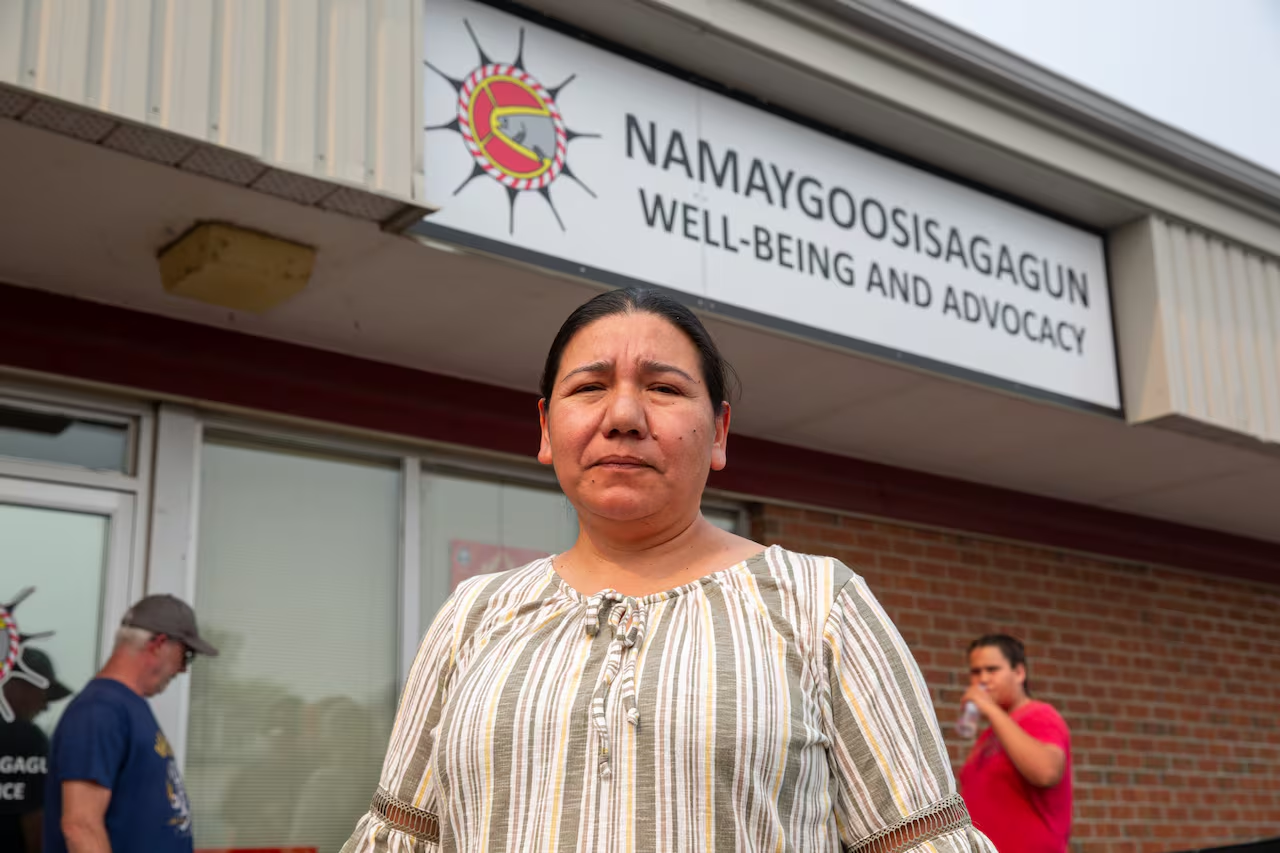
Chief Paavola has been pushing hard for both the provincial and federal governments to step up. The fact that Namaygoosisagagun is still in the process of becoming a recognized First Nation has complicated that push.
The recognition process affects which funding streams and programs are available to the community. Paavola is clear that the technicalities of federal recognition status should not determine whether a community of people who just lost everything receives help.
“That shouldn’t stop them from helping us,” she said. “They have a duty to help us.”
On Thursday morning Ontario issued a formal request for assistance to the federal government to be prepared to expedite the deployment of federal resources to support evacuations. The request specifically mentioned possible Canadian Armed Forces deployments according to Ontario’s minister of emergency preparedness and response, Jill Dunlop.
Prime Minister Mark Carney said Wednesday that the federal government is in close contact with provincial, municipal, and Indigenous partners and stands ready to provide any additional support as needed.
Words matter. So does the speed with which they become action.
The Infrastructure Problem Nobody Has Solved
Alvin Fiddler is the grand chief of Nishnawbe Aski Nation, which represents 49 First Nations across Treaties 9 and 5 in northern Ontario. He has been watching the wildfire evacuations unfold with a concern that goes beyond this specific crisis to the structural problem underneath it.
“Many of our airports are limited in size, and the capacity to be able to accommodate bigger aircraft to fly in and to fly people out in high numbers is very challenging,” Fiddler told CBC News.
When a fire comes fast in northwestern Ontario the options for evacuation are limited by the infrastructure that exists to support them. Small airports. Limited road access. Telecommunications systems that cut out under stress. Communities that are accessible in ways that assume normal conditions, not emergency ones.
NAN has raised specific concerns about highway closures and telecommunication breakdowns affecting people’s ability to access essential health care in the region during the current wildfire emergency.
“We need to make sure that every resource is available to our communities for them to be safe,” Fiddler said.
The people of Namaygoosisagagun escaped because they had boats and a lake and enough warning to get to the shore before the fire arrived. The next community facing a wildfire in northwestern Ontario may not have those same options. That is the problem Fiddler is asking governments to solve before the next fire starts rather than after.
How to Help
Anishinabek Nation, which represents 39 First Nations in Ontario, has set up supports for members of Namaygoosisagagun First Nation in Thunder Bay and is actively collecting donations on the community’s behalf.
To donate or find out how to help the Namaygoosisagagun community directly, contact Anishinabek Nation at anishinabek.ca or call their Thunder Bay office.
The Canadian Red Cross is also coordinating wildfire relief across Ontario. Donations can be made at redcross.ca or by calling 1-800-418-1111.
They Are Going Home
Chief Helen Paavola knows what her community has lost. She does not minimize it. The homes that are gone were built by hand by people who chose to live off the land and the water in one of the most remote and beautiful parts of Ontario. That is not replaceable in the way that a manufactured house in a subdivision is replaceable.
But she also knows who her people are.
“That is our home,” she said. “We are gonna go home.”
The road back will be long and it will require government support that has not always come quickly or fully to remote First Nations communities in Ontario. It will require recognition processes to be expedited. It will require federal and provincial governments to treat the duty to help as exactly what it is rather than as an option conditioned on paperwork.
What it will not require is courage or community or the willingness to rebuild. The people of Namaygoosisagagun already demonstrated those things when they went door to door in the minutes before the fire arrived, loaded strangers and pets and whatever fit into the boats, crossed a lake while their community burned, and drove highway roads with fire at their backs.
They already showed who they are.
This is a developing story. Maplestime will update this article as the Namaygoosisagagun community’s situation develops and as the Ontario wildfire emergency continues.
Have information about this story or want to share a donation option? Email [email protected]
Have a correction? Email [email protected]
The people of Namaygoosisagagun First Nation lost everything they had built — but they got every single person out alive. Share this story so that Canadians know what happened in northwestern Ontario this week. And if you want to help, Anishinabek Nation is accepting donations on the community’s behalf right now.
