


Canada news today — Manitoba highway buckling in 2026 caused serious damage across the province on Sunday July 13 as a brutal heat wave pushed temperatures into the mid-thirties and caused concrete roads to expand, heave, and violently break apart. At least seven highways were affected including the Trans-Canada and the Perimeter Highway near Winnipeg. One driver watched his gas tank get punctured by chunks of broken concrete. Emergency maintenance crews across the city could not keep up with the demand.
By Maplestime News Desk | Winnipeg, Manitoba | July 15, 2026
Sources: CBC News | CAA Manitoba | Manitoba Transportation and Infrastructure | Last updated: July 15, 2026
What We Know So Far
- At least seven Manitoba highways experienced buckling and blowups on Sunday July 13 during the province’s extreme heat wave
- Affected roads include Highway 7, Highway 8, Highway 30, Highway 59 South, Highway 75, the Trans-Canada, and the west Perimeter Highway near Winnipeg
- The west Perimeter Highway was closed between Saskatchewan Avenue and the Trans-Canada — one of Winnipeg’s busiest outer routes
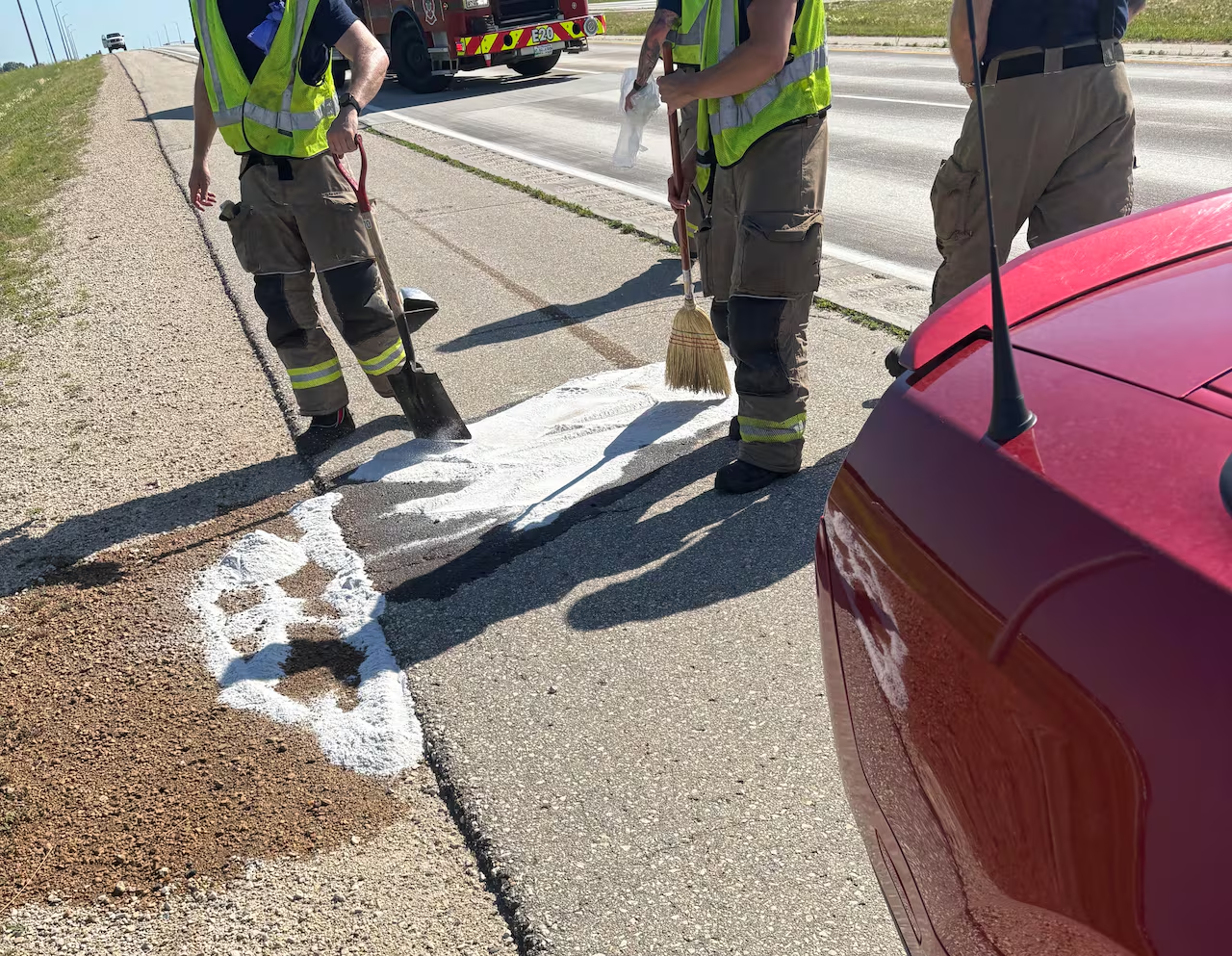
- Garth Thomson’s 2011 Mustang had its gas tank punctured by broken concrete chunks on the Perimeter Highway — the fire department was called to manage the resulting gas leak
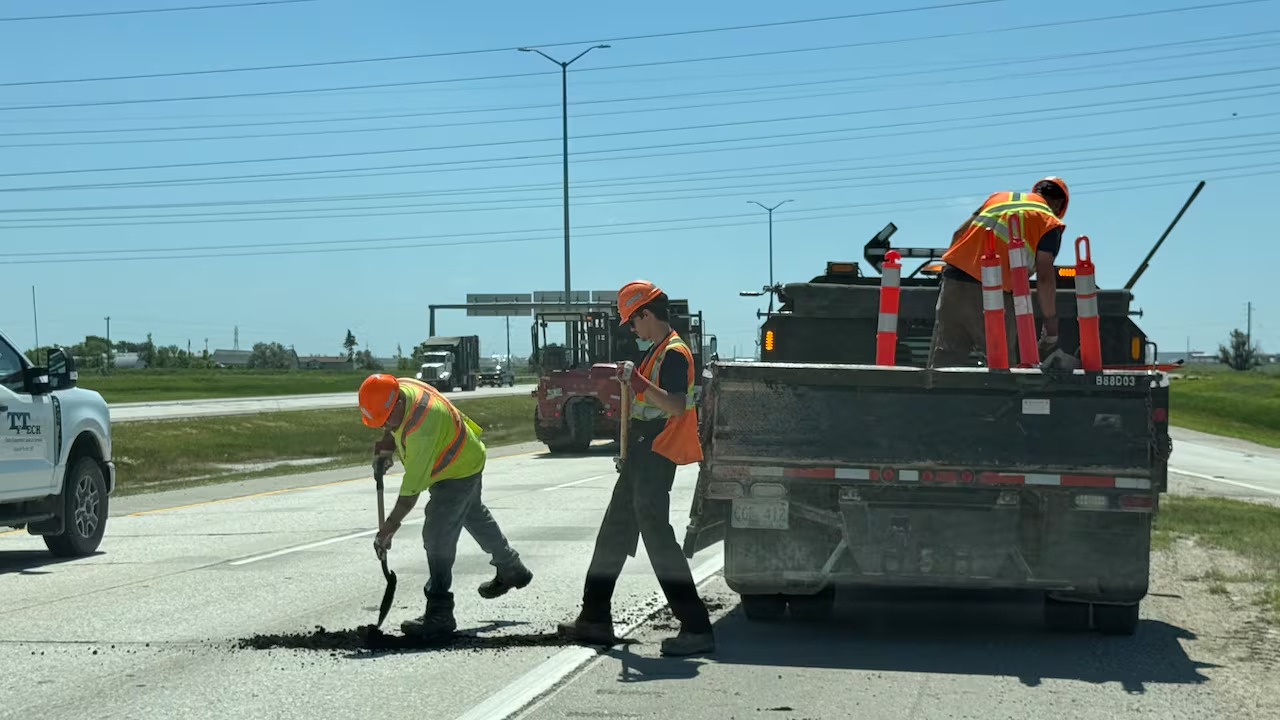
- City of Winnipeg emergency maintenance crews could not keep up with the volume of buckled roads and sidewalks requiring repair
- CAA Manitoba received at least 892 roadside assistance calls across the province as of Monday afternoon — a 10 per cent increase over a typical heat period
- All highway closures due to buckling have since been resolved according to the Manitoba government
- At least 10 cars at one Winnipeg auto shop needed cooling system repairs since the heat wave began — typically they see only a handful in the same period
One Driver. One Big Bang. One Very Bad Sunday.
Garth Thomson was not expecting any trouble when he took his 2011 Mustang convertible north on the Perimeter Highway just past Assiniboia Downs near CentrePort Canada Way shortly after 4 PM on Sunday.
The car ahead of him moved. That is when he saw it — a large hole sitting in the middle of the road.
“So I swerved to miss the most of it. I heard a large bang, bang, and thought I better pull over and have a look,” he said.
What he found when he got out was not good. Several other vehicles had already pulled over. Many had flat tires. People were walking around their cars looking confused and frustrated in thirty-seven degree heat.
Then Thomson noticed something worse. Gas was pouring out from under his car.
He called the fire department. They came and got the road blocked off. Then Thomson waited two hours for a tow truck in the full force of a Manitoba summer heat wave.
“It took a beating,” he said simply.
Thomson believes his car hit loose chunks of concrete that had broken away from the road surface — and that those chunks punched straight through his gas tank. The damage also left an oil patch on the ground from his engine.
“Good thing I stopped and didn’t do any more damage,” he said.
His car was one of many caught out by a phenomenon that Manitoba’s infrastructure simply was not ready for at that scale on that day.
Why Roads Buckle in Extreme Heat — The Science Behind It
Concrete roads are built with expansion joints — small gaps between sections of pavement designed to give the concrete somewhere to go when it expands in warm temperatures.
Under normal summer conditions this system works. The concrete expands during the day and contracts overnight and the joints absorb the movement without incident.
But Manitoba’s heat wave pushed temperatures well beyond what the joints were designed to handle. Highways and roads are designed to accommodate the expansion and contraction of the road surface at the joint locations. However when air temperatures significantly rise, concrete pavement can expand beyond the available space at the joints, a Manitoba government spokesperson explained.
When the concrete runs out of room — it goes somewhere anyway. It pushes upward. The road surface heaves, cracks, and in severe cases like the Perimeter Highway on Sunday, breaks apart violently and throws chunks of concrete onto the driving surface.
Although buckling is not common, it can happen during extreme heat and it can happen fast. Michelle Stainton, the City of Winnipeg’s project management engineer with public works, put the danger plainly. “It’s an emergency repair.”
Concrete roads and especially sidewalks are more susceptible to buckling from heat compared with asphalt ones — which is why drivers in older parts of Winnipeg with concrete pavement noticed more problems on Sunday than those on newer asphalt roads.
Seven Highways. One City Overwhelmed.
The west Perimeter was not the only road that gave way on Sunday.
A Manitoba government spokesperson confirmed that highways 7, 8, 30, 59 South, and 75, along with the Trans-Canada, all experienced blowups and buckling during the heat wave. The province said all highway and road closures due to buckling have since been resolved — but the repair work was significant and the disruption to traffic was real across multiple major routes simultaneously.
Inside Winnipeg, the city’s public works department was dealing with its own crisis. Emergency maintenance crews could not keep up with the demand, said Julie Horbal Dooley, a city public works spokesperson. They continue to respond.
Winnipeg does not formally track the number of buckled roads it deals with annually — but the city’s response was immediate when problems were reported. “We’ll definitely get out there immediately and barricade it,” Stainton said.
Given the increased intensity and length of heat waves, Stainton said the city is paying attention to the broader infrastructure challenge. “It’s not new” — but the frequency and severity of events like Sunday’s are increasing in a way that demands a more systematic response.
Your Car Is Also at Risk — What Mechanics and CAA Are Saying
The roads were not the only things struggling on Sunday. The heat wave has been hard on Manitoba vehicles too.
Richard Porco, owner of West Kildonan Auto Service, said at least ten cars have come in needing cooling system repairs since the heat wave began. In a normal hot spell that number would be a handful over the same period.
The risk is straightforward. At 37 degrees Celsius the interior of a parked car can reach 40 to 50 degrees. Cooling systems under that kind of sustained load fail more frequently. Engines overheat. Drivers get stuck on the side of the road in dangerous conditions.
“You get stuck on the side of the road if you get a failure — I mean, it’s 37 degrees. The interior of your car is probably gonna be 40, 50 degrees. It gets hot and you don’t want to be stuck on the side of the road in a hot vehicle,” Porco said.
His advice for Manitoba drivers right now: check your coolant levels before every long drive, make sure your radiator is clear of debris, and verify your tires are properly inflated.
That last point matters more than most drivers realize. CAA Manitoba says tire pressure actually increases in summer heat — the opposite of what happens in winter — and over-inflated tires are more vulnerable to failure when they hit road damage like the buckling seen on Sunday.
CAA Manitoba received at least 892 roadside assistance calls across the province as of Monday afternoon — a 10 per cent increase compared to a typical period, said Kaitlynn Furse, CAA Manitoba’s communications director. The majority were for battery calls, breakdowns, and tire issues.
Furse also urged drivers to prepare for the possibility of being stranded. Pack an emergency kit that includes additional food and water. Keep your phone charged. Keep your gas tank at least half full in case you run into anything unexpected.
What Manitoba Drivers Should Do Right Now
Before getting on any highway in Manitoba during this heat wave:
Check your tires. Pressure increases in heat. Do not drive on over-inflated tires — they are more likely to fail if you hit road damage.
Check your coolant. Top it up if it is low. A cooling system failure in 37 degree heat on a closed highway is a genuine safety emergency.
Keep your gas tank above half. If you get stuck waiting for a tow in this heat, you need air conditioning and you need fuel to run it.
Pack water. More than you think you need. A two-hour wait in direct Manitoba sun in July is serious heat exposure.
Drive slowly on unfamiliar roads. Buckled sections and heaved pavement can appear without warning. Leave more space between you and the vehicle ahead so you have time to react the way Garth Thomson did — by swerving — rather than hitting the damage head-on.
Report damage immediately. If you see a buckled or heaved section of road call 511 in Manitoba to report it to Manitoba Transportation and Infrastructure. The faster they know the faster they can barricade and repair it before another car takes a beating like Thomson’s Mustang.
This is a developing story. Maplestime will update this article as additional highway damage is reported and as Manitoba’s heat wave continues.
Spotted a buckled road or have a heat wave story from Manitoba? Email [email protected]
Have a correction? Email [email protected]
Did the Manitoba heat wave damage your vehicle or force you to take a different route this weekend? Tell us what you experienced in the comments — and share this with every Manitoba driver you know who is on the roads this week.
Discover more from MaplesTime
Subscribe to get the latest posts sent to your email.
