



Canadian defence news — NATO just handed nearly a million Canadian dollars to two homegrown startups: a Quebec rocket company and an Ottawa military-data firm in stealth mode. They beat out 2,600 proposals worldwide. And with Canada’s venture money now chasing defence tech aggressively, this looks like the start of something, not a one-off.
By Maplestime Business Desk | Ottawa, Ontario | September 19, 2026
Sources: BetaKit, NATO DIANA, US PitchBook, Prime Minister’s Office | Last updated: September 19, 2026
Key Takeaways
- Longueuil, Que.-based Reaction Dynamics and Ottawa-based Tactiql advanced to Phase 2 of NATO’s Defence Innovation Accelerator for the North Atlantic (DIANA)
- Each will receive 300,000 euros ($482,000 CAD) — nearly $1 million CAD combined
- Only 15 companies advanced to Phase 2, narrowed from 76 finalists and 2,600 global proposals
- Reaction Dynamics builds eco-friendly hybrid propulsion rockets; it plans a 2028 orbital launch from Nova Scotia
- Tactiql, founded in 2023 by CAF veteran Michael Nelson, builds ISR data software and holds nearly $4M in federal research contracts
- BDC CEO Isabelle Hudon says Canada’s top VC plans to fund defence tech in “a more aggressive way”
- PM Mark Carney has pledged to hit NATO’s 5% of GDP defence target by 2035; US VC defence investment hit a record $7B+ in 2025
Two Canadian Startups Beat 2,600 Competitors
Two Canadian companies have been selected for the second phase of a NATO defence tech accelerator program that aims to develop dual-use technologies.
Longueuil, Quebec-based Reaction Dynamics and Ottawa-based Tactiql advanced to Phase 2 of NATO’s Defence Innovation Accelerator for the North Atlantic (DIANA), and will each receive 300,000 euros ($482,000 CAD).
The numbers show how competitive this was: just 15 companies advanced to Phase 2, narrowed from 76 finalists and 2,600 proposals from defence tech companies worldwide. DIANA supports technologies with both military and civilian uses across NATO countries, offering access to NATO test centres, an investor network, mentoring from industry and procurement partners, and sales opportunities.
Reaction Dynamics — Rockets From Longueuil
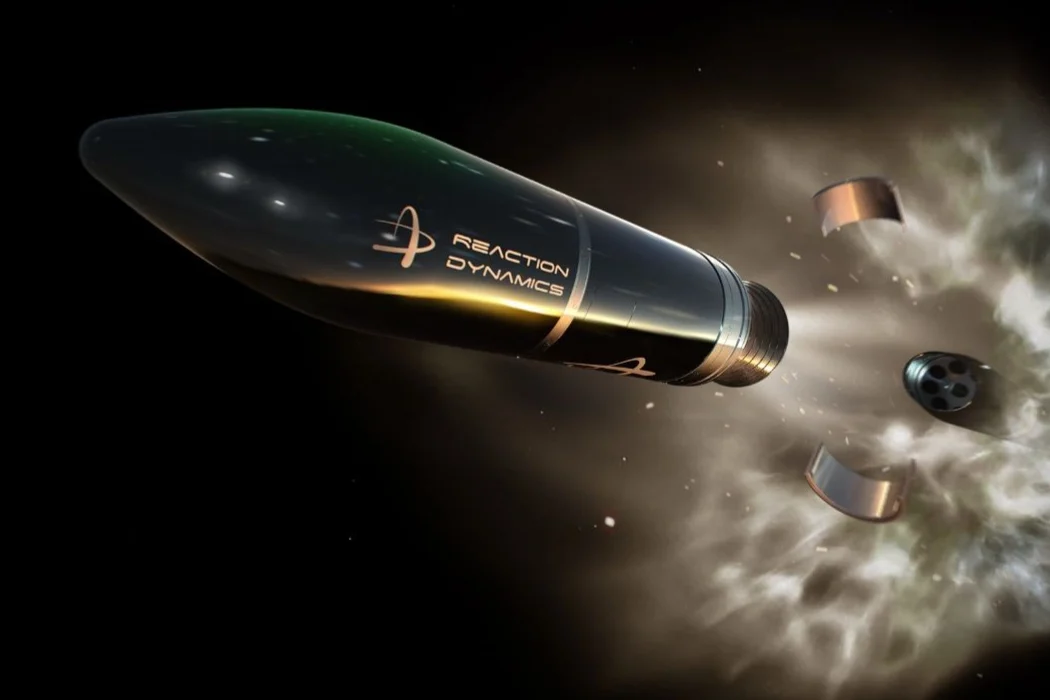
Aerospace and defence company Reaction Dynamics was selected for DIANA’s critical infrastructure category. It develops rocket engines and launch vehicles with a focus on environmentally friendly propulsion systems.
The company was featured in BetaKit’s Most Ambitious issue for its hybrid propulsion rocket and its plans to handle Canadian satellite deployments. It recently signed an agreement with Halifax-based Maritime Launch Services to launch a rocket into orbit in 2028 from a planned Nova Scotia facility.
Tactiql — Ottawa’s Stealth-Mode ISR Startup
Ottawa-based Tactiql was selected for DIANA’s data and information security category. Founded in 2023 by Canadian Armed Forces veteran Michael Nelson, the company’s software collects and centralizes data from intelligence, surveillance, and reconnaissance (ISR) sensors during military operations — the sensors found on military hardware used to surveil and identify threats or targets.
Tactiql has already been awarded two Canadian government research contracts worth nearly $4 million, according to procurement records. According to a pop-up on its website, the startup is “currently in stealth mode” and is purposefully keeping its website vague. Tactiql did not respond to a request for comment before press time.
Related: Prairie Storms $728 Million Damage 2026 — Manitoba And Saskatchewan Shattered Insurance Records
Related: Bench IQ raises $7.3 million CAD for AI platform analyzing judicial rulings
BDC Is About to Get Aggressive on Defence Tech
Canadian investors have increased their interest in defence tech in recent months. The country’s most active venture capital investor, the publicly funded Business Development Bank of Canada, told BetaKit this week it plans to fund defence tech in “a more aggressive way.”
The majority of the startups in BDC Capital’s Deep Tech Venture Fund portfolio are already developing dual-use solutions with both civilian and defence applications. BDC CEO Isabelle Hudon revealed that BDC — which has planned a successor to its first deep tech fund — is currently revising the name, mandate, and size of that investment vehicle to focus on defence tech.
The Defence Money Flood Is Global
Prime Minister Mark Carney has pledged to increase national defence spending to the new NATO target of five percent of annual GDP by 2035. That includes 3.5 percent of GDP for core military capabilities, including “modernizing [Canada’s] military equipment and technology.”
Outside Canada, investors have increasingly poured money into defence tech — a broad category spanning surveillance and intelligence software, armoured vehicles, drone technology, and lethal weapons. According to US PitchBook data, VC investment in defence tech in 2025 reached a new peak of over $7 billion — more than four times the level of investment in 2022.
Maplestime will provide updates on Canadian defence tech as announcements are made.
Have a tip about defence tech in Canada? Email [email protected]
Have a correction? Email [email protected]
Should Canada be ramping up defence tech spending — or is the military-industrial complex the last thing this country needs? Tell us in the comments. And share this with every Canadian watching where the defence dollars go.
Enjoying Maplestime? Support independent Canadian journalism — no paywall, no corporate owners.