




Nova Scotia news: hundreds of people marched through the rain in Halifax on Saturday, joining rallies in six other communities to demand a moratorium on large AI Data Centre proposals, with EverWind Fuels’ $10-billion Point Tupper campus squarely in their sights.
By Maplestime News Desk | Halifax, Nova Scotia | November 8, 2026
Sources: CBC News, Canadian Press via Toronto Star, Tech Insider | Last updated: November 8, 2026
Key Takeaways
- Rallies were held in seven Nova Scotia communities on Saturday, November 7: Halifax, Kentville, Port Hawkesbury, Truro, Bridgewater, Westville and Sydney.
- Halifax drew the largest crowd, hundreds to nearly 1,000 people marching from Province House through downtown in the rain.
- Protesters are demanding a moratorium on large-scale AI Data Centre proposals, led by opposition to EverWind’s Point Tupper campus.
- The $10-billion project includes a 20-year lease to Anthropic, the company behind Claude, with phase one at 95 megawatts due online in 2027.
- A petition against the project has gathered nearly 28,000 signatures.
Seven Communities, One Demand
Saturday was not a single protest. It was seven of them, spread across the province on the same afternoon, all carrying the same message: pause the AI data centre rush until Nova Scotians get real answers on power, water and who benefits.
Halifax was the biggest. Hundreds to nearly 1,000 people gathered at Province House at noon and marched through downtown in the rain, a crowd large enough to fill the streets around the legislature. Kentville drew about 200 people. Port Hawkesbury drew about 150. Truro drew dozens. Bridgewater, Westville and Sydney held rallies of their own.
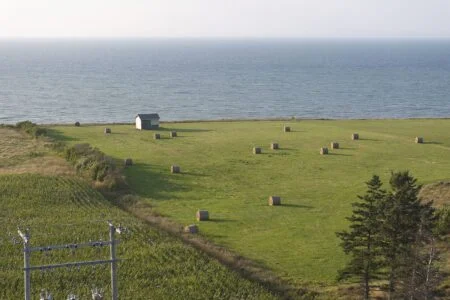
The target of every one of those rallies was the same: EverWind Fuels’ proposed campus at Point Tupper, in the Strait of Canso area, where the company plans one of the largest AI data centre developments in Canada.
What the AI Data Centre Would Bring to Point Tupper
EverWind’s Point Tupper campus is a $10-billion project, and it already has a tenant. Anthropic, the artificial intelligence company behind the Claude chatbot, has signed a 20-year lease on an 18,600-square-metre facility at the site.
Phase one of the AI Data Centre is planned at 95 megawatts, due to come online in 2027, followed by a 325-megawatt expansion in mid-2028. That is an enormous amount of electricity for a province whose grid already strains on cold winter evenings, and it is the number at the heart of the protests.
EverWind says the AI Data Centre will draw power from the provincial grid until its own approved onshore wind farms are built. Construction on those wind farms has not started.

Server racks inside a data centre. Photo: BalticServers, CC BY-SA 3.0, via Wikimedia Commons.
Why Protesters Say No
Ned Zimmerman, a Dartmouth tech worker who helped organize the Halifax rally, was blunt about what the crowds want. Protesters do not want the project to go ahead, he said, and they want the province to stop approving AI Data Centre projects of this scale until the rules are clear.
Rowan Swain of the Ecology Action Centre, speaking at the Halifax rally, said she is concerned the province is being promised a future where corporate profits are prioritized over the people who actually live here. That line drew some of the loudest cheers of the afternoon.
The opposition is not limited to the people who marched. A petition on Change.org against the project has gathered nearly 28,000 signatures, a striking number in a province of about one million people.
For many protesters, the worry is practical rather than ideological. An AI Data Centre of this size needs vast amounts of electricity and water for cooling. Nova Scotians want to know whether their power bills will rise to pay for it, whether local water supplies are at risk, and what the province actually gets in return for hosting one of the biggest AI facilities in the country.
What the Province and EverWind Say
Premier Tim Houston’s office has said the project will proceed only if it meets provincial and federal guidelines on water, the environment, power rates and grid capacity. The province has not agreed to a moratorium, and Houston has repeatedly framed large energy and technology investments as central to Nova Scotia’s economic future.
EverWind, for its part, says the campus will eventually run on wind power from its own approved onshore wind farms, and that the grid connection is a bridge until those are built. Critics note that the bridge could last years, and that the wind farms exist on paper today, not on the ground.
That gap between promise and construction is where the debate now sits. Supporters see jobs, investment and a place for Nova Scotia in the AI economy. Opponents see a province handing over its power and water to a foreign-owned AI company to host one of the biggest AI Data Centres in the country before the safeguards are in place.
What Happens Next
Saturday’s rallies were the largest coordinated show of opposition to the project so far, and organizers say the campaign will continue. The petition keeps climbing, and the seven-community format gives the movement a reach beyond Halifax that will be hard for the province to ignore.
The immediate test is whether Houston’s government answers the moratorium demand directly or continues to insist the existing approval process is enough. Either way, the Point Tupper decision has become the defining energy fight in Nova Scotia, and it is not going away.

Maplestime will provide updates from the Nova Scotia AI Data Centre protests and the EverWind Point Tupper proposal as announcements are made.
Have a tip about the AI data centre debate in Nova Scotia? Email [email protected]
Have a correction? Email [email protected]
Do you think Nova Scotia should hit pause on the AI Data Centre boom until the power and water questions are answered, or is this the kind of investment the province cannot afford to turn away? Tell us in the comments. And share this with every Nova Scotian following the fight over the province’s energy future.
Enjoying Maplestime? Support independent Canadian journalism — no paywall, no corporate owners.