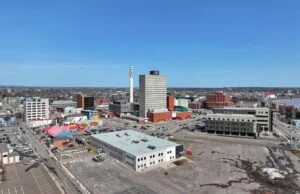
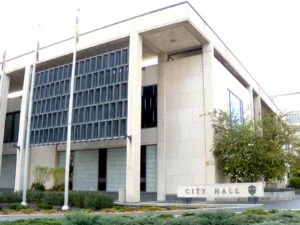


Newfoundland and Labrador infrastructure news — After pouring money into a Stephenville Crossing rebuild that was only 19 per cent complete, the province has pulled the plug entirely: the Martin Gallant Building is being demolished, and the redevelopment is dead.
By Maplestime News Desk | St. John’s, Newfoundland and Labrador | October 6, 2026
Sources: Government of Newfoundland and Labrador, Construction Links | Last updated: October 6, 2026
Key Takeaways
- On Oct. 5, 2026, N.L.’s Department of Transportation and Infrastructure announced the Martin Gallant Building in Stephenville Crossing will be demolished, and redevelopment plans are abandoned.
- New environmental and structural assessments found contaminated soil, lead paint, and significant structural deficiencies that would demand extensive remediation and reconstruction.
- The province calls redevelopment of the existing structure “no longer a viable or fiscally responsible option.”
- The redevelopment was about 19 per cent complete when its contract was cancelled in June 2026 after cost escalation, delays, design issues, and site conditions were flagged.
What Assessments Found At Stephenville Crossing
According to the Oct. 5 release, the additional environmental and structural assessments on the Martin Gallant Building read like a demolition brief: contaminated soil on the site, lead paint inside, and structural deficiencies serious enough that any reuse of the building would require full remediation and reconstruction before anyone could safely occupy it.
The department’s conclusion was blunt. Redevelopment of the existing structure is, in its words, “no longer a viable or fiscally responsible option.” The building will be safely decommissioned and demolished, with all environmental requirements met during the process.
Why Stephenville Crossing Lost Its Redevelopment
This was not a sudden collapse. In June 2026, the province cancelled the previously awarded redevelopment contract after a project review flagged cost escalation, delays, design issues, and site conditions. At that point, the work was about 19 per cent complete — enough to have burned real money, not enough to have anything to show for it.
The Oct. 5 release adds a pointed detail: the previous administration advanced the original redevelopment plan without the due diligence and site analysis typically expected for a project of this scale. Read that again. The province is saying the checks that should have happened before the first shovel moved didn’t happen.
Related: Nain Wastewater Upgrades: N.L. Puts $39M Into Northern Infrastructure
A Wider Reset, Not Just One Building
The demolition decision is part of a broader infrastructure reset. The province is also rescoping the new K-12 school project in Cartwright, which sat at roughly 6 per cent complete, with the stated goal of improving value and delivery on both projects.
The message from the Department of Transportation and Infrastructure is consistent across both files: stop throwing money at compromised projects, rescope them, and do the homework this time. Whether the new plans hold to their budgets is the next thing to watch.
For now, the timeline is straightforward: decommission, demolish, and start over with a clean site and — the province insists — proper due diligence. The community that was promised a redeveloped Martin Gallant Building will get a vacant lot and a second promise.
The province has not published a demolition cost estimate or a decommissioning timeline, and the question of how much taxpayer money went into the 19-per-cent-complete build before the plug was pulled remains open. Those numbers will matter when the rescoped plans return for approval. Residents deserve to see the full bill for the failed Stephenville Crossing redevelopment before they are asked to fund its replacement.
Maplestime will provide updates from Stephenville Crossing infrastructure projects as announcements are made.
Have a tip about Stephenville Crossing? Email [email protected]
Have a correction? Email [email protected]
The province says the last plan skipped the due diligence “typically expected” — so who approved 19 per cent of a build on contaminated soil? Tell us in the comments. And share this with every Canadian who’s tired of watching public money pour into buildings nobody did their homework on.
Enjoying Maplestime? Support independent Canadian journalism — no paywall, no corporate owners.