




Winnipeg winter driving: the Winnipeg Winter Driving Guide 2026 pulls together everything a Manitoba driver needs for the cold months, from winter tires and the MPI loan program to parking bans, Manitoba 511 and the kit to carry in the trunk.
Winnipeg Winter Driving Guide in short: Manitoba has no winter tire law, but MPI will finance up to $2,000 per vehicle at prime plus 2 percent for winter tires. Put them on when daytime highs sit at or below 7 degrees. Check Manitoba 511, respect the 2 a.m. to 7 a.m. winter route parking ban, and carry an emergency kit.
By Maplestime News Desk | Winnipeg, Manitoba | November 14, 2026
Sources: Manitoba Public Insurance, City of Winnipeg, Manitoba 511, Winnipeg Police Service, CAA Manitoba, RCMP Manitoba | Last updated: November 14, 2026
Key Takeaways
- Manitoba has no law requiring winter tires, but MPI finances up to $2,000 per vehicle at prime plus 2 percent for approved winter tires.
- From October 1, 2026, MPI only finances tires designed and marketed solely for winter driving that carry the three peak mountain snowflake symbol.
- Put winter tires on when daytime highs sit consistently at or below 7 degrees, usually by late October in Winnipeg.
- Studded tires are legal in Manitoba from October 1 to April 30.
- Winnipeg’s winter route parking ban blocks parking on designated routes from 2 a.m. to 7 a.m. once the City declares it.
- Check Manitoba 511 at manitoba511.ca, on the app, or by calling 511 before any highway trip.
Winnipeg Winter Driving Guide: Winter Tires and the MPI Program
Winter tires are the single biggest upgrade a Winnipeg driver can make, and the reason is the rubber, not the tread. All season tires stiffen as the air gets cold, and once daytime temperatures sit around 7 degrees they start losing grip, even on bare pavement. Winter tires stay soft and flexible deep into the cold, and they bite into snow and ice. CAA Manitoba says winter tires can cut braking distance by up to 25 percent, and MPI reports that vehicles with winter tires are involved in 6.3 percent fewer collisions.
Manitoba does not force anyone to make the switch. Unlike Quebec, where winter tires are the law, this province leans on encouragement instead. The main encouragement is money. The MPI Winter Tire Program lets eligible Manitobans finance up to $2,000 per vehicle at prime plus 2 percent interest, repaid over one to four years through monthly withdrawals from a bank account. The loan covers approved winter tires plus rims, mounting, balancing, alignment, tire pressure monitoring parts, studding within limits, and taxes, arranged through a participating retailer.
The rule on what qualifies changed this fall. Effective October 1, 2026, an approved tire must carry the three peak mountain snowflake symbol and be designed and marketed solely for winter driving conditions, including snow and ice. Tires marketed as all weather, all season, four season or year round no longer qualify for MPI financing, even if they carry the snowflake. A dedicated winter tire, studded or studless, is unaffected. Transport Canada says to install winter tires in sets of four, matched in type, size, speed rating and load index, and all wheel drive helps a vehicle get moving, not stop or turn, so it is no substitute for proper tires.
Timing matters more than the first snowfall. Book the changeover for when daytime highs settle at or below 7 degrees, which in Winnipeg usually means late October. Pull the winter tires off once daytime highs sit above 7 degrees for good, usually sometime in April. Studded tires are a separate question: Manitoba’s driver handbook says they are illegal between April 30 and October 1, which means they are legal from October 1 through April 30.
Related: Winnipeg Winter Parking Ban Explained 2026 — Snow Routes, Times and Fines
What does the parking ban mean for drivers?
Winnipeg runs five winter parking bans to keep snow clearing moving, and two of them touch almost every driver. The annual winter route parking ban starts when weather conditions require it and can come into effect at any point from November 1 to the end of April. The City announces it seven days before it starts. Once it is in effect, you may not park on designated winter routes between 2 a.m. and 7 a.m., every day, whether it is snowing or not. Winter routes are the major thoroughfares emergency vehicles rely on, and they are marked with WINTER ROUTE or SNOW ROUTE signs. Last season the ban began December 3, 2025 and was lifted April 2, 2026, with a $100 ticket, or $75 if paid early.
The residential parking ban is the one that catches people off guard. The City calls it after a significant snowfall to clear residential streets, and it applies during your snow zone’s scheduled 12 hour clearing window. Every residential street sits in a lettered snow zone, and the winter route ban is suspended during a residential ban so residents have more places to park. A vehicle parked in violation of a residential ban can receive a $200 ticket, or $150 if paid early. The Know Your Zone app and the snow map at winnipeg.ca/snow show your zone and whether a ban is on at your address. Check before you park, not after the ticket arrives.
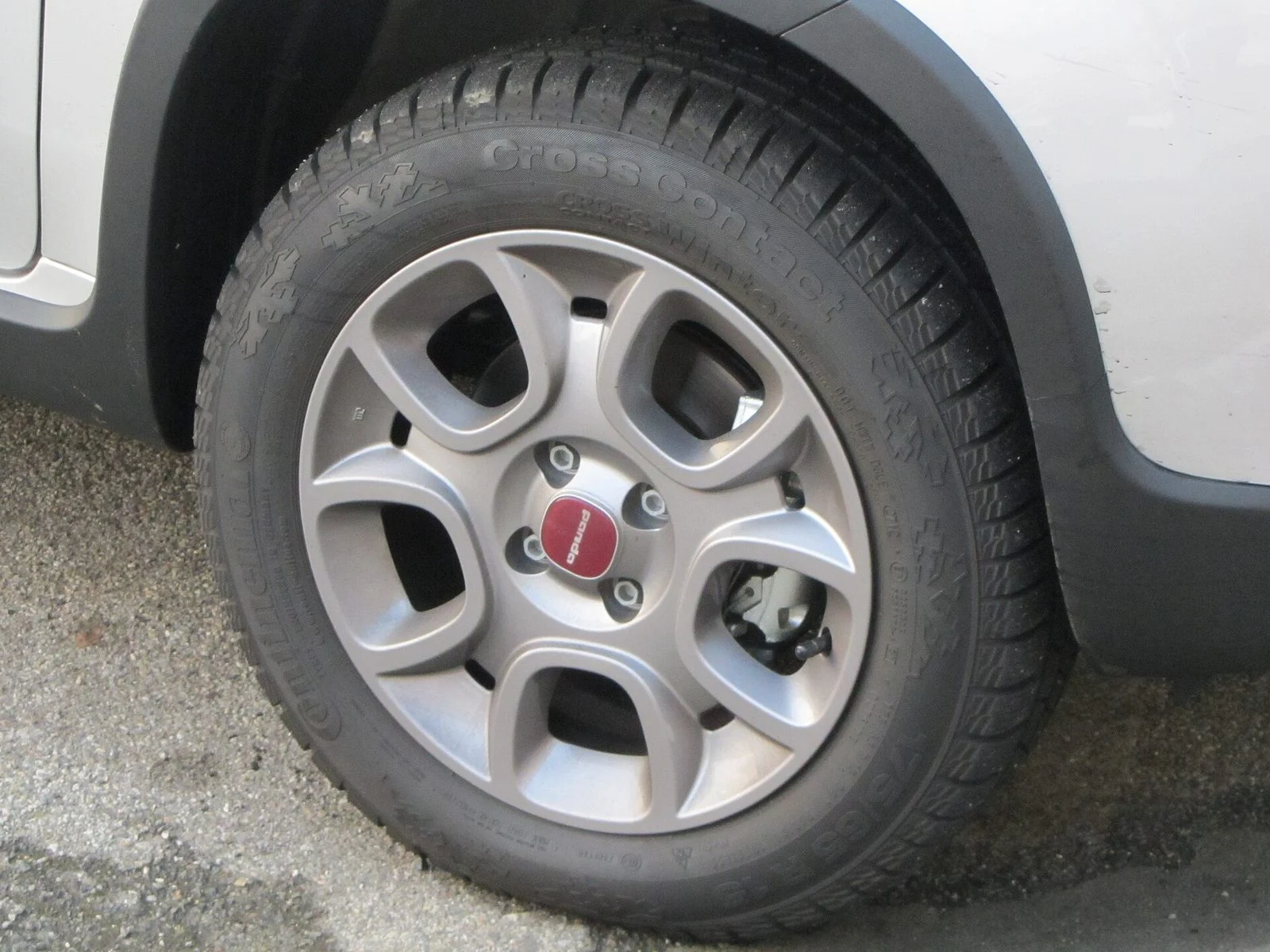
A car wheel fitted with snow tires. Photo: Pava, CC BY-SA 3.0 it, via Wikimedia Commons
How do you check road conditions before you go?
Manitoba 511 is the first stop before any trip out of the city. Run by Manitoba Transportation and Infrastructure, it carries current maps, traffic, road conditions and closures at manitoba511.ca and on the Manitoba 511 app, and you can call 511 toll free or follow MBGovRoads on X. The RCMP decides when a highway closes for unsafe conditions and when it reopens, working with Manitoba 511 to get the word out. The province maintains a 19,000 kilometre highway system, and conditions can change fast, so a report from the morning may not match the road by afternoon.
Do not gamble on a closed highway. RCMP Manitoba has warned repeatedly that travelling on closed highways in blizzard conditions is extremely dangerous and should not be attempted, and that roads are assessed hour by hour in a storm. If the highway is open but the weather is turning, tell someone your route and your expected arrival time before you leave.
What should you carry in a winter emergency kit?
A Manitoba winter can strand a driver a long way from help, and the kit in the trunk is what turns a bad night into an inconvenience. The RCMP and the City of Winnipeg both recommend the same basics: a blanket or extra clothing, non perishable snacks and water, a flashlight with extra batteries, a snowbrush, an ice scraper and a shovel, jumper cables and a tow rope, and sand or kitty litter for traction under the tires. CAA Manitoba adds waterproof matches, candles, extra mitts, hats, socks and footwear, and washer fluid rated for minus 40 degrees.
Two items people forget are the phone and the fuel. Keep the cellphone charged and carry a car charger, because a dead phone in a ditch at minus 30 is a real emergency. Keep the gas tank at least half full to prevent freezing in extreme cold, and to keep the heater running if you do get stuck. CAA Manitoba also warns that even a fully charged battery can lose up to 30 percent of its charge in temperatures below zero, so test the battery before winter and replace it before it fails, not after.
How do you handle black ice and extreme cold?
Black ice is the quiet hazard of a Winnipeg winter. It forms on bridges and overpasses before it forms on regular roads, and intersections get polished slick by spinning tires. The RCMP notes that roads are generally just as slippery at 0 degrees as at minus 20, so a mild day is no reason to relax. Slow down, because posted speed limits are set for ideal conditions, and leave extra space between you and the vehicle ahead. If the tires lose traction, stay calm, steer in the direction you want to go, and avoid slamming the brakes.
Clear every window, mirror and light of snow and ice before you drive, and clear the roof too, because snow blowing off it is a hazard to everyone behind you. Warm the vehicle up to prevent window fogging. Cold air also drops tire pressure, so check it more often through the winter and inflate to the pressure listed on the sticker inside the driver side door. When you pass emergency vehicles or tow trucks pulled over with their lights on, Manitoba law requires you to slow down and move over: to 40 km/h where the posted limit is under 80 km/h, and to 60 km/h where it is over 80 km/h.
Frequently Asked Questions
Does Manitoba require winter tires by law?
No. Manitoba has no law requiring winter tires. MPI encourages the switch through its Winter Tire Program, which finances up to $2,000 per vehicle at prime plus 2 percent for approved winter tires.
When should I put winter tires on in Winnipeg?
When daytime highs sit consistently at or below 7 degrees, usually by late October in Winnipeg. Do not wait for the first snowfall, because all season rubber starts hardening well before snow arrives.
How do I know if the winter route parking ban is on?
Check winnipeg.ca/snow or the Know Your Zone app, or call 311. The City announces the annual ban seven days before it starts, and the snow map shows current bans at any address.
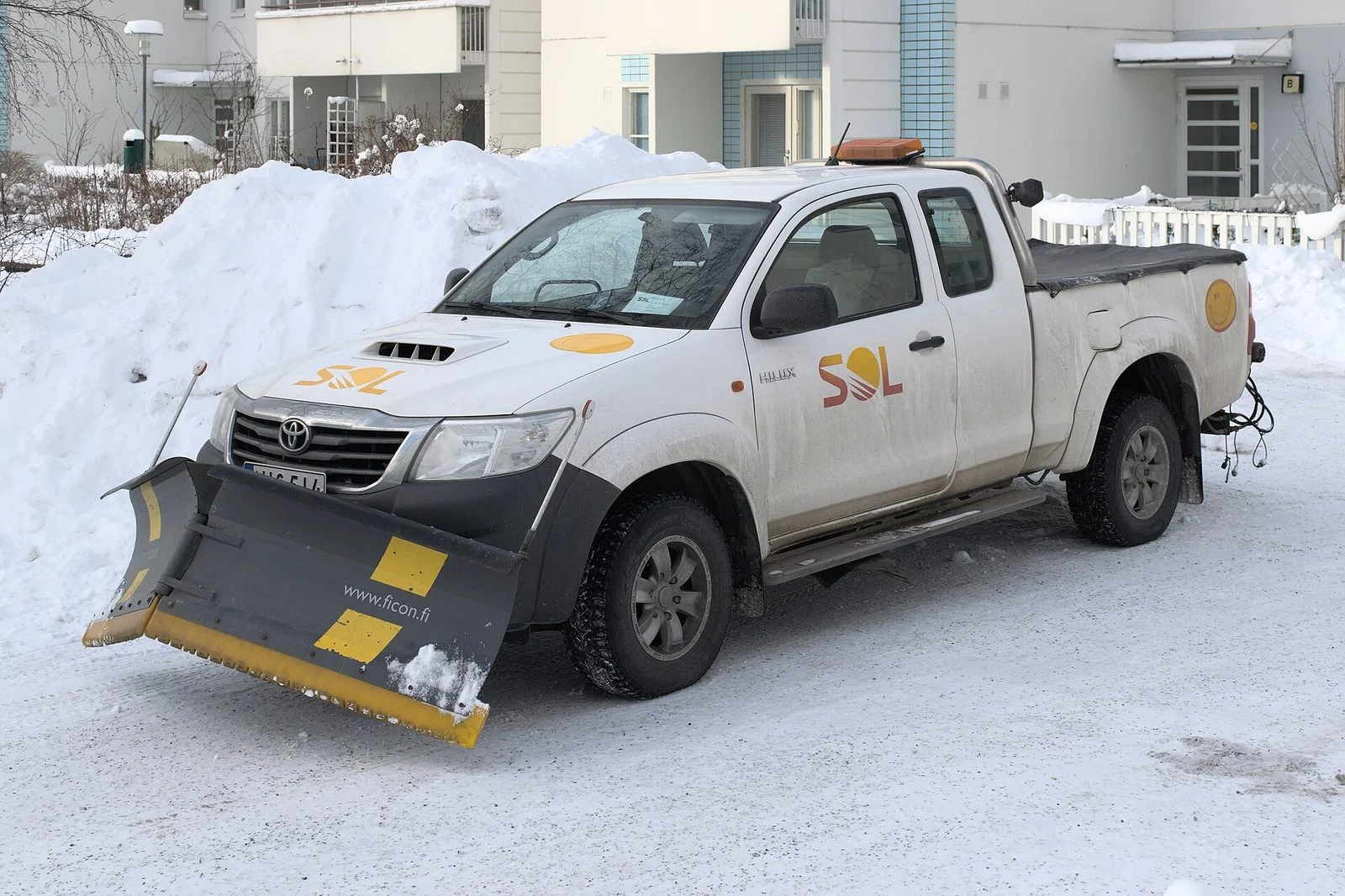
A pickup truck fitted with a snowplow. Photo: Sadenäyttely, CC BY-SA 4.0, via Wikimedia Commons
Maplestime will provide updates from Winnipeg winter driving as rules and programs change.
Have a tip about this story? Email [email protected]
Have a correction? Email [email protected]
Do you switch to winter tires before the first snowfall, or do you wait for the roads to tell you? Tell us in the comments. And share this with every Winnipegger who drives through a Manitoba winter.
Enjoying Maplestime? Support independent Canadian journalism — no paywall, no corporate owners.