



By Ayomikun. O | December 2025 | Updated: December 2025 | No Comments | 7 Mins Read
Canadian business news — Your grocery bill is about to get nearly a thousand dollars heavier. Canada’s Food Price Report 2026 forecasts prices will climb another 4 to 6 per cent, pushing the average family’s annual food spending past $17,500. Meat is the worst of it, the Prairies’ drought is the reason, and one in four Canadian households is already food insecure.
By Maplestime Business Desk | Canada | December 2025
Sources: Canada’s Food Price Report 2026, Dalhousie University | CBC News | Last updated: December 2025
Key Takeaways
- Canada’s food prices are forecast to rise 4% to 6% in 2026, per Canada’s Food Price Report 2026.
- The average family of four will spend $17,571.79 on food — $994.63 more than last year.
- Food prices are now 27% higher than they were five years ago.
- Meat will see the steepest increases (5–7%), driven by Prairie drought and shrinking cattle herds.
- Alberta, New Brunswick, Nova Scotia, Ontario, and Quebec face increases above the national average.
- In Manitoba, the province eliminated PST on food at big grocery stores on July 1 — but mom-and-pop shops were left out.
- Roughly one in four Canadian households now faces food insecurity.
The Headline Numbers — Canada’s Food Price Report 2026
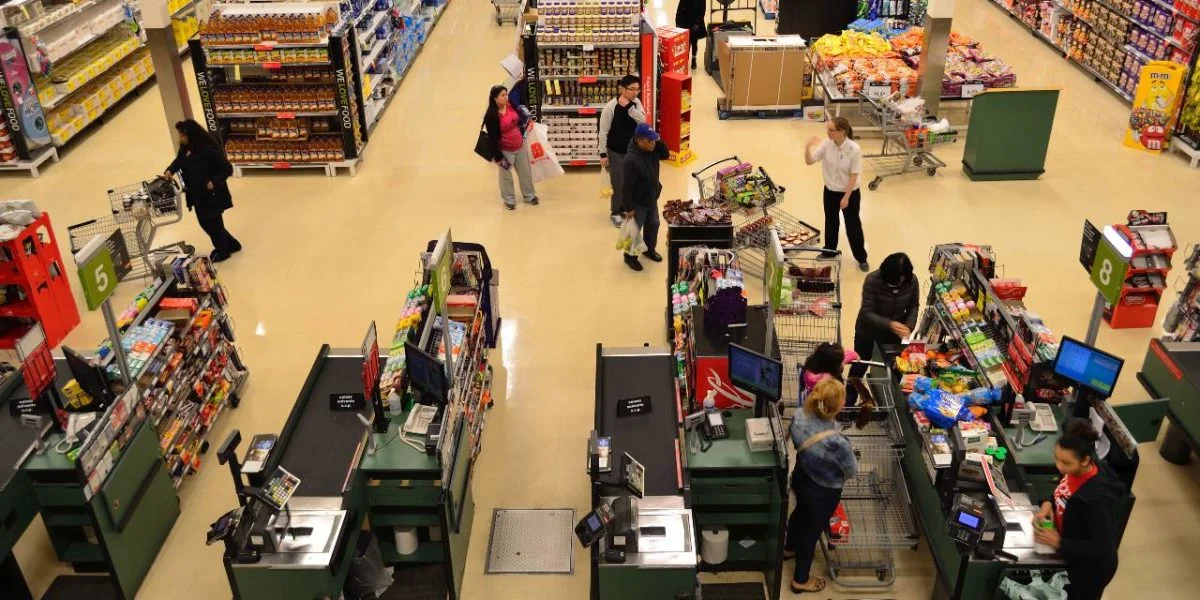
The numbers come from the 16th annual edition of Canada’s Food Price Report, produced collaboratively by Dalhousie University, the University of Guelph, the University of Saskatchewan, UBC, Université Laval, and others. It is the most authoritative forecast Canadians get, and this year’s is sobering.
| Category | 2026 Forecast |
|---|---|
| Overall food price increase | 4% – 6% |
| Family of four annual food spend | $17,571.79 |
| Increase vs. last year | +$994.63 |
| Increase vs. five years ago | +27% |
| Meat | +5% – 7% (steepest) |
| Provinces above average | Alberta, New Brunswick, Nova Scotia, Ontario, Quebec |
“Canadian families are still feeling the squeeze at the grocery store,” says Dr. Sylvain Charlebois, the report’s project lead at Dalhousie University. “Our forecast for 2026 makes one thing clear: food affordability will remain a major pressure point in the year ahead.”
What’s Driving Prices — Meat, Drought, and a Trade War That Won’t Quit
Beef is the story. Prices jumped 19% in early 2025 and remain 23% above the five-year average. Drought conditions on the Prairies produced smaller cattle and smaller herds, while avian flu precautions limited poultry availability. Canada has increased beef imports from Mexico and Australia to stabilize supply — but the pressure on your steak budget is not going away soon.
Tariffs are easing, but the damage lingers. Canada lifted almost all counter-tariffs against the United States in September, and U.S. President Donald Trump walked back tariffs on more than 200 agricultural and food products — including a 50% levy on coffee giant Brazil. Long shelf-life items like coffee will take time to come down; bananas should adjust faster.
Labour and restructuring are biting. Changes to the Temporary Foreign Worker Program have tightened labour supply, and restructuring at major food manufacturers has meant job losses and reduced output — costs that end up on the shelf.
Your grocery store may be changing prices while you shop. An increasing number of grocers are switching traditional sticker tags for digitized ones, allowing prices to shift with demand. Report author Dr. Charlebois told The Weather Network it may be worth visiting stores during off-hours or bad weather — prices can be lower when demand dips.
There was a brief bright spot. The Agri-Food Analytics Lab’s back-to-school report found a basket of 45 food products fell 2.8% between July and August ($269.52 to $262.07). But Charlebois cautioned: “We should not confuse a promotion-heavy August snapshot with a lasting reversal in food inflation.” The real test comes this fall.
Related: Manitoba Highways Buckled and Broke Under Extreme Heat — And One Driver’s Car Paid the Price
Related: Bank of Canada Interest Rate Decision: What It Means for Your Mortgage and Your Money in 2026
The Manitoba Angle — A PST Cut That Missed the Corner Store
Manitoba tried something bold in its 2026-27 budget: Premier Wab Kinew eliminated the provincial sales tax on all food items at bigger grocery stores, effective July 1. “When you go to the grocery store, no more food and drink subject to provincial tax,” Kinew said.
But there is a catch that matters enormously in Winnipeg’s West End and other lower-income neighbourhoods: smaller convenience and mom-and-pop shops were excluded. Shoppers buying packaged foods or ready-to-eat items from small stores still pay PST. The supervisor of one West End convenience store told CBC his low-income customers “are going to pay more, and that’s not fair” — and that he expects to lose business to the big grocers.
It is a textbook example of a policy that helps the middle class at Superstore while missing the people who buy their groceries at the corner store. For a province where food insecurity hits hardest in the neighbourhoods least served by big-box grocers, that exclusion is hard to defend.
What You Can Actually Do About It
Reports diagnose; households have to cope. Here is what the data suggests actually works:
- Shop off-peak. Digital price tags mean prices move with foot traffic. Bad weather and quiet hours can mean lower prices.
- Watch meat closely. With beef leading inflation, shifting even part of your protein spending to poultry, legumes, or imported-beef value cuts saves real money.
- Buy seasonal and local. Prairie produce in season avoids the transport and tariff premiums baked into imports.
- Use community programs. Winnipeg’s Good Food Club and mobile market models bring affordable produce to the neighbourhoods the big grocers underserve.
The deeper problem — one in four Canadian households facing food insecurity while food prices sit 27% above where they were five years ago — is not a coupon problem. It is a policy problem. And it is not going away in 2026.
Maplestime will provide updates from Canada’s food price story as new reports and announcements are made through 2026.
Have a tip about Canada’s food prices? Email [email protected]
Have a correction? Email [email protected]
A family of four is paying nearly $1,000 more for food this year while corner stores got left out of Manitoba’s tax cut — is anyone in power actually shopping where struggling Canadians shop? Tell us in the comments. And share this with every Canadian feeling the squeeze at the checkout.
Enjoying Maplestime? Support independent Canadian journalism — no paywall, no corporate owners.