


On a school night last summer, Arham Paul was getting ready for bed in Markham, Ontario when his phone rang. By morning he had helped build the opening of a Drake song. Last week, that song was on one of the most talked-about album releases of 2026. This is the story of how a Pakistani-Canadian teenager from the suburbs became a Drake collaborator — and what he did the night the album finally dropped.
By Maplestime Entertainment Desk | Markham, Ontario | May 23, 2026 Source: The Canadian Press — Alex Nino Gheciu | Last verified: May 23, 2026
Key Takeaways
- Arham Paul, 16, is a music producer from Markham, Ontario who produces under the name ap.melodies
- He contributed to “Classic” on Drake’s Habibti and “Q&A” on Drake’s Maid of Honour — two of the three surprise albums Drake dropped on May 15, 2026
- Paul started making music at age 8 after randomly opening GarageBand on his sister’s laptop
- He built the “Classic” intro alongside Miami-based producer Sebas Lopez in an all-night session — on a school night
- Drake personally messaged a mutual producer saying “This is a smash hit” about Q&A
- Paul attends Bill Hogarth Secondary School in Markham — his principal, teachers, and the entire school found out simultaneously when the album dropped
- His parents surprised him with cake as the family watched Drake’s CN Tower livestream at midnight on release night
The Phone Call That Changed Everything
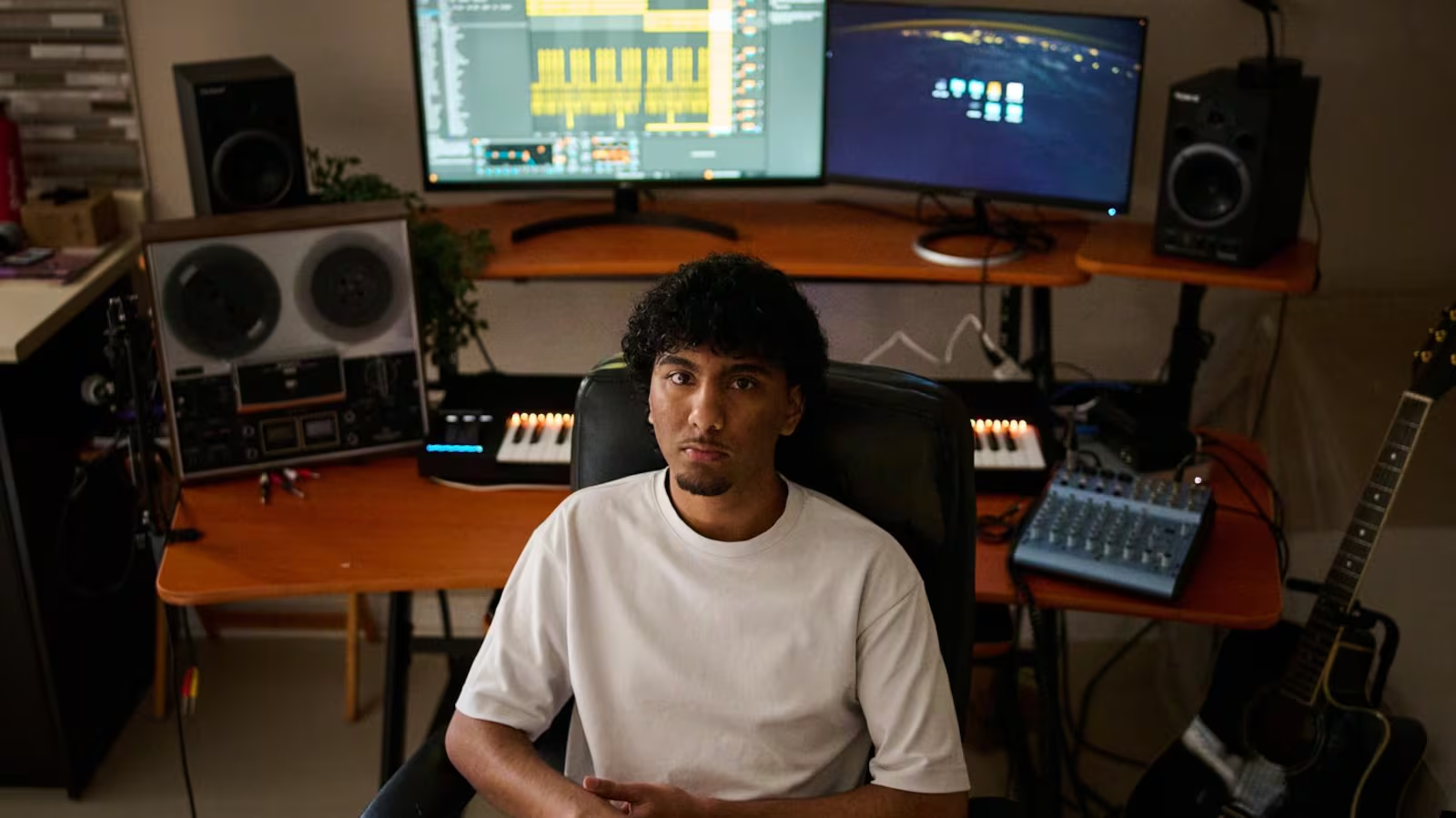
It was a school night last summer. Arham Paul, then still 15, was winding down and getting ready for bed in his Markham home when his phone rang.
One of his beatmaker friends had been brought into Drake’s new project and needed help — specifically, someone who could build an ’80s-style intro for a song. Fast.
Paul did not hesitate for a second.
“We are not sleeping tonight,” he told his friend.
So instead of resting for class the next morning, the teenager spent hours in his basement studio building out a slow, sensual opening alongside Miami-based producer Sebas Lopez. The sound they were going for was something warm and retro — the kind of texture that sounds like it could have come off a Jodeci record, even though Paul had not grown up listening heavily to that era.
“I tried to put myself in that mindset of, ‘What sounds did they use during that era? And how would Drake sound over it?'” he says.
That session became “Classic” — one of two songs Paul helped craft for Drake’s surprise album trilogy that dropped last week to the sound of fireworks over Toronto’s waterfront and a CN Tower turned blue.
“I was shocked because I didn’t expect him to call me to work on a Drake track,” Paul says during an interview. “But when Drake asked for the ’80s intro, he called me because he knew I was on that sort of vibe.”
From Markham to Drake’s Studio — How It Actually Happened
The path from a Markham basement to a Drake credit is not as improbable as it sounds — but it required years of quiet, consistent work that most people never see.
Paul traces the real beginning to a moment when he was eight years old. He opened GarageBand on his sister’s laptop one day by accident.
“I just randomly opened it and started messing around with it and it just, like, clicked,” he says.
From there he spent years remaking songs, experimenting with trap beats, and absorbing influences — Drake and Future early on, then gradually developing something more distinctly his own. A style that blends soulful melodies, hard-hitting drums, and experimental textures.
The internet was his recording school and his distribution network simultaneously. He began posting beat snippets and production videos on Instagram, building connections in the music industry one follow at a time. His first notable placement came through New Jersey streamer and rapper PlaqueBoyMax on a track called “Oasis” — the direct result of a loop Paul had shared in a Discord community that started circulating among producers.
That momentum created gravity. One connection led to another. Eventually those connections led him into Drake’s orbit.
The Two Songs — What He Actually Built
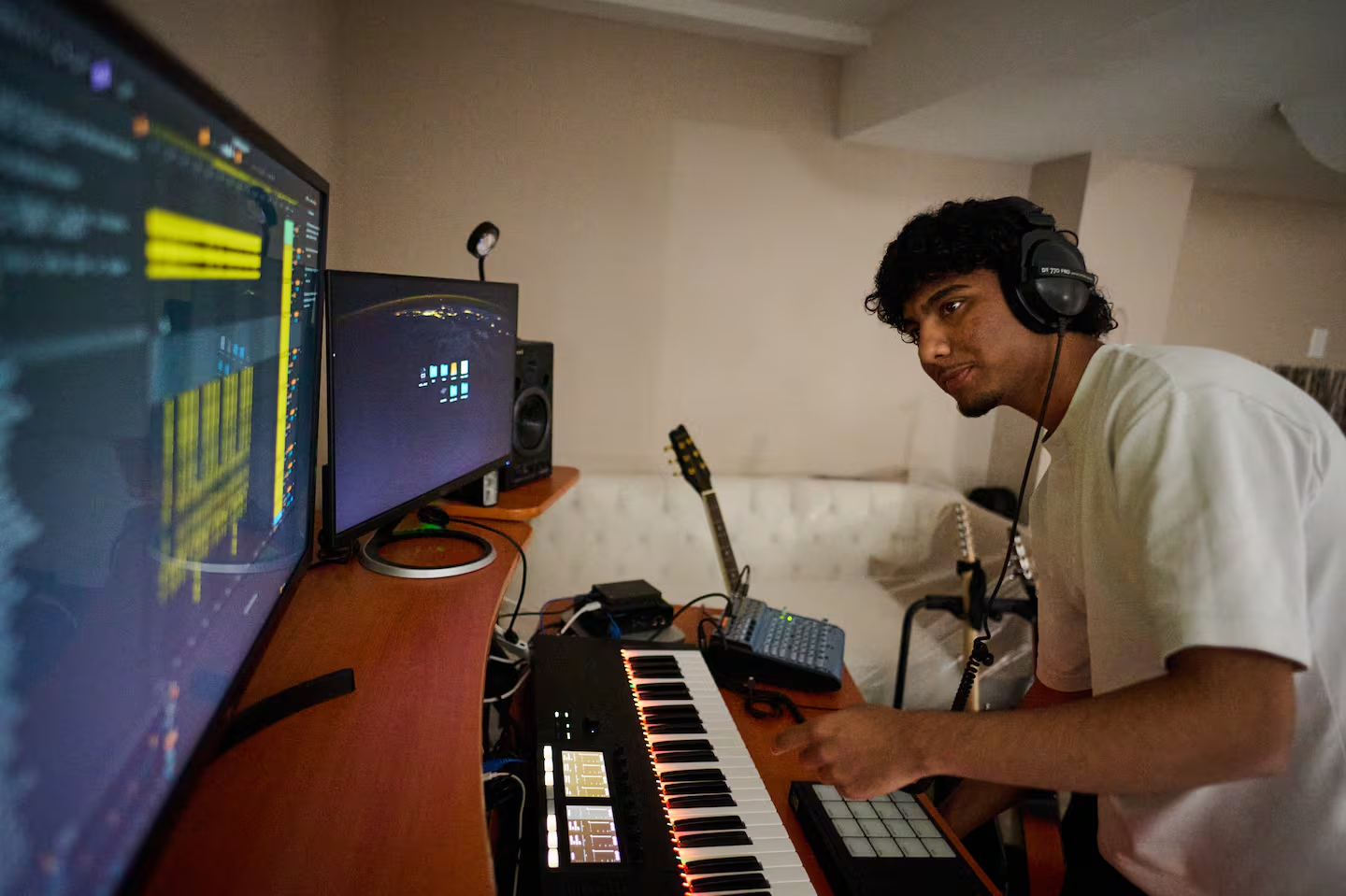
“Classic” from Habibti
Lopez reached out for “Classic” specifically because he knew Paul had been experimenting with retro sounds and synth-heavy textures. Building the opening meant immersing himself in older R&B records — studying the production techniques of an era he had not grown up with and figuring out how to make them feel current without losing the warmth that made them work.
The finished intro does exactly what Drake needed. It sets a tone that is confident and unhurried — the kind of opening that tells you the person about to rap over it is not in a rush to prove anything.
“Q&A” from Maid of Honour
The second placement came together differently. Drake had contacted Dallas producer Stack!e asking for a song channelling what he described as “summer ratchet vibes.” Stack!e sent Paul a MIDI file to work with.
Paul took that file and built something unusual out of it — fusing Brazilian funk with sexy drill, a rap sub-genre known for its combination of melodic hooks and hard percussion. He altered the chords, layered additional textures, and incorporated vocals from producer Dylan Hyde’s sample packs.
Then something happened that stopped him completely.
“Drake messaged my homie and was like, ‘This is a smash hit.'”
And then, on the finished song, Drake mirrored parts of the melodies Paul had built — vocally echoing the textures he had layered into the beat.
“I was stunned,” Paul says.
The Moment the Whole School Found Out
Two weeks before the albums dropped, Paul learned the songs would actually be released. What followed was a frantic scramble — contracts, legal paperwork, documentation of his involvement. His team shared a photo of legal documentation confirming his credits before streaming platforms had updated to reflect them.
Then release night came.
Paul gathered with his family in Markham to watch Drake’s CN Tower livestream before the albums dropped at midnight. His parents — who had watched their son spend years in a basement studio chasing something they perhaps did not fully understand until this moment — surprised him with cake.
“When I clicked on the song and heard Drake’s voice on the beat, it felt like one of my biggest goals that I’ve accomplished,” he says. “My parents, they’re so proud of me. It felt surreal.”
The next morning at Bill Hogarth Secondary School in Markham, the world had already moved at internet speed.
“Everyone’s all like, ‘How did you do this?’ The whole school is just hyped,” Paul says. “My principal even asked me, ‘Are you on the Drake album?’ It was just crazy. All the teachers were talking about it.”
The Wave That Followed
In the week since the albums dropped, Paul says he has been stunned by who has reached out. Producers including RiotUSA and CuBeatz — names well established in the industry — have made contact.
He has his eyes on the next chapter. Travis Scott. Don Toliver. SZA. Names that represent the next tier of the ambition he has been building toward since he was eight years old opening his sister’s laptop.
But despite the sudden attention and the industry heavyweights sliding into his messages, Paul is clear about how he sees himself right now.
“I’m still the same as I was before,” he says. “It’s just that new doors are open.”
Why This Story Matters Beyond the Music
Arham Paul is not just a feel-good story about a talented kid getting lucky. He is a portrait of something specific about Canada in 2026.
He is Pakistani-Canadian. He grew up in Markham — one of the most diverse suburban communities in the country. His father played piano and kept instruments around the house, but the real breakthrough came from a laptop, free software, the internet, and years of self-directed learning in a basement.
He did not go to music school. He did not have industry connections handed to him. He built them one Discord server and one Instagram post at a time, developing his ear by studying music he had not grown up with, and staying up all night when opportunity called.
While Drake’s new albums feature longtime collaborators like Noah ’40’ Shebib and Boi-1da, a wave of younger, internet-bred producers also helped shape the projects’ eclectic sound — including ap.melodies alongside underground names including London’s b4u and Edmonton’s rl. Developers Zone
That detail is worth holding. Edmonton. London. Markham. The next generation of Canadian music production is not centralized in one neighbourhood or one scene. It is distributed across the country, working in basements, building sounds nobody has heard yet, and waiting for the phone to ring on a school night.
Source: The Canadian Press — Alex Nino Gheciu, May 23, 2026.
Have a correction? Email [email protected]
Are you from Markham or the GTA? Did you know about ap.melodies before the Drake drop? Share this with every young Canadian producer who needs to hear this story — and let us know in the comments what you think of “Classic” and “Q&A.”
Discover more from MaplesTime
Subscribe to get the latest posts sent to your email.
