



Canada immigration news: Immigration Minister Lena Metlege Diab stood in Dieppe on November 12 and defended the government’s Immigration Levels Plan, conceding Ottawa “brought in too many people in the past” while insisting the real 2027 net gain is “more like 200,000” people, not the 380,000 in the headline target.
Quick Answer: Immigration Minister Lena Metlege Diab says the 2027 net gain from outside Canada will be more like 200,000, not the 380,000 target in the Immigration Levels Plan, because over half of that target covers people already in Canada. Neither Budget 2026 nor the levels plan backs that figure. The target stays at 380,000 residents a year through 2029.
By Maplestime News Desk | Dieppe, New Brunswick | November 14, 2026
Sources: IRCC, CIC News, Profilo Politics, The Opposition News Network, Toronto Sun | Last updated: November 14, 2026
Key Takeaways
- On November 12 in Dieppe, New Brunswick, Diab gave operational details of the Budget 2026 time limited measure: provinces and territories get optional extra PNP space to transition up to a combined 100,000 workers and their families already in Canada to permanent residence in 2027, with allocations to be used by March 31, 2027.
- Diab described the measure as a targeted one year measure, not a new program and not a permanent increase to immigration levels.
- Pressed on the numbers, she claimed the 2027 net gain is “more like 200,000” permanent residents admitted from outside Canada, saying over half of the 380,000 headline target goes to people already inside Canada. Neither Budget 2026 nor the levels plan backs that figure.
- The headline plan holds permanent resident admissions at 380,000 a year for 2027 to 2029, with an operational range of roughly 352,500 to 422,000, plus 370,000 new temporary residents a year.
- Conservative Leader Pierre Poilievre called the plan “crazy” and “bonkers”, claiming it would push 2027 totals to 650,000. Diab replied she feels sorry for him and that he does not understand Canadian workers.
- Budget 2026 figures: new international student arrivals from January to August 2026 fell 71 percent vs the same period in 2024, new worker arrivals fell 57 percent, and asylum claims fell 68 percent.
What did Diab actually announce in Dieppe?
The announcement itself is narrow and concrete. The federal government is offering provinces and territories optional extra space under the Provincial Nominee Program to move up to a combined 100,000 workers and their families to permanent residence in 2027. These are workers already living in Canada and contributing to key industries, and the provinces can choose how much of the extra space they use. The allocations are intended to be used by March 31, 2027.
The measure does not create a new program and does not reopen closed pathways. IRCC says provinces can also identify workers who already applied for permanent residence and are waiting on a decision, including through the Atlantic Immigration Program and federal programs that no longer accept new applications, among them the Start-Up Visa Program, the Self-Employed Persons Program, the Agri-Food Pilot and home care worker programs. Applicants do not need to do anything or contact IRCC.
The same measure also sets aside places for up to 45,000 spouses, partners and children of people already in Canada, plus Hong Kong pathway applicants, Ukraine family reunification cases and humanitarian cases. Put together, the government frames the whole package as supporting up to about 200,000 people already in Canada moving to permanent residence, and it says these are not new arrivals.
What does the Immigration Levels Plan actually say?
The plan tabled alongside Budget 2026 holds permanent resident admissions at 380,000 a year for 2027, 2028 and 2029, with an operational range of roughly 352,500 to 422,000. The economic class is the largest share, at about 64 percent, or around 244,700 people a year. New temporary residents are set at 370,000 a year, 220,000 workers and 150,000 students. Add the permanent and temporary totals together over three years and the plan comes to about 2.2 million people, under Budget 2026’s “Masters of Our Destiny” banner.
That is the official math. The fight is over what it leaves out. The extra 200,000 spaces for people already in Canada sit outside the headline 380,000 target chart, which is why critics say the real 2027 total is far higher than the number the government leads with.
Related: Express Entry Draws Paused November 2026 — IRCC Rescores Every Profile, Restart Near November 17
Where does the 200,000 figure come from?
It comes from Diab herself, in the room in Dieppe, not from any document. Pressed on how Canadians can trust the government not to repeat the strains of recent years, she said that over half of the 380,000 headline target goes to people already inside Canada, and that the net gain for 2027 is “more like 200,000” permanent residents admitted from outside Canada. Neither Budget 2026 nor the 2027 to 2029 levels plan backs up that figure or states that over half of the 380,000 target will come from inside Canada.
The other side has its own numbers, and they point the opposite way. Poilievre posted a video to X on November 8 calling the plan “bonkers” and “insane”, and he claims it would push 2027 totals to 650,000 people. A Toronto Sun editorial published November 14 argues that up to 662,000 people could get permanent resident status in 2027 once the extra measures are counted. Diab’s answer to Poilievre was personal: she said she feels sorry for him and that he does not understand Canadian workers, while conceding that some Canadians have legitimate concerns.
So the public now has three numbers for the same year: 200,000 from the minister, 380,000 in the official target, and 650,000 or more from the critics. They cannot all be the right way to count 2027, and the difference between them is the whole argument.

Aerial view of Dieppe, New Brunswick. Photo: Quintin Soloviev, CC BY 4.0, via Wikimedia Commons
Why does this land hardest in the GTA?
Toronto and the GTA take in more newcomers than any other part of Canada, so every argument about the national target lands there first, in rents, in job queues and in classroom sizes. When the minister says the system is now well managed and focused on economic needs, GTA employers and renters are the ones who will know first whether that is true.
The Budget 2026 numbers already show a sharp turn. New international student arrivals from January to August 2026 fell 71 percent from the same period in 2024, new worker arrivals fell 57 percent, and new asylum claims fell 68 percent. Whatever the right count for 2027 turns out to be, the flow of people into Canada is already far smaller than it was two years ago.
The Dieppe exchange, Diab at the podium and Poilievre’s reply, is captured in this video reel posted November 12.
Frequently Asked Questions
Is the 200,000 figure official?
No. It is the minister’s claim from her Dieppe appearance on November 12. Neither Budget 2026 nor the 2027 to 2029 Immigration Levels Plan states that figure or says that over half of the 380,000 target will come from people already in Canada.
What is the 100,000 worker measure?
It is a time limited Budget 2026 measure that gives provinces and territories optional extra Provincial Nominee Program space to transition up to a combined 100,000 workers and their families already in Canada to permanent residence in 2027. The allocations are intended to be used by March 31, 2027, and the measure creates no new program.
Does the plan cut immigration?
On the headline number, yes. Budget 2026 presents the 380,000 annual permanent resident target as a 21 percent cut from the 483,655 people admitted in 2024. Critics say the extra measures outside the headline target undo much of that cut.
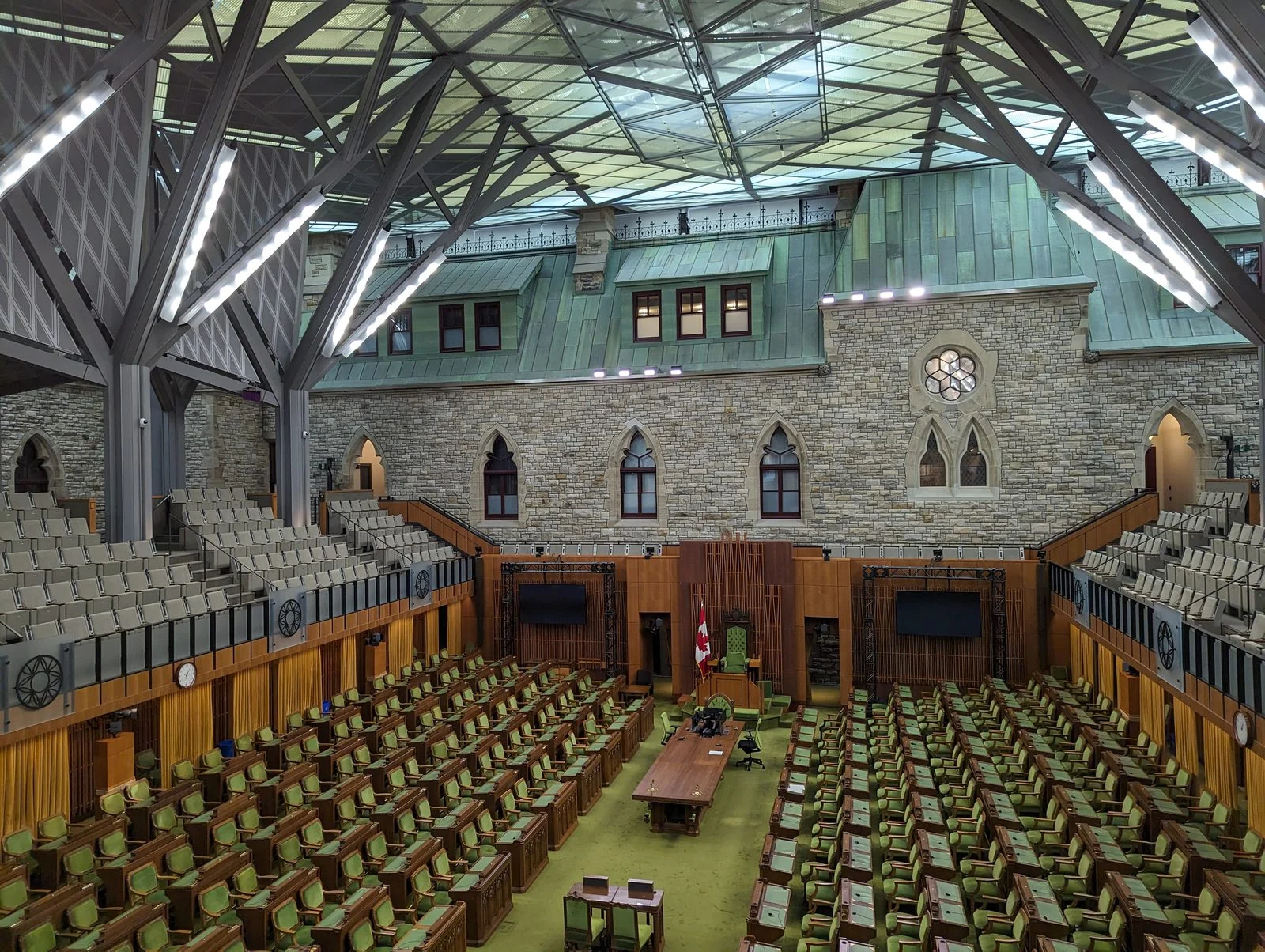
The House of Commons chamber in the West Block, Ottawa. Photo: Takipoint123, CC BY-SA 4.0, via Wikimedia Commons
Maplestime will provide updates from the immigration levels debate as announcements are made.
Have a tip about this story? Email [email protected]
Have a correction? Email [email protected]
If the real net gain is 200,000 and the headline says 380,000, which number should Canadians trust? Tell us in the comments. And share this with every newcomer watching the levels debate.
Enjoying Maplestime? Support independent Canadian journalism — no paywall, no corporate owners.