


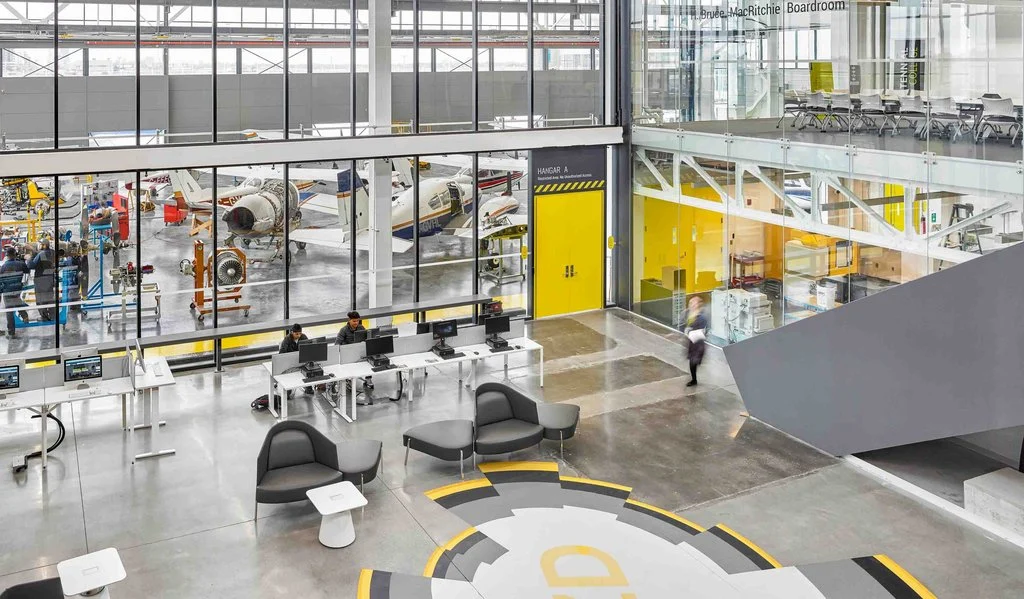
Canadian tech news — NASA is bringing the 2025 Space Apps Challenge to Canada on October 4 and 5, and the Toronto event will be the largest in the country, hosted at the Bombardier Centre for Aerospace and Aviation at Centennial College’s Downsview Campus. Canadians have quietly become some of the world’s best at this competition — and this year’s hackathon lands at a moment when both NASA and the Canadian space industry are at a crossroads.
By Maplestime Technology Desk | Toronto, Ontario | September 19, 2026
Sources: NASA, Space Apps Challenge, Canadian Space Agency, BetaKit | Last updated: September 19, 2026
Key Takeaways
- The 2025 NASA Space Apps Challenge runs October 4–5, in person and virtual; Toronto’s event at Centennial College’s Downsview Campus is the largest in Canada
- The annual hackathon tasks participants with solving Earth- and space-related problems using NASA’s open datasets — no coding experience required
- In 2024, Canadian teams won two of 12 global categories: Waterloo’s WMPGang (Best Use of Science, near-Earth object finder) and Saskatoon’s Asteroid Destroyer (exoplanet mapping)
- Toronto attracted over 300 contributors in 2024; worldwide registrations hit 93,520 that year, up from just 2,004 people globally in 2012
- The event lands as NASA faces deep cuts from the Trump administration and Canada’s commercial space sector races toward major firsts
What the Space Apps Challenge Is
Like recent years, the annual hackathon tasks both in-person and virtual participants with solving Earth- and space-related problems using NASA’s open datasets. The space agency wants to foster collaborations between creatives, developers, scientists, and students — a way to build portfolios and professional networks while doing genuinely interesting science.
NASA launched the challenge in 2012 and included Canada from its early days. It is now held across 163 countries and territories. The Canadian Space Agency is among 15 space agencies involved — it began participating in 2018 and offers its own challenges to Canadian participants in cities including Montréal, Ottawa, and Vancouver.
NASA stresses that entrants do not need coding experience, and expert mentorship is part of the process. Projects are submitted for judging in a Global Winners competition recognizing the “most innovative” work.
Canadians Keep Winning This Thing
In 2024, Canadian teams won in two out of 12 global categories. Waterloo, Ontario’s WMPGang won “Best Use of Science” for a web app that finds near-Earth objects. Saskatoon’s Asteroid Destroyer team mapped exoplanets — planets beyond our solar system — in our galaxy, the Milky Way.
That is a remarkable hit rate for a country punching far above its weight. And the Toronto event keeps growing: it attracted over 300 contributors in 2024. For context, the entire 2012 Challenge involved 2,004 people worldwide. Registrations began climbing sharply in 2020, when NASA added a one-year COVID-19 hackathon, and the hybrid model has pushed growth sharply since 2022 — 93,520 registrations worldwide in 2024.
Related: Cohere opens Paris office to create European hub for its AI business
Related: Keypr incorporates Nesto mortgage services into platform for homebuyers
Why This Year’s Challenge Matters More Than Usual
The Space Apps Challenge comes at a crucial moment for both NASA and the Canadian space industry.
The Trump administration has cut 4,000 NASA jobs and proposed cutting funding for science programs by half, focusing instead on the Artemis moon program. The White House has also fought against climate change research that might support the challenge — including two climate monitoring missions that track carbon dioxide levels in the atmosphere and measure plant health.
Meanwhile, Canadian spaceflight is on the verge of real expansion. NordSpace is poised to launch what it claims will be Canada’s first commercial rocket as soon as August 27. Maritime Launch Services and Reaction Dynamics are readying an orbital vehicle for a planned 2028 debut. And the CSA could make history soon: astronaut Jeremy Hansen could become the first Canadian to circle the moon if NASA’s Artemis II mission launches as planned in April 2026.
A hackathon that connects young Canadian talent to real space data and real networks is arriving exactly when Canada needs that pipeline most — and exactly when NASA’s own commitment to science is being hollowed out at the top.
Maplestime will provide updates from the Space Apps Challenge and Canada’s space industry as announcements are made.
Have a tip about Canadian space and tech? Email [email protected]
Have a correction? Email [email protected]
Should Canada keep betting on NASA partnerships while Washington guts science funding — or is it time to build a truly independent Canadian space program? Tell us in the comments, and share this with every Canadian who thinks we should be aiming higher.
Enjoying Maplestime? Support independent Canadian journalism — no paywall, no corporate owners.