



Canada immigration news: You need $27.60 an hour to live in the Greater Toronto Area, and that is before rent eats the rest of your paycheque. The Ontario living wage 2026 numbers, released November 9, put every region further out of reach for minimum wage workers, and the gap keeps growing.
The Ontario living wage 2026 rate is $27.60 an hour in the Greater Toronto Area, the highest in the province. Every region saw an increase, with rates from $21.15 to $27.60, and no region lets a full time minimum wage worker cover basic living costs. The rates are a guide for employers, not a legal minimum.
By Maplestime News Desk | Winnipeg, Manitoba | November 13, 2026
Sources: Ontario Living Wage Network, To Do Canada, Immigration News Canada | Last updated: November 13, 2026
Key Takeaways
- The GTA leads the province at $27.60 an hour, up $0.40 from $27.20 in 2025, a rise of 1.5%.
- The GTA rate sits $9.65 above Ontario’s $17.95 minimum wage, in effect since October 1. That gap has widened from $8.50 in 2023.
- All 10 regions saw increases, averaging 1.6%, a much more modest rise than the 5.3% average jump in 2025.
- Ottawa rose fastest at 3.0%, from $23.40 to $24.10 an hour. London-Elgin-Oxford is lowest at $21.15, still $3.20 above minimum wage.
- A GTA worker on a 35 hour week grosses $50,232 a year at the living wage, versus $32,669 at minimum wage, a gap of $17,563.
- More than one million Ontario workers do not earn a living wage where they live, according to an October 2025 Canadian Centre for Policy Alternatives analysis, with women and racialized workers disproportionately represented.
What is the Ontario living wage 2026 rate where you live?
The Ontario Living Wage Network released the Ontario living wage 2026 rates on November 9, with coverage following on November 11. Every one of the 10 regions moved up, but the increases were smaller than last year. The average rise of 1.6% compares with a 5.3% average jump in 2025, which suggests the sharp cost surges of recent years have eased, even as the rates themselves keep climbing.
Here are the full 2026 rates, region by region:
- Greater Toronto Area: $27.60
- Grey-Bruce-Perth-Huron-Simcoe: $24.75
- Ottawa: $24.10
- Dufferin-Guelph-Wellington-Waterloo: $23.40
- Hamilton: $23.10
- East: $22.80
- Southwest: $21.85
- Brant-Haldimand-Norfolk-Niagara: $21.60
- North: $21.35
- London-Elgin-Oxford: $21.15
Ottawa posted the largest percentage increase in the province, up 3.0% from $23.40 to $24.10. At the other end, London-Elgin-Oxford has the lowest rate at $21.15, yet even there a worker earns $3.20 more per hour than the provincial minimum wage and still falls short of what the network says basic living costs demand. The blunt message in the release is that there is no region in Ontario where a full time minimum wage worker can cover basic living costs.
What does a living wage family budget look like in the GTA?
The GTA figure is built on a family of four, and the budget behind it shows where the money goes. Shelter alone is costed at $34,802 a year. Food adds $12,914, childcare adds $12,565, and transportation adds $9,689. Those four items alone total $69,970 a year, before clothing, phone bills, or anything else a family needs.
That is why the Ontario living wage 2026 math is so stark. On a 35 hour week over 52 weeks, a GTA worker at the living wage would gross $50,232 a year. The same worker at minimum wage would gross $32,669. The gap is $17,563 a year, and it is the difference between a family that can pay its bills and one that falls behind every month.
Related: Toronto Newcomer Support Poll 2026 — Most Say Communities Do Enough, Except on Housing
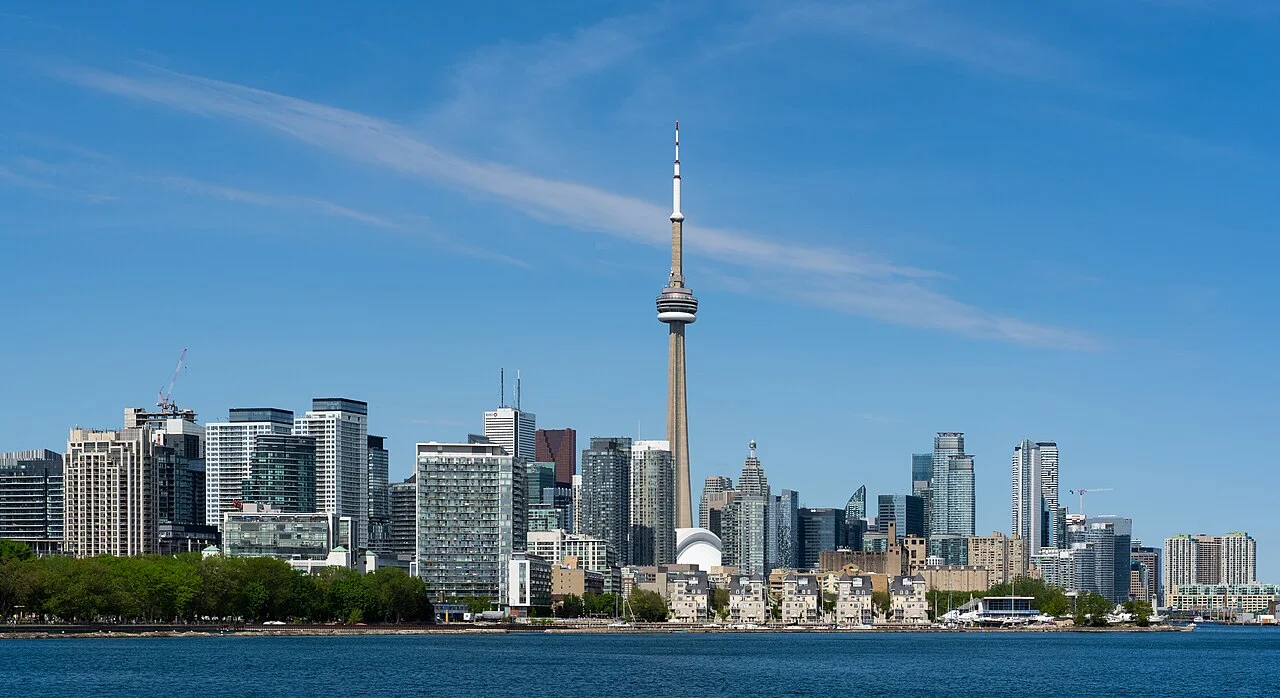
Toronto skyline viewed from Trillium Park, where the living wage is highest in Ontario. Photo: Maksim Sokolov, CC BY-SA 4.0, via Wikimedia Commons
Who is most affected by the gap?
The Ontario living wage 2026 release is not a law. It is a calculation of what a worker needs to earn to cover basic costs in the community where they live, and employers choose whether to pay it. More than 600 Ontario employers are certified by the network as living wage employers, but that leaves most of the province’s workforce outside the standard.
An October 2025 analysis by the Canadian Centre for Policy Alternatives estimated that more than one million Ontario workers do not earn a living wage where they live. Women and racialized workers are disproportionately represented in that group, which means the Ontario living wage 2026 shortfall lands hardest on the people who already face the steepest climb. For newcomers settling in the GTA, where the rate is highest and the housing costs are steepest, the numbers are a warning to plan carefully before choosing where to live and work.
Frequently Asked Questions
Is the living wage the same as the minimum wage?
No. Ontario’s minimum wage is $17.95 an hour, the legal floor every employer must pay. The Ontario living wage 2026 figures are what the network calculates a worker needs to cover basic costs in their region. Employers choose to pay it, and more than 600 in Ontario are certified as living wage employers.
What is the Ontario living wage 2026 rate in Toronto?
The Greater Toronto Area rate for 2026 is $27.60 an hour, up from $27.20 in 2025. It is the highest rate in the province and sits $9.65 above the minimum wage.
Why did Ottawa’s rate rise the most?
Ottawa recorded the largest percentage increase of any region, up 3.0% from $23.40 to $24.10 an hour. The Ontario living wage 2026 release lists the new rate for each region but the GTA remains the most expensive place in Ontario to live on a working wage.
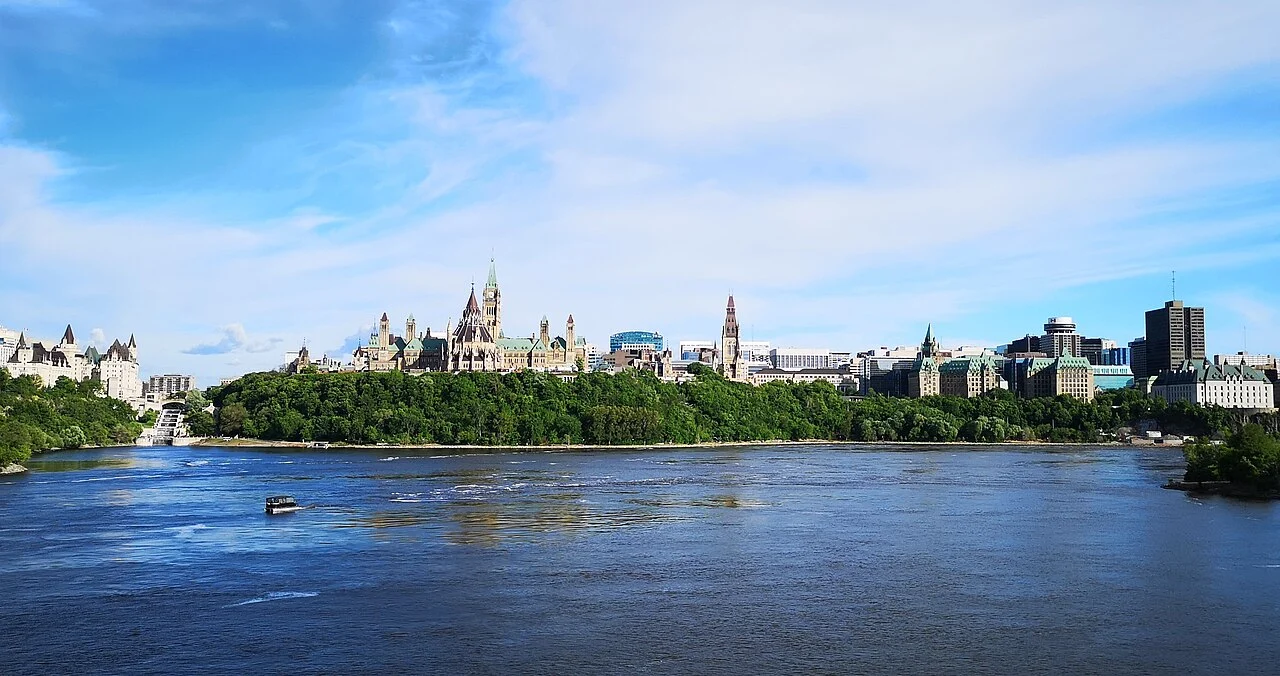
Ottawa skyline, where the living wage rose 3.0% this year, the largest percentage increase in Ontario. Photo: Scoutguy5427, CC BY-SA 4.0, via Wikimedia Commons
Maplestime will provide updates from Ontario living wage 2026 rates as announcements are made.
Have a tip about this story? Email [email protected]
Have a correction? Email [email protected]
If $27.60 an hour is what it takes to live in the GTA, how many of your neighbours are actually earning it? Tell us in the comments. And share this with every newcomer trying to make Ontario home.
Enjoying Maplestime? Support independent Canadian journalism — no paywall, no corporate owners.