


Thousands of fans packed Rogers Stadium in North York on Sunday night for the first of five Bruno Mars concerts after heavy rain and strong winds wiped out Saturday’s sold-out opening show. The music is finally happening. But so is a more complicated conversation about what it means to have a 50,000-seat concert venue in the middle of a residential neighbourhood.
By Maplestime Entertainment Desk | Toronto, Ontario | May 24, 2026 Source: CTV News Toronto — Janice Golding and Joanna Lavoie | Last updated: May 24, 2026 — 9:48 PM EDT
Key Takeaways
- Bruno Mars opened his five-night Rogers Stadium run on Sunday May 24 after Saturday’s concert was cancelled due to heavy downpours and strong winds
- Saturday’s show has been rescheduled to Sunday May 31 — all Saturday tickets are valid for the new date
- Sunday’s concert is the first show of Rogers Stadium’s second season — 20 concerts are planned for 2026, up from 14 last year
- Rogers Stadium at Downsview Park seats 50,000 — making it one of the largest outdoor concert venues in Canada
- Nearby residents are raising concerns about noise vibration, traffic disruption, and a lack of public consultation before the stadium was built
- Live Nation says it has made technical, transportation, and noise mitigation improvements for the 2026 season
- Local Councillor James Pasternak says last year was a “real wake-up call” and empathizes with community concerns
The Show That Almost Wasn’t — Saturday’s Cancellation and Sunday’s Comeback
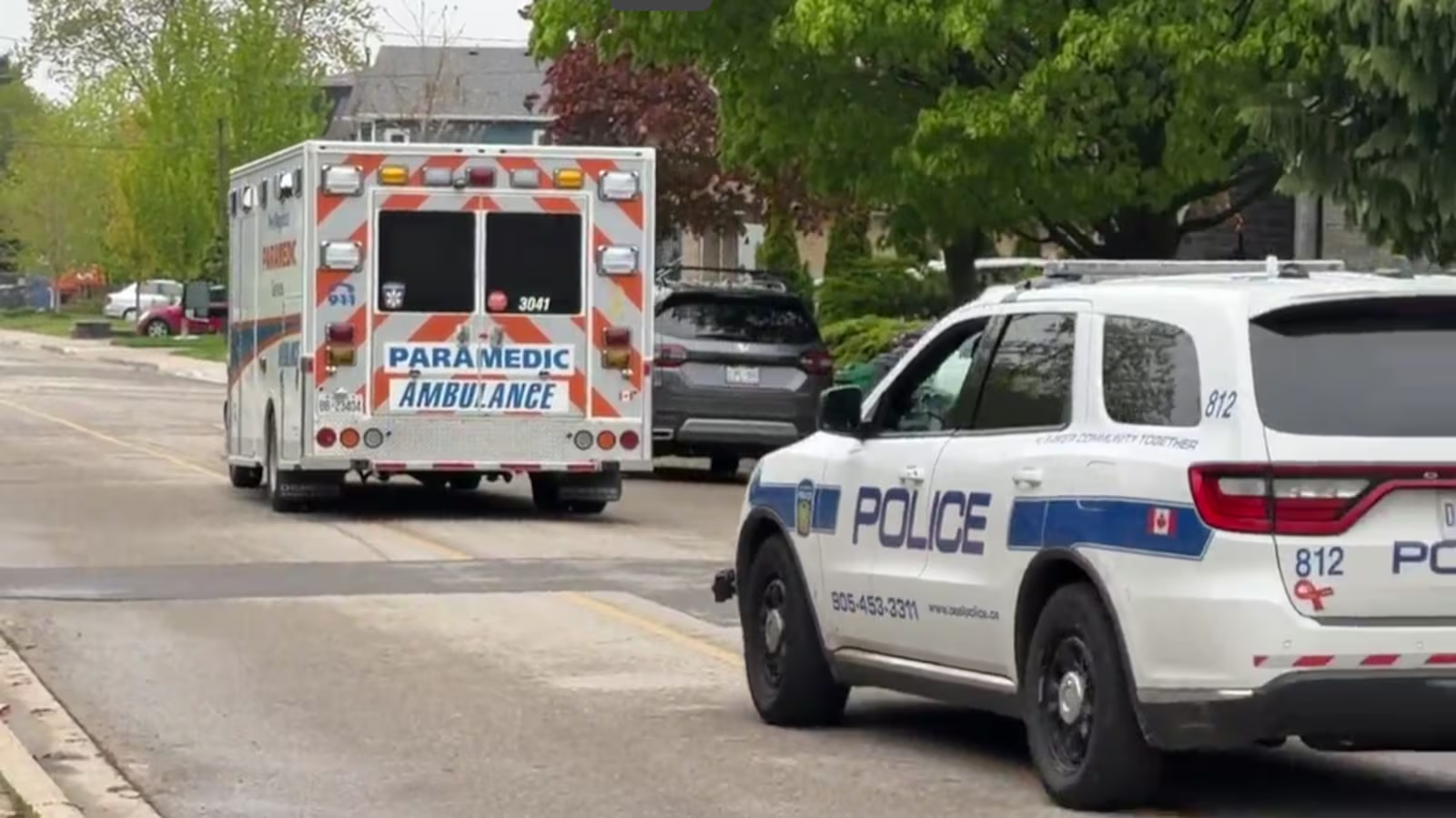
Saturday was supposed to be the night. Fifty thousand people had tickets. Bruno Mars was in the city. Rogers Stadium was ready.
Then the sky opened up.
Heavy downpours and strong winds swept through the Greater Toronto Area on Saturday, making an outdoor concert at Downsview Park not just uncomfortable but unsafe. Rogers Stadium announced the cancellation, Mars personally addressed his fans online — “I never want this but I need everyone to be safe in order to have a good time” — and the show was rescheduled to May 31.
Sunday brought better weather and the fans who had been ready since Friday showed up with the same energy they had planned to bring the night before.
“It’s bittersweet. I think we’ll have a better time next weekend. The weather’s supposed to be better, but yeah, I mean, rain or shine I would have gone out to see him,” one fan told CTV News Toronto outside the venue on Sunday afternoon.
“It would have been worth it. We would have grinded it out, but I think it’s good that we didn’t have to go through it,” added another.
By late Sunday afternoon, sound checks were underway and the stadium was filling. The five-night run — originally Saturday through the following Saturday — now runs Sunday through Sunday May 31, with the rescheduled show as the bookend.
“I think it’s going to be really, really great. I think he’s a great performer. A lot of the set list is amazing so we’re really excited,” said one fan heading into the stadium.
The Stadium — Year Two and Growing
Sunday’s Bruno Mars show is not just a concert. It is the official opening of Rogers Stadium’s second summer season.
Last year the venue — located at Downsview Park in North York — hosted 14 concerts. This year that number rises to 20. The 50,000-seat outdoor stadium is rapidly establishing itself as one of the most significant concert venues in Canadian history, drawing some of the world’s biggest artists to Toronto on a scale the city could not accommodate before.
Bruno Mars kicking off the 2026 season is a statement booking. His five-night run alone represents a quarter million tickets — a number that reflects both the global scale of his fanbase and the growing confidence concert promoters have in Toronto as a world-class live music destination.
The Neighbours — A Valid and Growing Concern
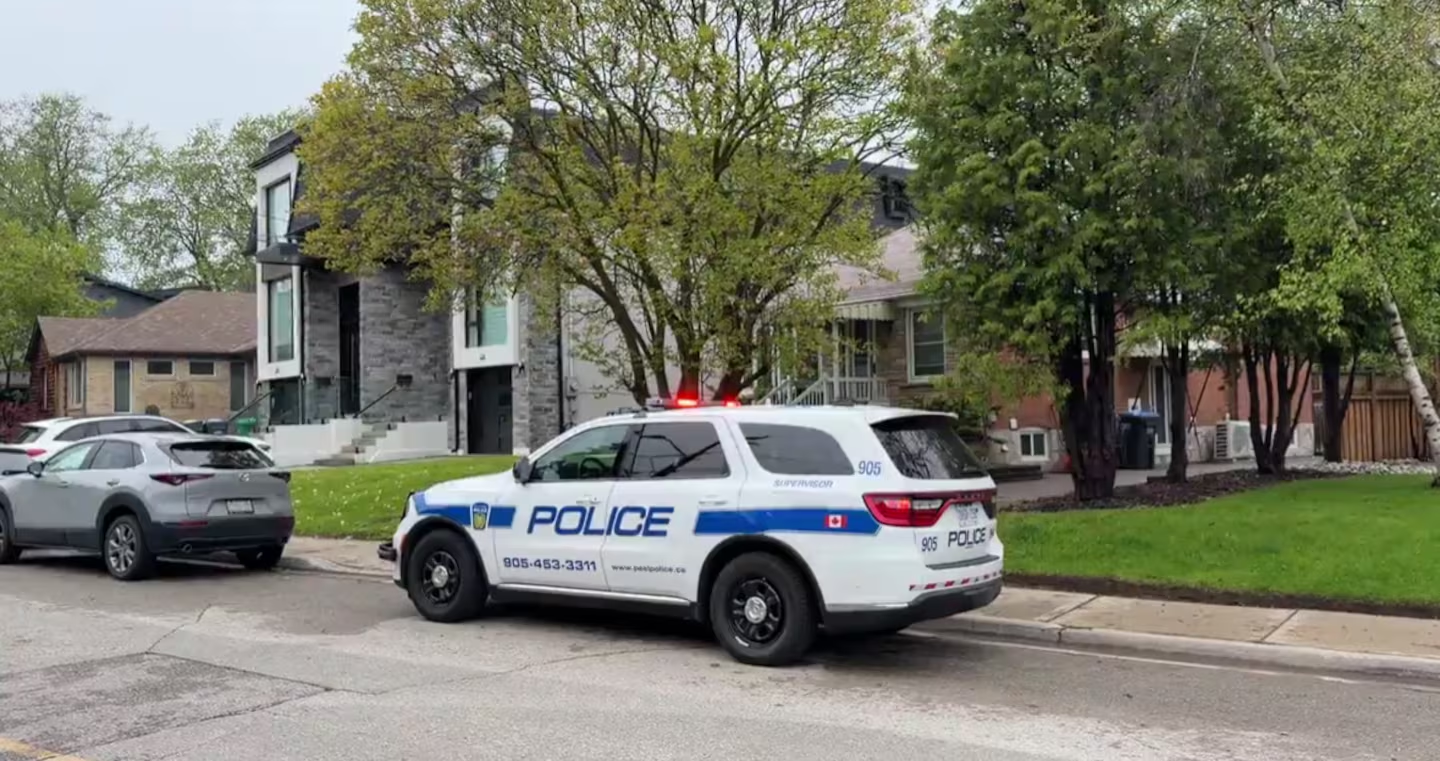
Not everyone within earshot of Rogers Stadium is excited about what summer 2026 looks like on the concert calendar.
The residents who live in the neighbourhoods surrounding Downsview Park have a complaint that is both specific and legitimate. They were there before the stadium. And nobody asked them whether they wanted it.
“I found out about the stadium about three weeks before it was announced,” local Councillor James Pasternak told CTV News Toronto on Sunday. It is an admission that speaks to a broader issue — major infrastructure decisions in Toronto are sometimes made faster than the community consultation process can keep pace with.
Pasternak was direct about the community’s position. “I empathize with the local community. They were there long before the stadium. This is not like moving out to the airport and then complaining about jets. These people were decades before the stadium was there and they have a valid point.”
The specific complaints from residents centre on two things — traffic and vibration.
Traffic is visible and immediate. Signs outlining traffic restrictions appear throughout the neighbourhood on concert nights. Streets fill with cars, police direct parking, and residents who simply want to get home find their neighbourhood transformed into a concert venue parking lot.
Vibration is harder to solve. Ingrid Buday, the founder and executive director of No More Noise, put it plainly. “It’s vibration that was the number one concern from people. You can put earplugs in for decibels, you can do nothing for vibration. So when their windows are rattling and people can’t get to sleep because of this, it’s a real problem.”
Buday’s criticism of Live Nation’s response was pointed — she said the improvements announced for the 2026 season are not sufficient, and she raised the issue of how the stadium was developed with what she described as little to no public consultation.
What Live Nation Says It Has Changed for 2026
Live Nation, the primary operator of Rogers Stadium, issued a statement ahead of the 2026 season acknowledging last year’s issues and outlining what it says are meaningful improvements.
The changes include dedicated rideshare pickup and drop-off locations designed to reduce random parking in residential streets. Transit encouragement — Live Nation says it is actively pushing concert-goers toward public transportation. Technical improvements to vinyl cladding on the grandstands intended to decrease how far sound travels into the surrounding community. Municipal licensing officers will monitor sound levels both on site and in the community throughout the concert season. All shows will end by 11:00 PM.
Whether these changes will satisfy the community remains to be seen. The test will come over the course of 20 concerts through the summer — and the complaints or their absence will tell a more honest story than any statement issued before the season began.
Not Everyone in the Area Is Complaining
The neighbourhood reaction is not uniform. Some residents living near Rogers Stadium have found their own way to appreciate what has appeared in their community.
“My family really enjoys the concerts. We sometimes go on our roof patio and listen to them, and honestly it’s been a good addition to the community,” said one neighbour.
That perspective is real too. A world-class concert venue brings cultural energy, economic activity, and the kind of experiences that define a city’s identity. Toronto is a better city for having the ability to host Bruno Mars for five nights. The question is how to make that true for the people who live nearby as well as for the fans who drive in from across the GTA.
That balance — between a venue’s ambitions and a community’s quality of life — is the conversation Rogers Stadium’s second season will force Toronto to have whether it is ready or not.
What Ticket Holders Need to Know
If you had tickets for Saturday May 23: Your tickets are automatically valid for the rescheduled show on Sunday May 31. No exchange is required. Check the Rogers Stadium app and your Ticketmaster account for official confirmation and any updates.
If you have tickets for any of the remaining shows: Sunday through Friday shows are proceeding as scheduled. The May 31 show is the rescheduled Saturday performance.
Transportation: Live Nation is strongly encouraging transit. The TTC offers pickup and drop-off near the venue. The City of Toronto announced free subway rides home from Rogers Stadium following summer concerts — check the TTC website for details.
Sound curfew: All shows end by 11:00 PM.
Source: CTV News Toronto — Janice Golding and Joanna Lavoie, May 24, 2026. | Data current as of May 24, 2026 — 9:48 PM EDT.
Have a correction? Email [email protected]
Are you going to one of the Bruno Mars shows this week at Rogers Stadium? Or do you live near Downsview Park and have a perspective on the stadium’s impact on the neighbourhood? Tell us in the comments — and share this with every Toronto music fan who needs the update.
Discover more from MaplesTime
Subscribe to get the latest posts sent to your email.
