




By Ayomikun. O | August 2026 | Updated: August 2026 | No Comments | 4 Mins Read
Manitoba weather news — Three separate tornadoes touched down in southern Manitoba during severe storms on August 5 and 6, and the Northern Tornadoes Project has now confirmed all three. Nobody was hurt, but the twisters ripped a 4-kilometre path through Birds Hill Provincial Park and chewed up crops near Dugald.
By Maplestime News Desk | Winnipeg, Manitoba | August 2026
Sources: Northern Tornadoes Project | Environment and Climate Change Canada | Last updated: August 2026
Key Takeaways
- Three EF0 tornadoes touched down in southern Manitoba on August 5 and 6, 2025 — confirmed by the Northern Tornadoes Project (NTP).
- The twisters struck near Grande-Clairière, Birds Hill Provincial Park, and Dugald.
- All three were rated EF0 — the weakest classification — with estimated winds of 115 km/h.
- The Birds Hill tornado carved a 4.1-kilometre path up to 270 metres wide; the Dugald tornado ran 4.24 kilometres.
- No injuries were reported from any of the three tornadoes.
- Confirmations came from radar data, witness video, and ground and drone surveys conducted on August 7.
Three Confirmed Tornadoes — Storm by Storm
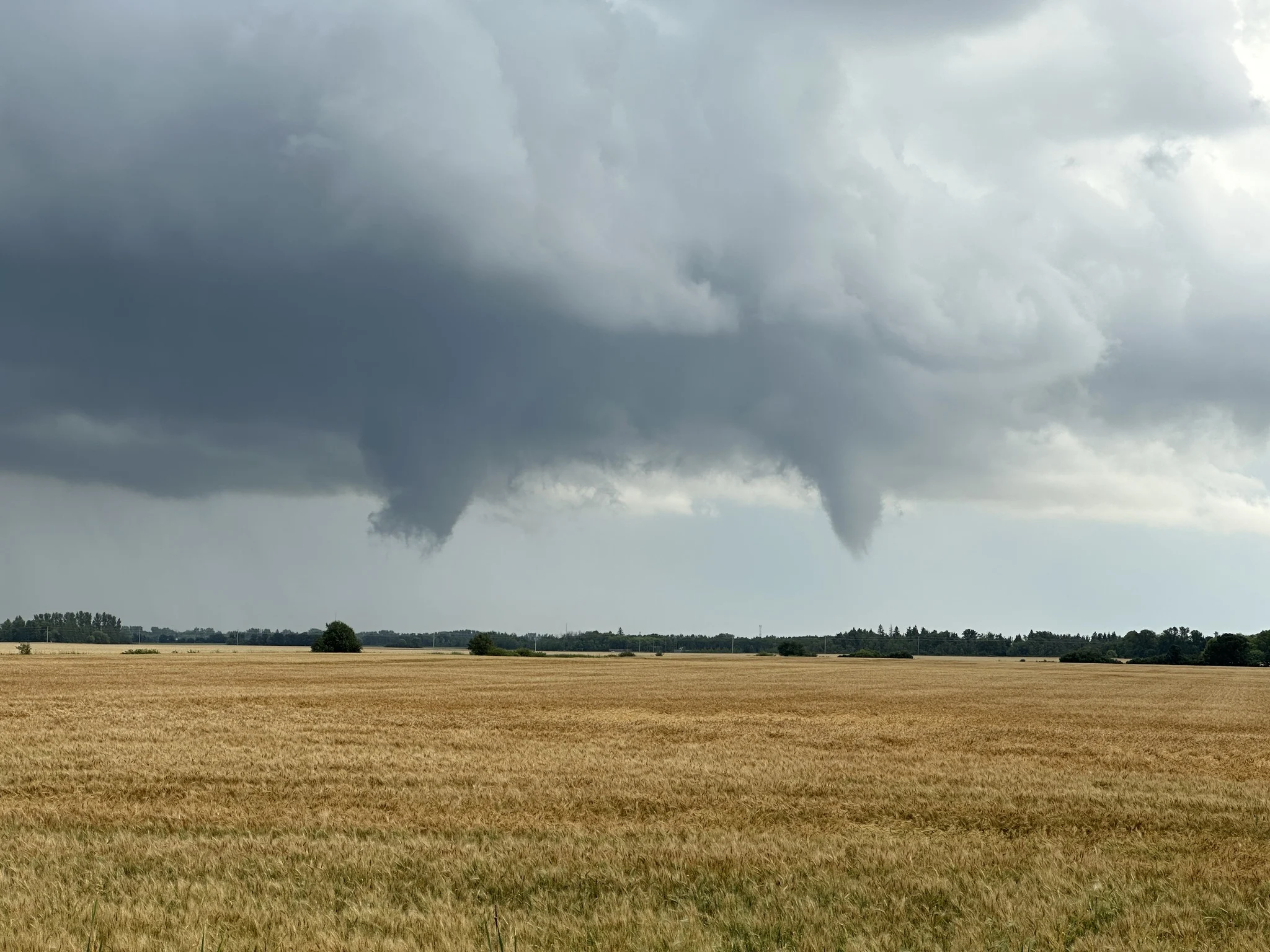
The Northern Tornadoes Project (NTP) has confirmed that three EF0 tornadoes touched down in southern Manitoba during severe storms on August 5 and 6, 2025.
While all three tornadoes were considered weak by Enhanced Fujita (EF) scale standards, they were still capable of causing minor damage — a reminder that even the “weakest” tornado is nothing to take lightly on the Prairies.
Grande-Clairière Tornado — August 5
The first tornado struck near Grande-Clairière, southwest of Melita, on the evening of August 5.
- EF rating: Default EF0 (weakest classification)
- Damage: No reported damage
- Details: Witness video captured the twister. Satellite imagery analysis is still pending.
For more details on EF0 tornado classifications, see Environment and Climate Change Canada’s tornado facts.
Birds Hill Provincial Park Tornado — August 6
The second tornado touched down northeast of Winnipeg near Birds Hill Provincial Park at 5:06 p.m. on August 6.
- Path: 4.1 kilometres long, up to 270 metres wide
- Wind speed: Estimated 115 km/h
- Damage: Minor tree damage
- EF rating: EF0
This one hit uncomfortably close to the city — Birds Hill is a beloved weekend escape for thousands of Winnipeg families, and a twister tracking four kilometres through the park is the kind of thing that makes you check the sky a little more carefully on storm days.
Dugald Tornado — August 6
The third tornado formed near Dugald, Manitoba at approximately 5:30 p.m. on August 6 — less than half an hour after the Birds Hill twister.
- Path: 4.24 kilometres long, up to 70 metres wide
- Wind speed: Estimated 115 km/h
- Damage: Crop and tree damage
- EF rating: EF0
Related: Manitoba Daylight Saving Time 2026 — No More Clock Changes Starting This Fall
Related: Trump Canada Iran 2026 — 5 Things Every Canadian Must Know About This Dangerous Comparison
No Injuries Reported
According to NTP’s official event summaries, no injuries were reported from any of the three tornadoes.
The confirmations came through a combination of radar data, witness reports, and ground and drone surveys conducted on August 7. Satellite imagery reviews are still ongoing, and could refine the damage assessments for the Grande-Clairière tornado in particular.
How Tornadoes Are Rated — The EF Scale Explained
The Enhanced Fujita (EF) scale measures tornado intensity based on damage. Here is how it breaks down:
| EF Rating | Wind Speed | Typical Damage |
|---|---|---|
| EF0 | 90–130 km/h | Light damage — tree limbs, sign damage |
| EF1 | 135–175 km/h | Moderate — roofs peeled, windows broken |
| EF2 | 180–215 km/h | Considerable — roofs torn off, mobile homes destroyed |
| EF3 | 220–270 km/h | Severe — entire storeys of homes destroyed |
| EF4 | 275–320 km/h | Devastating — homes levelled, cars thrown |
| EF5 | 320+ km/h | Incredible — strong-frame houses levelled |
- EF0 tornadoes: Winds of 90–130 km/h, typically causing light damage.
- Higher EF ratings indicate stronger, more destructive storms.
Learn more about the EF scale from the National Weather Service.
Why Manitoba Sees Tornadoes — And What To Do When One Comes
Southern Manitoba sits in the path of the same storm systems that make the Prairies one of Canada’s most active tornado regions. Warm, moist air from the south colliding with cool northern air masses creates exactly the conditions that spin up twisters — particularly through June, July, and August.
The takeaway from these three confirmed tornadoes is straightforward: have a plan. Environment and Climate Change Canada issues tornado watches and warnings through the weather alert system, and when a warning is issued for your area, the advice is simple — go to the lowest floor, get to an interior room away from windows, and stay there until the warning passes.
Maplestime will provide updates from southern Manitoba storm activity as announcements are made by the Northern Tornadoes Project and Environment and Climate Change Canada.
Have a tip about southern Manitoba weather or storm damage? Email [email protected]
Have a correction? Email [email protected]
Three confirmed tornadoes in two days — is Manitoba doing enough to prepare rural communities for severe weather, or are we just getting lucky? Tell us in the comments. And share this with every Manitoban who needs a reminder to take tornado warnings seriously.
Enjoying Maplestime? Support independent Canadian journalism — no paywall, no corporate owners.