


Canadian politics news — the Trump Canada Iran 2026 moment happened on Saturday September 12 in Dublin, and every Canadian needs to understand what it actually means. U.S. President Donald Trump stood before reporters and deliberately compared Canada to Iran — a country the United States has been at war with since February. “Canada wants to make a deal very badly, just like Iran wants to make a deal very badly,” Trump said. Then he added: “I hope Canada appreciates being in the same sentence with Iran.” This is not a gaffe. It is not a slip. It is a calculated move from a president who uses words as weapons — and Canada needs to understand exactly what he is doing and why it matters for every Canadian family, business, and worker caught in this trade war.
By Maplestime Politics Desk | Canada | September 12, 2026
Sources: The Canadian Press | CJME | CBC News | Al Jazeera | Last updated: September 12, 2026, 5:00 PM CDT
In This Article
- Thing 1 — What Trump actually said in Dublin
- Thing 2 — Why comparing Canada to Iran is not an accident
- Thing 3 — Where the trade negotiations actually stand today
- Thing 4 — The CUSMA withdrawal threat hiding in plain sight
- Thing 5 — What Canada needs to do right now
- What Happens Next
Key Takeaways
- Trump compared Canada to Iran on September 12 in Dublin, saying both countries want a deal very badly
- Trump added “I hope Canada appreciates being in the same sentence with Iran” — making clear the comparison was deliberate and taunting
- The U.S. has been at war with Iran since February 2026 when it launched joint airstrikes with Israel on the Islamic Republic
- Canada-U.S. Trade Minister Dominic LeBlanc confirmed on Friday that no formal trade talks are currently scheduled
- Formal negotiations ended August 21 when PM Carney summoned negotiators home over American demands he said would undermine Canadian sovereignty
- Trump imposed 50 per cent tariffs on nearly $28 billion in Canadian goods and signed orders banning imports of most Canadian alcohol
- Canada’s retaliatory counter-tariffs of 15 to 50 per cent on 700 U.S. products took effect Tuesday September 8
- Trump hinted at withdrawing from CUSMA entirely without directly threatening it — leaving the uncertainty as deliberate leverage
- PM Carney’s office has not yet directly responded to the Dublin remarks
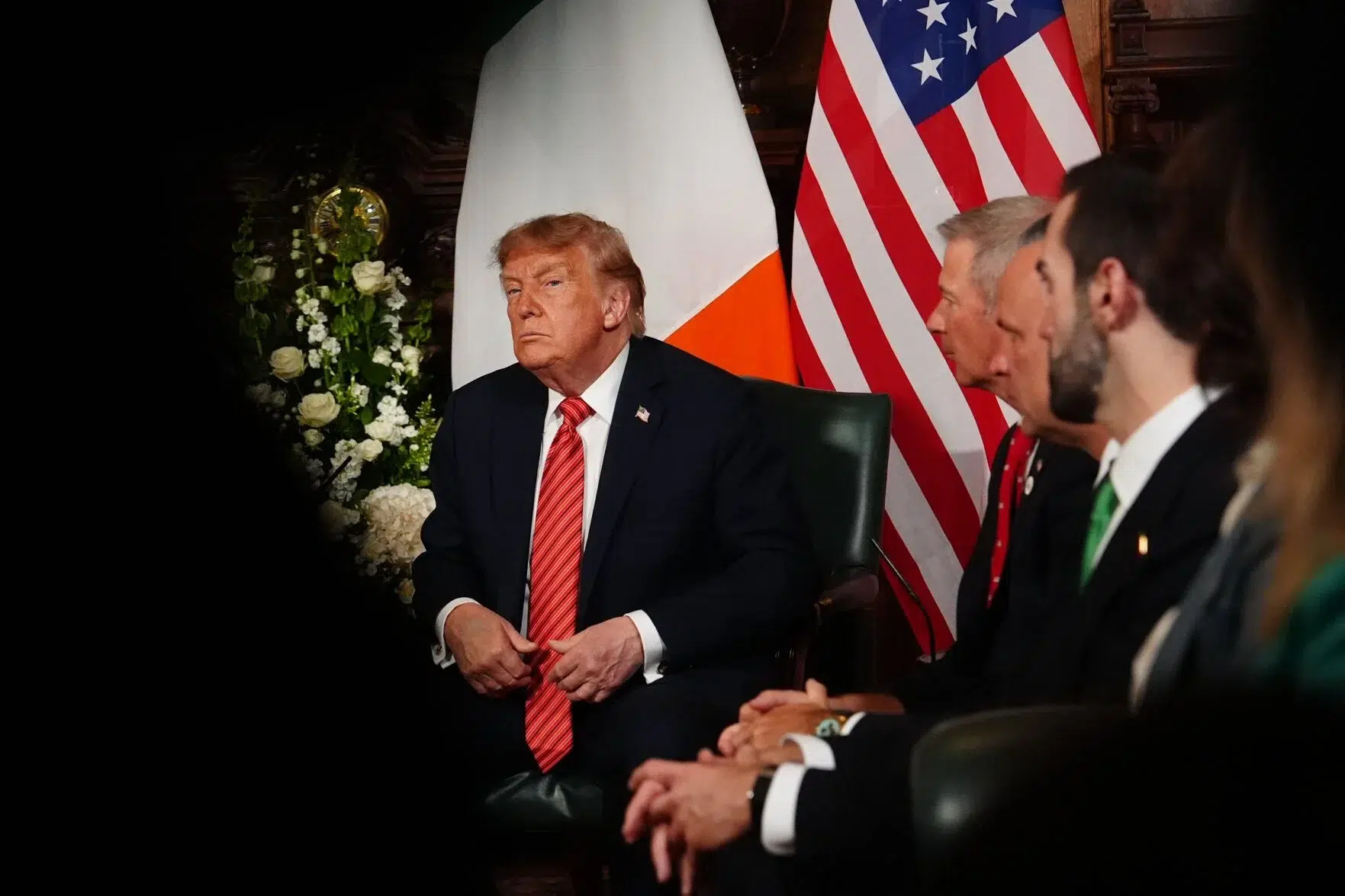
Thing 1 — Trump Canada Iran 2026 — What He Actually Said and Why the Words Matter
Trump was in Dublin on Saturday for a meeting with Irish Taoiseach Micheál Martin. A reporter asked him a straightforward and serious question — was he considering withdrawing the United States from CUSMA, the Canada-United States-Mexico Agreement on trade, entirely.
It was exactly the kind of question that deserves a direct, substantive answer about North American trade policy. Trump responded by reaching for Iran.
“Canada wants to make a deal very badly, just like Iran wants to make a deal very badly. I just don’t think they’re ready.”
Then came the line that Canadians need to sit with. “I hope Canada appreciates being in the same sentence with Iran.”
Trump started the exchange by saying the U.S. has a good relationship with Canada. He then pivoted immediately to his oft-repeated claim that his country has been ripped off for 50 years by Canada. He said Canada could get a deal at the right time — but he does not think Canada is ready.
Read those words together and you have the full picture. Good relationship. Ripped off for 50 years. Same sentence as Iran. Not ready.
This is not diplomacy. This is a dominance performance designed for an audience of one — the Canadian government — delivered on an international stage to maximise its humiliation value. And it worked, because here we are talking about it on the same afternoon it happened.
Related: Canada Counter Tariffs September 8 2026 — What Gets More Expensive and What to Do Now
Thing 2 — Why the Iran Comparison Is Not an Accident
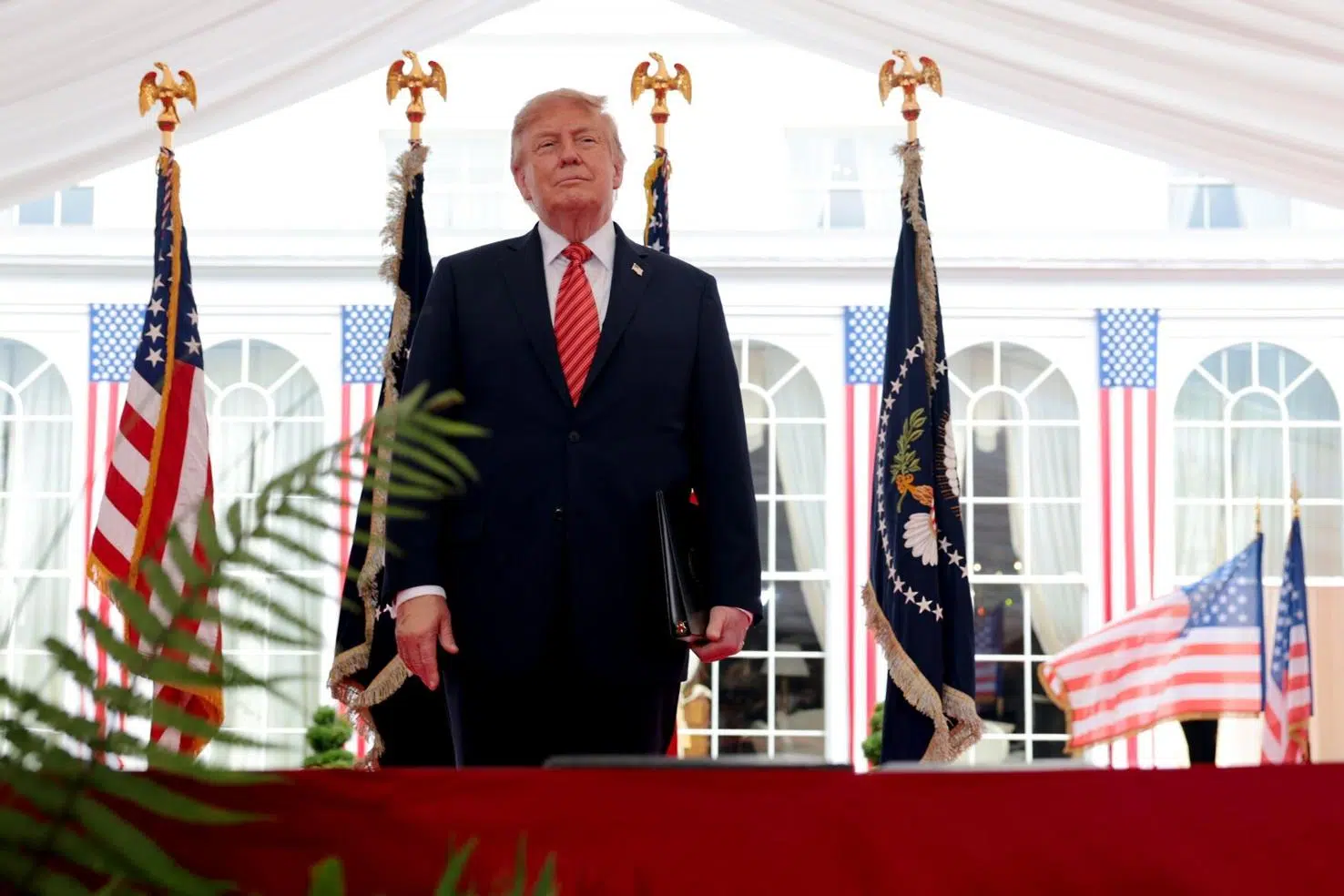
To understand why this comparison is so significant you need to understand what Iran represents in September 2026.
The United States has been at war with Iran since February 28, when it launched joint airstrikes with Israel on the Islamic Republic. The conflict has spread to neighbouring states, disrupted global shipping through the Strait of Hormuz, and contributed to ongoing economic instability that has affected energy prices and supply chains worldwide. Iran is not a trade partner the U.S. is negotiating with in good faith. Iran is an adversary the U.S. is fighting while trying to extract concessions through economic pressure.
Putting Canada in that category is not a throwaway comment. It is a deliberate framing.
When Trump uses comparison as a diplomatic tool he is doing something specific. He is publicly reclassifying Canada from ally to supplicant. He is telling the world that he sees no meaningful difference between a country he is at war with and a country that has been his largest trading partner for generations. He is signalling to his domestic audience that Canada is weak and desperate. And he is signalling to the Canadian government that he can say whatever he wants about Canada with zero diplomatic consequence — because what is Canada going to do about it?
This is the Trump Canada Iran 2026 comparison in its full context. It is not about Iran. It is about Canada’s leverage. Or rather, Trump’s view that Canada has none.
Canada is not Iran. Canada is a nation of 40 million people with one of the most advanced economies in the G7, a shared continent, a joint continental defence command, and a history of military partnership with the United States that stretches back over a century. The fact that a sitting American president chose to invoke Iran in the same breath as Canada tells you everything about how this administration views alliances — not as mutual partnerships but as hierarchies to be exploited.
Related: Canada US Relations 2026 — Trade Tariffs and the New Reality
Thing 3 — Where the Canada-U.S. Trade Negotiations Actually Stand Today
The honest picture of where Canada-U.S. trade relations stand on September 12, 2026 is not encouraging.
The formal negotiating table has been empty since August 21. That was the day PM Carney summoned Canadian negotiators home, accusing the American side of making last-minute demands that would have undermined Canadian sovereignty. The two countries had appeared to be on the verge of a deal earlier that same week — close enough that the breakdown shocked both governments and markets.
Trump responded to the breakdown by imposing 50 per cent tariffs on nearly $28 billion worth of Canadian goods. He then signed additional orders banning imports of most Canadian alcohol. He vowed to extend tariffs to steel, aluminum, and automotive sectors that had previously been partially sheltered from the worst of the trade war.
Canada responded with its own counter-tariffs. Starting Tuesday September 8, Canada imposed retaliatory tariffs of 15 to 50 per cent on more than 700 U.S. products worth $27.6 billion in annual imports — matching the U.S. rates dollar for dollar as PM Carney had promised.
For a full breakdown of exactly which products are covered and what Canadians should expect to pay more for, read our complete guide to Canada’s September 8 counter tariffs.
Canada-U.S. Trade Minister Dominic LeBlanc confirmed on Friday that no formal trade talks are scheduled. His office declined to comment on Trump’s Saturday remarks. Background conversations between officials at lower levels continue — but a formal negotiating session that could actually produce an agreement does not appear imminent.
Both sides have publicly blamed each other for the impasse. U.S. Trade Rep. Jamieson Greer called Canada’s response senseless retaliation that blocked an almost-final deal. Carney accused the Trump administration of trying to make Canadian industries structurally dependent on the United States — a form of economic capture that goes beyond normal trade negotiation.
Those are not the statements of parties moving toward a resolution. They are the statements of two governments that have decided absorbing the cost of this conflict is preferable to the compromise required to end it — at least for now.
Thing 4 — The CUSMA Withdrawal Threat Hiding in Plain Sight
Here is the thing about the reporter’s question that prompted Trump’s Iran comparison. That question does not get asked without reason.
A reporter asking whether Trump is considering pulling the United States out of CUSMA entirely is not a random provocation. It is a question that gets asked when reporters who cover the White House have seen or heard something that makes them believe it is being considered. CUSMA is not just a trade agreement. It is the legal architecture on which the entire Canadian economy’s relationship with its largest trading partner is built. Manufacturing supply chains, agricultural exports, energy trade, automotive production, pharmaceutical imports — all of it operates within the CUSMA framework.
If the United States withdraws from CUSMA, the disruption to the Canadian economy would be immediate, severe, and without a clear legal remedy.
Trump did not say he was withdrawing. But he did not say he was not. He deflected into the Iran comparison and left the question about CUSMA withdrawal hanging unanswered in the Dublin air.
That is not an accident either. Uncertainty is a negotiating tool. A Canadian government that cannot tell its businesses, its workers, or its investors whether CUSMA will exist in six months is a government operating under a form of permanent economic anxiety that benefits the party creating the uncertainty. Trump understands this. He has used this technique in every significant negotiation of his political career.
Canada needs to operate on the assumption that CUSMA withdrawal is a live possibility — not an imminent certainty, but a scenario that requires contingency planning at the federal and provincial level right now, not after it happens.
Thing 5 — What Canada Needs to Do Right Now
Maplestime is going to be direct about this because the story demands it.
Canada cannot negotiate its way out of this trade war by being patient and waiting for Trump to moderate. That is not who he is and it is not how this administration operates. Every month that passes without a resolution is a month that Canadian businesses absorb higher costs, Canadian workers face uncertainty, and Canadian supply chains redirect themselves toward or away from American partners without a stable policy framework to plan around.
What Canada needs right now is a parallel strategy that reduces its exposure to American goodwill regardless of how the CUSMA negotiations ultimately resolve.
The federal government has already begun this work. Carney has accelerated trade diversification conversations with European partners, with the United Kingdom, and with Pacific trading partners. Canada has deepened its engagement with the Global Combat Air Program as an observer — a move that signals to Washington that Canada has strategic options beyond the American sphere. These are the right moves. They need to happen faster and with more public clarity about the long-term direction.
At the domestic level Canadian businesses need real clarity about which sectors are most exposed to tariff escalation and what federal support is available to bridge the disruption. The government’s tariff support programs are a start. They are not sufficient for the scale of what is coming if this trade war continues through the fall.
And at the level of public communication Canada needs its government to stop allowing Trump to define the terms of this relationship. When he puts Canada in the same sentence as Iran, the Canadian response cannot be a press office declining to comment. It needs to be a clear, direct, public statement that reframes what Canada is and what Canada stands for — on the international stage, in the language of allies and partners, in a way that builds the coalition Canada will need if this conflict deepens.
Canada did not choose this fight. But Canada is responsible for how it responds to it. And right now the response needs to be sharper, faster, and louder than it has been.
What Happens Next
September 8, 2026    Canada counter-tariffs now in effect
                     on 700 U.S. products

September 12, 2026   TODAY — Trump compares Canada to Iran
                     in Dublin. No Canadian response yet.

Coming days          Watch for Carney direct response
                     to Dublin remarks

Coming weeks         Watch for Trump extension of tariffs
                     to steel, aluminum, and auto sectors

Ongoing              Watch for any signal of formal
                     trade talks resuming

Watch closely        Any movement on CUSMA withdrawal
                     as a formal U.S. threat
The September 8 tariffs were supposed to create enough economic pressure on the American side to bring both governments back to the negotiating table. Four days in, the American president is in Ireland comparing Canada to a wartime adversary. The table remains empty.
What comes next depends on whether either government concludes the cost of continuing this conflict has become greater than the cost of the compromises required to end it. That calculation has not changed yet on either side.
Canada did not start this trade war. But Canada is the one that needs a plan for how it ends — and that plan cannot wait for Donald Trump to decide Canada is ready.
This is a developing story. Maplestime will update this article as PM Carney and the federal government respond to Trump’s Dublin remarks and as the Canada-U.S. trade situation develops.
Have a tip, a reaction, or information about how the trade war is affecting your business or community? Email [email protected]
Have a correction? Email [email protected]
Trump put Canada in the same sentence as Iran today. What is your reaction — and do you think Canada’s government response to this trade war has been strong enough? Tell us in the comments. And share this with every Canadian who needs to understand what is actually happening right now.
