



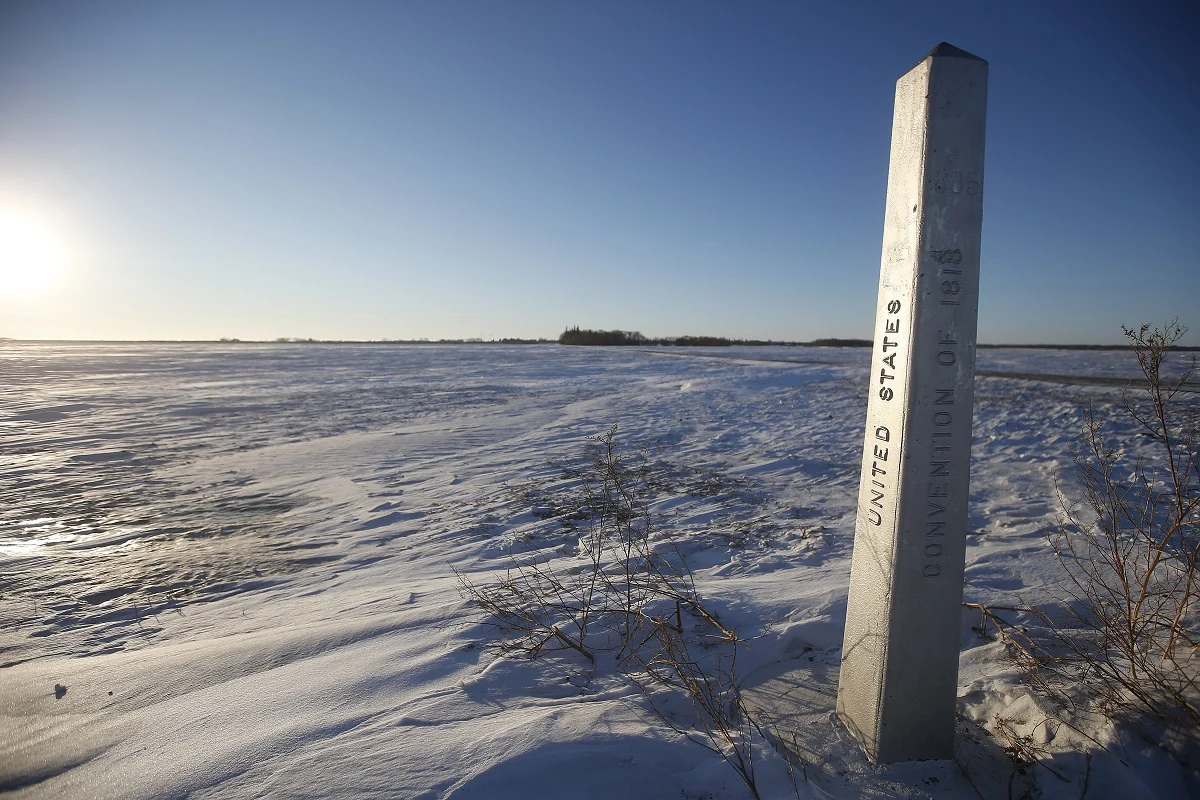
Manitoba news — nearly a year after the province redeployed conservation officers to watch the U.S. border, the results are in: no migrant crossings witnessed, no drug movements, no arrests. Eleven months of Manitoba’s border surveillance strategy produced almost nothing on the enforcement side — but politically, it did exactly what it was designed to do.
By Maplestime News Desk | Winnipeg, Manitoba | September 19, 2026
Sources: The Canadian Press, Government of Manitoba, Canada Border Services Agency | Last updated: September 19, 2026
Key Takeaways
- Manitoba shifted eleven conservation officers toward U.S. border regions nearly a year ago amid Trump’s warnings about migrant flows and fentanyl smuggling
- Natural resources minister Ian Bushie confirmed the officers did not witness migrant crossings, drug movements, or arrests
- A freedom of information request revealed no records of conservation officer involvement in drug seizures or migrant interdictions
- CBSA data shows detentions of foreign nationals suspected of illegal entry into Manitoba remained in the single digits per quarter — including airport interceptions
- The union warns the redeployment cut capacity for wildlife enforcement and environmental oversight amid existing vacancies
Optics Over Outcomes
The initiative emerged during heightened tension with the United States, driven by then-president Donald Trump’s warnings about migrant flows and fentanyl smuggling. Manitoba’s shift of eleven conservation officers toward border regions was part of a broader national effort to reassure Washington that Canada was acting on security concerns.
Political scientist Christopher Adams described the move as a strategic gesture meant to influence diplomatic discussions rather than directly impact border crime. His assessment underscores the political calculation at work: demonstrating action, even in the absence of concrete findings.
In other words, the audience for this program was never really the border. It was Washington.
What Officers Actually Found: Nothing
Natural resources minister Ian Bushie confirmed that conservation officers did not witness migrant crossings, drug movements, or arrests. Union president Kyle Ross echoed this, noting he had heard of no incidents originating from conservation staff during the entire period.
A freedom of information request told the same story in paperwork: no records of conservation officer involvement in drug seizures or migrant interdictions. Actual border enforcement remained squarely in the hands of the RCMP and the Canada Border Services Agency.
The data backs up the quiet border. Canada Border Services Agency figures show detentions of foreign nationals suspected of illegal entry into Manitoba have remained in the single digits per quarter — and those figures include airport interceptions, which means land crossings are rarer still. Across the border, U.S. Customs and Border Protection reports slightly higher activity in the broader Grand Forks sector, but still modest numbers in the double digits.
The Conservation Cost
The provincial government maintains that officers were moved only within their districts and remained capable of fulfilling their usual responsibilities. The union disagrees.
With vacant positions already straining the service, Ross argues that diverting officers toward border duties reduced capacity for essential conservation tasks — wildlife enforcement and environmental oversight. Manitoba did not create new conservation officers for this; it moved existing ones. Something had to give.
Bushie suggested the initiative may have deterred some would-be crossers, though no evidence confirms this. The broader picture points to a program shaped more by political pressure than operational need, with its primary value lying in diplomatic symbolism rather than measurable border security outcomes.
Related: Manitoba’s Legislature Has a Decorum Problem — And This Week Made It Impossible to Ignore
Related: Port of Churchill Expansion 2026 — Owner Says $3B Beats Kinew’s $80B LNG Plan
Nearly a Year Later
Nearly a year after Manitoba repositioned conservation officers to support border monitoring aimed at appeasing U.S. concerns, the initiative has produced almost no meaningful enforcement results. Politically, it was advantageous. Operationally, it delivered symbolic reassurance rather than concrete security outcomes.
The questions now are about resource use and long-term strategy: how long does a province keep wildlife officers watching an empty border, and who answers for the conservation work that didn’t get done?
Maplestime will provide updates from Manitoba’s border surveillance strategy as announcements are made.
Have a tip about Manitoba politics? Email [email protected]
Have a correction? Email [email protected]
Was Manitoba’s border deployment a reasonable diplomatic move — or eleven months of political theatre at the expense of real conservation work? Tell us in the comments, and share this with every Manitoban who pays attention to how this province spends its money.
Enjoying Maplestime? Support independent Canadian journalism — no paywall, no corporate owners.