


If you’ve ever wondered whether your money would stretch further in Halifax than in Toronto, or whether Calgary really is cheaper than Vancouver, this is the article for you.
The honest answer is that where you live in Canada changes your financial life more than most people realize. The difference between two equivalent families, one in Quebec and one in British Columbia, can be $47,000 a year in after-tax purchasing power at the same gross income.
Let’s walk through what life actually costs in each Canadian province in 2026. Real numbers, fresh sources, no marketing fluff.
The national picture in 2026
Before going province by province, here’s the baseline.
According to aggregated 2026 data from Statistics Canada and major Canadian cost-of-living research, the average monthly cost of living for a single person across Canada falls between $3,300 and $3,800. For a family of four, that figure rises to $5,900 to $6,400 per month, including rent.
Food prices are projected to rise another 4% to 6% in 2026 according to the Canada Food Price Report, adding roughly $1,000 a year to the typical family grocery bill. Housing remains the single biggest driver of cost differences between provinces. The Canada Mortgage and Housing Corporation considers any household spending more than 30% of pre-tax income on shelter to be facing affordability pressure. In several Canadian cities, this threshold is now the norm rather than the exception.
So that’s the country in broad strokes. Now let’s get specific.
British Columbia: The most expensive province

BC continues to hold the title of Canada’s most expensive province in 2026, and it isn’t even close.
Housing. Vancouver remains the least affordable city in Canada. Two-bedroom asking rents in Vancouver sit between $2,600 and $2,700 per month in early 2026. Home prices in the Lower Mainland routinely exceed $1.2 million for a modest detached property. Even outside Vancouver, cities like Victoria and Kelowna run well above national averages.
Taxes. BC has relatively moderate provincial income tax compared to Atlantic provinces, but the housing math wipes out most of that advantage.
Groceries and utilities. Groceries are the most expensive in Canada on average. Electricity rates are reasonable thanks to BC Hydro, but the overall household cost of living is higher.
Single person monthly cost: $3,800 to $4,500
Family of four monthly cost: $6,800 to $7,800
Best for: Tech, film, and natural resource professionals earning over $90,000. Lifestyle-focused workers who value mild climate and natural beauty.
Ontario: High costs, deep job market

Ontario, particularly the Greater Toronto Area, runs a close second to BC in overall cost.
Housing. Toronto two-bedroom rents range from $2,750 to $2,900 per month in 2026. Detached homes in the GTA average over $1.3 million. The good news for renters is that Toronto saw modest rent softening through late 2025 and early 2026 as new purpose-built rental supply came online. Outside the GTA, cities like Hamilton, Kitchener-Waterloo, London, and Ottawa offer significantly more affordable housing.
Taxes. Ontario’s top combined federal-provincial marginal tax rate is among the highest in Canada at 53.5%, although middle-income earners see more moderate rates.
Groceries and utilities. Roughly in line with the national average. Electricity rates are higher than Quebec but reasonable.
Single person monthly cost: $3,500 to $4,200
Family of four monthly cost: $6,200 to $7,400
Best for: Finance, tech, law, healthcare, and creative professionals who need to be in or near Toronto. Newcomers using Ontario as an immigration landing pad.
Quebec: The family value champion

Quebec is the cost-of-living surprise of Canadian provinces, and it’s not even subtle once you look at the numbers.
Housing. Montreal two-bedroom rents typically fall between $1,500 and $1,900 in 2026. Detached homes in the Montreal area average around $580,000, well below GTA or Lower Mainland prices. Quebec City is even more affordable.
Childcare. This is where Quebec separates itself from every other province. Subsidized childcare in Quebec costs $9.65 per day in 2026, roughly $200 per month per child. A family with two children under five saves approximately $5,400 to $10,800 per year on childcare alone compared to equivalent families in Toronto, Vancouver, or Victoria.
Taxes. Quebec has the highest provincial income tax rates in Canada. Combined federal-provincial top marginal rate reaches 53.31%. However, the trade-off includes the subsidized childcare, low electricity rates, and the QPIP parental leave program.
Utilities. Quebec has the cheapest electricity in Canada thanks to abundant hydroelectric power. Typical apartment electricity runs $80 to $100 per month, compared to $150 to $200 in Ontario or Alberta.
Auto insurance. The Quebec public no-fault insurance system (SAAQ) keeps auto insurance dramatically lower than other provinces. Many Quebec drivers pay half what Ontarians pay.
Single person monthly cost: $2,800 to $3,400
Family of four monthly cost: $4,500 to $5,500
Best for: Families with young children, French speakers or French learners, professionals in healthcare, education, technology, and aerospace. Newcomers willing to integrate into a French-speaking province.
Alberta: Low taxes, mid-range costs
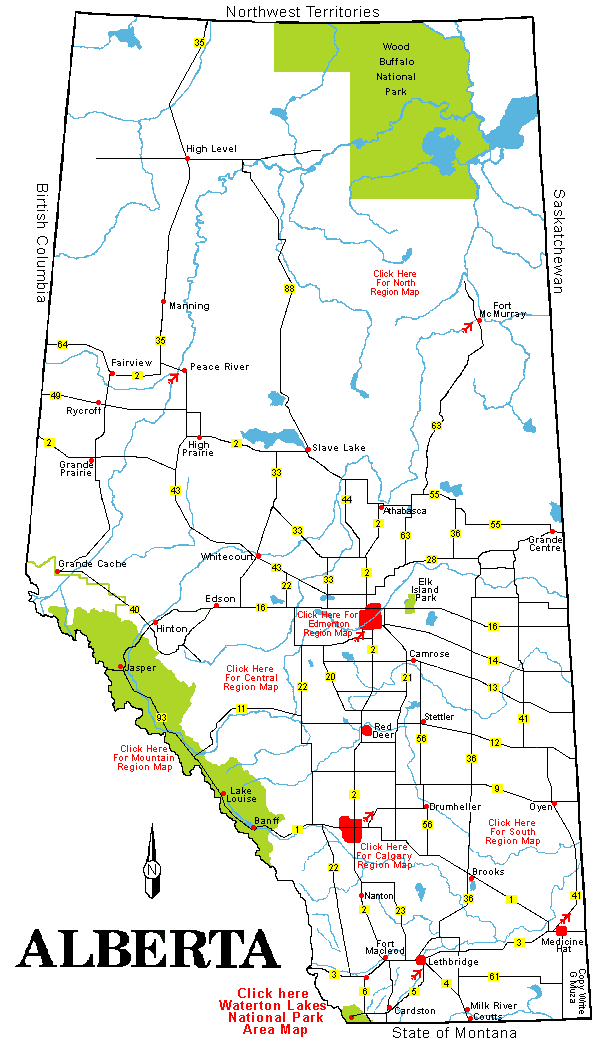
Alberta has long marketed itself as the affordable alternative to BC and Ontario, and the data still supports much of that claim in 2026.
Housing. Calgary detached homes average around $620,000, well below Toronto and Vancouver. Edmonton runs even lower at approximately $440,000. Rental costs in both cities are notably lower than the GTA or Lower Mainland.
Taxes. Alberta has the lowest top marginal tax rate in Canada and no provincial sales tax. For higher-income earners, this is the single biggest tax advantage available in the country.
Utilities. Heating costs are higher than southern Canadian provinces due to colder winters. Electricity rates have been volatile due to deregulation.
Single person monthly cost: $2,900 to $3,600
Family of four monthly cost: $5,200 to $6,200
Best for: Oil and gas, healthcare, skilled trades, technology, and finance professionals. High-income earners benefiting from low taxes. Families looking for affordable home ownership in a major city.
Saskatchewan: Affordable and underrated

Saskatchewan doesn’t make many headlines, but it consistently delivers strong value for the cost.
Housing. Saskatoon’s average home price is around $380,000 in 2026, less than half of Vancouver’s average. Regina is similar. Rental costs are among the lowest in any major Canadian city.
Taxes. Saskatchewan’s provincial income tax rates are moderate. Combined with affordable housing, after-tax purchasing power is strong.
Employment. Healthcare, education, agriculture, and the skilled trades drive consistent demand for workers.
Single person monthly cost: $2,700 to $3,300
Family of four monthly cost: $4,800 to $5,800
Best for: Healthcare workers, agricultural professionals, skilled trades, and anyone prioritizing low housing costs over big-city amenities.
Manitoba: Hidden value, especially for families

Manitoba quietly offers some of the best cost-to-amenity ratios in Canada.
Housing. Winnipeg’s average home price is around $400,000 in 2026. Rents for two-bedroom apartments typically fall between $1,400 and $1,700. Both numbers are substantially below the national average.
Utilities. Like Quebec, Manitoba runs on hydroelectric power. Electricity rates are roughly 40% to 50% lower than Ontario or Alberta.
Healthcare. Provincial healthcare services are generally accessible compared to other provinces with longer wait times.
Single person monthly cost: $2,600 to $3,200
Family of four monthly cost: $4,700 to $5,600
Best for: Families looking for affordable home ownership, healthcare professionals, manufacturing workers, and anyone seeking low housing costs in a mid-sized Canadian city.
Nova Scotia: The Atlantic value choice

Halifax has been one of Canada’s most-changed cities over the past five years. The cost of living has risen significantly, but it still offers strong value compared to central and western Canada.
Housing. Halifax two-bedroom rents now sit between $1,800 and $2,100. Average home prices have climbed sharply to around $570,000 in 2026, although smaller cities like Truro, Yarmouth, and the Annapolis Valley remain affordable.
Taxes. Nova Scotia has higher provincial taxes than most of western Canada, but lower than Quebec.
Quality of life. Halifax offers ocean access, growing tech and healthcare sectors, and a much smaller commute footprint than Toronto or Vancouver.
Single person monthly cost: $2,900 to $3,500
Family of four monthly cost: $5,300 to $6,300
Best for: Healthcare and education professionals, remote workers seeking ocean-side living, growing tech sector workers, and anyone wanting maritime culture without Newfoundland’s isolation.
New Brunswick: Real affordability
New Brunswick remains one of the most affordable provinces to live in Canada, particularly outside the larger urban centres.
Housing. Moncton one-bedroom rents start as low as $834 per month. Fredericton runs slightly higher at $905 for a one-bedroom. Saint John offers one-bedrooms from $756. Home prices in New Brunswick remain among the lowest in Canada, with average detached homes around $350,000.
Taxes. Provincial income tax rates are moderate. Sales taxes (HST) are 15%, which is higher than some western provinces.
Groceries. Food prices tend to be somewhat higher than in central Canada due to transportation costs.
Single person monthly cost: $2,400 to $3,000
Family of four monthly cost: $4,500 to $5,400
Best for: Retirees, remote workers, families seeking low housing costs, and bilingual professionals comfortable with both English and French (New Brunswick is officially bilingual).
Prince Edward Island: Small island, modest costs
PEI is the smallest province but offers a genuinely distinct cost profile.
Housing. Charlottetown one-bedroom rents typically range between $910 and $1,200. Home prices have risen sharply over recent years to an average around $415,000, but remain well below Ontario and BC.
Taxes. Provincial tax rates are moderate. PEI residents benefit from one of the cheapest auto insurance markets in Atlantic Canada.
Lifestyle. Coastal access, slower pace of life, lower density, and one of the friendliest communities in Canada.
Single person monthly cost: $2,500 to $3,100
Family of four monthly cost: $4,600 to $5,500
Best for: Retirees, remote workers, small business owners, and families prioritizing community and safety over big-city amenities.
Newfoundland and Labrador: The lowest housing costs in Canada
If raw housing affordability is your goal, Newfoundland and Labrador offers the strongest numbers in the country.
Housing. The average home price in Newfoundland in early 2026 is approximately $315,000, less than half of the national average. St. John’s averages around $370,000 for a single detached home. Rental costs are similarly low, with St. John’s one-bedroom apartments often available under $900 per month.
Heating costs. This is the catch. Newfoundland winters are long and cold, particularly in the interior and Labrador. Heating costs from October through April can easily exceed $400 per month for larger homes.
Groceries. Food prices are somewhat higher due to the province’s island geography and reliance on Marine Atlantic ferry service for goods.
Taxes. Newfoundland and Labrador has some of the highest provincial income tax rates in Canada, particularly at higher income levels.
Single person monthly cost: $2,300 to $2,900
Family of four monthly cost: $4,400 to $5,300
Best for: First-time homebuyers, retirees, remote workers willing to handle winters, and anyone seeking dramatic natural beauty at a fraction of mainland housing costs.
The territories: A different conversation
The three territories (Yukon, Northwest Territories, and Nunavut) operate on a different cost structure entirely. Food and utility prices run 30% to 50% higher than southern Canada due to transportation logistics and limited supply chains. A household budget that works in Vancouver doesn’t translate to Yellowknife, let alone Iqaluit.
The territories require their own dedicated cost analysis, which is beyond the scope of this provincial guide. If you’re considering a move north, plan to research the specific community in detail before committing.
Cost of living ranking summary for 2026
Here’s the rough ranking from most expensive to most affordable, based on a combined index of housing, taxes, childcare, groceries, transportation, and utilities for a typical middle-income household.
- British Columbia (most expensive)
- Ontario
- Alberta
- Nova Scotia
- Saskatchewan
- Manitoba
- Quebec (when childcare is factored in for families, Quebec moves to most affordable)
- Prince Edward Island
- New Brunswick
- Newfoundland and Labrador (most affordable)
For single people without children, Quebec drops to the middle of the pack because the childcare advantage doesn’t apply. For families with young children, Quebec becomes one of the most affordable provinces in Canada by a wide margin.
What this means for Canadians thinking about moving
Three things to consider before relocating based on cost alone.
Income matters more than expenses in most cases. Moving from Toronto to Moncton might save $1,500 a month on housing, but if your career is in Toronto’s finance sector and the comparable role in Moncton pays $40,000 less per year, the math may not work.
Industry concentration matters. Tech jobs cluster in Toronto, Vancouver, Montreal, and increasingly Halifax and Calgary. Oil and gas work is concentrated in Alberta and parts of Newfoundland. Healthcare and education are reasonably distributed but specific specialties cluster in larger cities.
Quality of life is real and hard to quantify. Climate, family proximity, cultural fit, healthcare access, schools, and community matter as much as raw cost numbers. Many Canadians who move solely for cost savings discover within two years that the trade-offs weren’t worth it.
For Canadians struggling with rising costs without the option to move, our coverage of the Canada housing crisis in 2026explains why prices remain stubborn nationally, and our guide on TFSA contribution room for 2026 covers how to build long-term savings within the current cost environment.
The bottom line
Canada’s cost of living in 2026 varies enormously by province. The cheapest provinces (Newfoundland, New Brunswick, Quebec for families) can cost 35% to 45% less than the most expensive (BC and Ontario) for an equivalent lifestyle.
Housing is the single biggest factor driving these differences, followed by childcare for families, then provincial taxes for higher-income earners, then utilities for cold-climate provinces.
There is no single best province for everyone. There is, almost always, a much better province for your specific situation than the one most Canadians default to. Whether that’s worth moving for depends on income, career, family, and the quieter factors that don’t show up in the spreadsheets.
Maplestime will keep tracking cost-of-living shifts across Canada as the year unfolds. If you want our coverage delivered to your inbox each morning, subscribe to The Maple Briefing.
Sources: Statistics Canada, Canada Mortgage and Housing Corporation (CMHC), Numbeo Canada 2026, Canada Food Price Report 2026, Spergel cost-of-living research, WealthNorth provincial comparison data 2026. Last updated: May 2026.
Written by Orex, writer and digital content strategist at Maplestime. Read our editorial policy for how we source and verify our reporting.
